12/31/2006

A short walk in the small city garden

Always a work in progress, but I finished the cobblestone path a few days ago. I'm holding the camera at waist-level.


Come back in the spring and summer, and maybe we'll do this again.

I'm surprised how long it takes YouTube to "process" a video after it's been uploaded. This one didn't become available until three hours after I finished the upload! Apparently patience is a virtue...and not just in gardening.
San Francisco, once a blue-collar town, has changed in recent years as the port and manufacturing faded away. Now it's a city of service industries, with old neighborhoods next to new high-rises.

"A big city for people who don't like big cities," says Neil Olson, a management consultant for lawyers, who moved to San Francisco 20 years ago.

Like any city, San Francisco has its downside -- it is losing its middle class and its children. The number of kids in schools has declined from 93,000 in 1968 to 54,500 now, according to Supervisor Ed Jew, who was elected from the Sunset District last fall on a platform of trying to hold on to families and small businesses.

The city's streets are full of beggars, and some of the homeless sleep in the doorways of swanky shops at night. Sometimes 21st- century San Francisco looks like Charles Dickens' 19th-century London.

The golden times of the past also had their dark sides. In the Bonanza days of the 1870s, the largest hotel in the country was built in San Francisco, the rich drank champagne and built gingerbread palaces on Nob Hill, the city was stained with anti-Chinese riots, and the Barbary Coast was a dark and dangerous place of drugs, prostitution and crime.

"The place was full of contradictions," Charles Caldwell Dobie wrote in "San Francisco, A Pageant."

San Francisco of the here and now has contradictions, too, many of them shaped by economic forces.

Link.

12/30/2006

"In order to avoid offending religious fundamentalists, our National Park Service is under orders to suspend its belief in geology," stated PEER Executive Director Jeff Ruch. "It is disconcerting that the official position of a national park as to the geologic age of the Grand Canyon is 'no comment.'"

Link and link.
"A barge carrying one of the original Napa Valley homes floats down the Napa River to the building's destination in Benicia. House mover Phil Joy saved the historic building from destruction by engineering the transport of the house, built in 1895 on land that is now planned for a golf course. Chronicle photo by Michael Macor."

ba_house24_022_mac

Link.

12/29/2006

Dare to dream.

That's what I'm gonna do in my 2007 vegetable garden--by giving melons a shot.

Growing melons in cool, coastal California: Inadvisable. It's not hot enough. Requires micromanagement.

In her book, SF vegetable gardening guru Pam Peirce has this to say:
Every few years I come across a listing for a 'very early' [melon] that is supposed to bear fruit even in cool weather. So far, my success has been limited to the two-and-a-half-inch cantaloupe [described elsewhere]. And cantaloupe is probably the melon most likely to succeed here!


Well, I'm going with Territorial Seed's Earlidew ("An early hybrid honeydew that is as well suited to cool summer growing conditions as any melon we've evaluated." 80 days), and Cook's Garden's Charentais ("The original French melon known for its...ability to ripen even in cool areas." 75 days).

Maybe I'll get a boost from global warming.

Look how beautiful Charentais is. Right out of some old still-life by Cezanne or something.

charentais

I knew someone in grad school who thought melon flesh smelled like rotten meat. Or something like that. I'll bet he would hate that picture.

Magnolia campbellii

I believe. Possibly a pink-flowering M. denudata. I took this picture the day after a battering windstorm. You don't see the distinguishing 'cup-and-saucer' flower pattern at all in this picture.
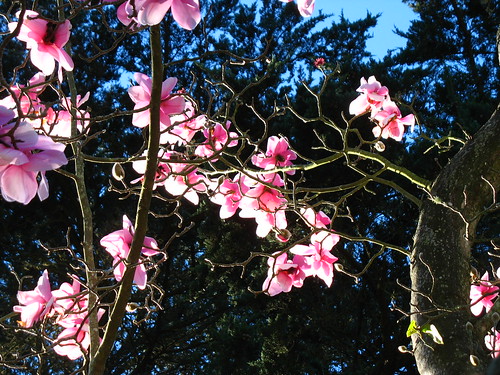
IMG_6546

On M. campbellii, famed Bay Area botanist Elizabeth McClintock wrote, "[The flower's] innermost tepals form an erect, conelike covering that encloses the central column of stamens and pistils; the remaining tepals spread horizontally. It is this characteristic 'cup-and-saucer' flower shape that distinguishes Campbell's magnolia from other deciduous Asiatic magnolias." (Weird--Amazon scanned the back cover of McClintock's book.)

So how do the flowers get pollinated if fleshy tepals enclose the sex parts? "Magnolias are among the oldest of flowering plants, having evolved more than sixty-five million years ago when earth was dominated by ferns and conifers... Beetles, ancient forms of insect life, are thought to be the original pollinators of magnolias, feeding on both the plentiful pollen and the sweet tissue of the [tepals]." Ibid.

Another shot of the same tree, looking more cup-and-saucery.
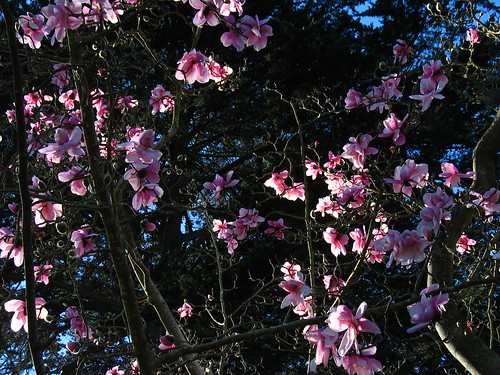
IMG_6549

12/27/2006

Bernal Heights, San Francisco. December 27, 2006.

San Francisco's best neighborhood, if I do say so myself.
IMG_6481

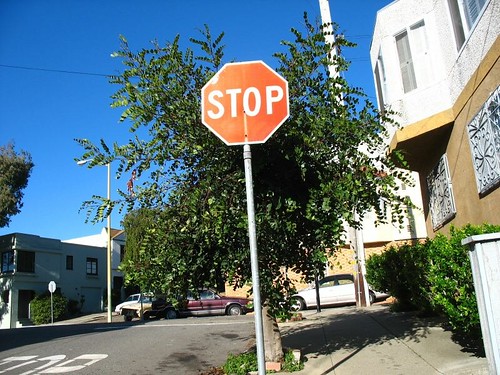
"Stop, and prune me."

IMG_6454

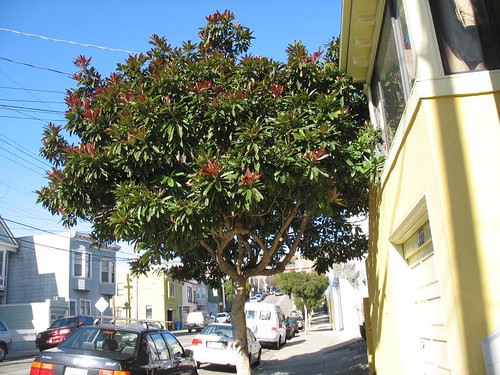
"And me too!" It must be hard to enjoy your Eriobotrya deflexa when it's about to smash through your living room window. I can't quite imagine what must go on in people's minds to let these trees go on like this.

Over the years, I've had a lot of nasty things to say about geraniums (yes, Pelargonium). I take it all back, starting several months ago. I like them now.
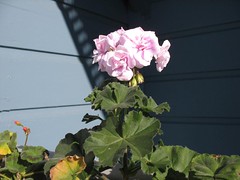
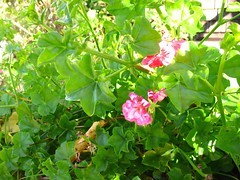
IMG_6452 IMG_6463

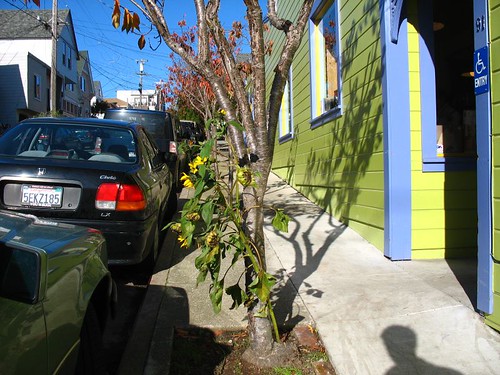
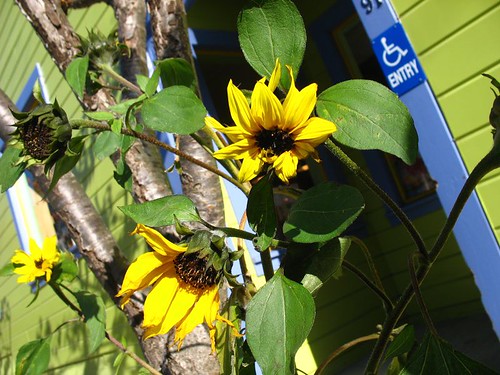
This sunflower (?) is cute.

IMG_6458

IMG_6459

Does your video store quote Thoreau? Mine does. Nyah, nyah!

IMG_6455

People, please do not plant Dietes unless you intend to divide it once in awhile. Please!
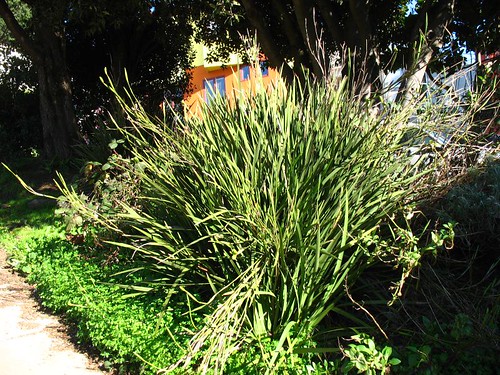
IMG_6488

If I owned this particular million dollar house, I would get that dead tree gone so fast. It's been there for a long time.
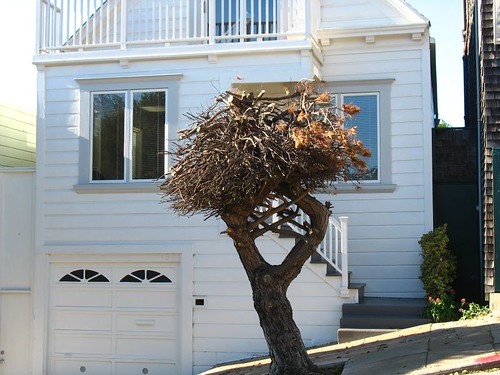
IMG_6491

These people have a nice, rugged Mediterranean garden...on public land I believe. (And when I say Mediterranean, I mean Mediterranean climate. Please don't tell me these aren't necessarily Mediterranean plants. I got that.)
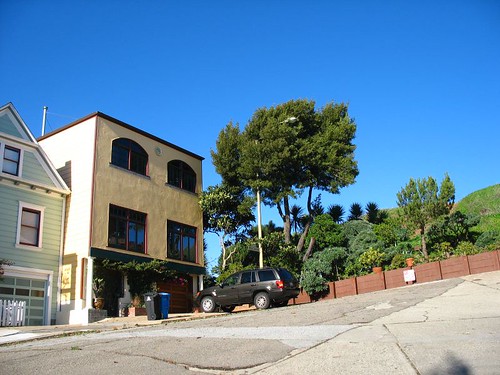
IMG_6489

IMG_6499

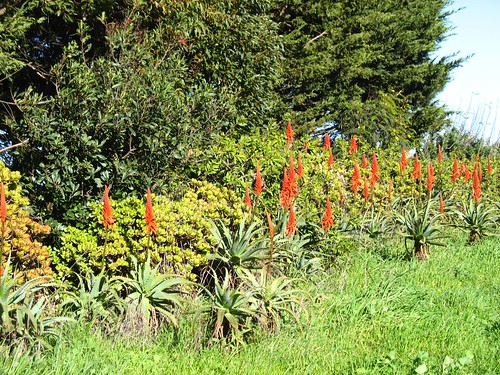
Aloes blooming everywhere.

IMG_6525

A particularly floriferous Fremontodendron.

IMG_6533

It's in bloom whenever I walk by, all year long.

Cute little puppy, barking at me furiously. Aww!

IMG_6501

12/24/2006

The first 80 seconds or so really captures a lot of my general mood this year.


The rest of it's funny too.

Not safe for work, but I don't give a fuck. :)

12/23/2006

Dear diary,

Today I went to the stone yard to pick up the last 10 or so cobbles I need to finish my garden path, but they were closed. Closed--the day before Christmas Eve! Can you imagine that, diary? I was so sad, all I could do was go home and clean up.

Then I remembered I had a rose bush to plant because I went by my nursery yesterday to buy two big pots for containerizing Asclepias speciosa, and I was quite surprised to see they'd already received their full shipment of roses. Roses! Caught totally off-guard, I bought a bareroot Climbing Joseph's Coat since I'd at least had that one in the back of my mind for awhile.

I told a friend I wanted to try grafting red, orange and yellow roses onto one rootstock so I could have a three-in-one rose going on in my small garden (like Fruit Loops), and she said, "Just buy Climbing Joseph's Coat." So that's what I did. Because let's face it diary, I don't know how to graft roses, and I have enough on my plate already. Grafting roses can wait until next year.

So I fixed up soil in a big pot for Climbing Joseph's Coat. I'm not going to let it climb tho'; I'll be pruning it into a bush because I know that rose can take it.

And I decided what to do with all that extra dirt I've been generating lately. I'm going to build another big raised bed for a spring/summer vegetable garden. I've been meaning to try potatoes; here's my chance. Next week, my nursery's scheduled to get fruit trees. Maybe I should get a fruit tree too? It would be nice to espalier a fruit tree where the Dahlia imperialis will soon be no more.

Okay, diary, I'll write more later. It's been a long morning and I want to take a nap before dinner.

12/22/2006

Another one. Bigger than the other day. At least a 4.0.

They're calling it a 3.7. Well, it felt stronger than that to me.

The stone yard

What gardener doesn't enjoy a trip to the stone yard?

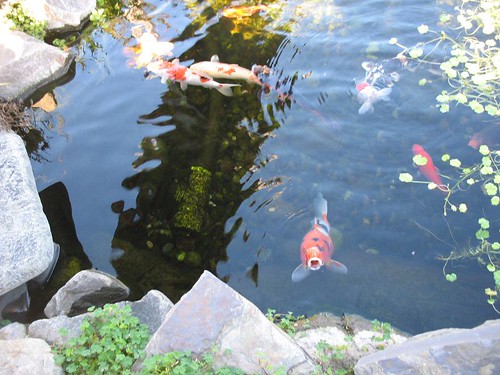
This one has a nice fish pond.
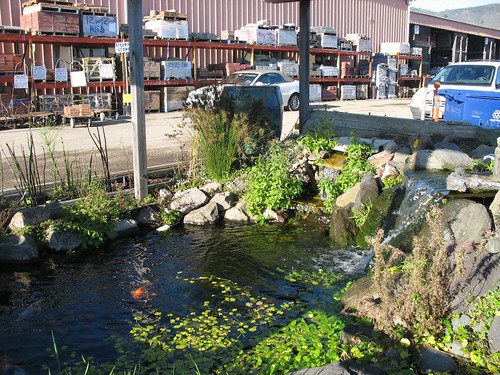
IMG_6450

With hungry fish.

IMG_6445

This place is 20 minutes away in South San Francisco (a town which doesn't even share a border with San Francisco). I hear there's a stoneyard in San Francisco proper, but I've never been able to find it. Anyhow, I come here on my lunch break sometimes just to look around.

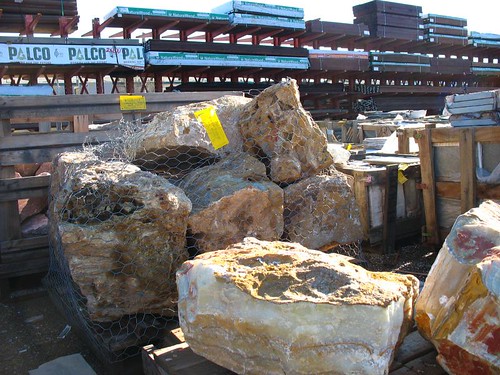
Big rocks.

IMG_6416

IMG_6415

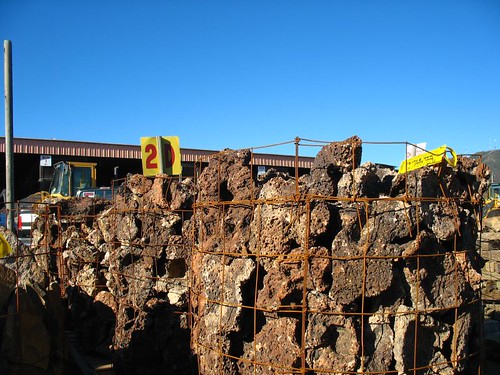
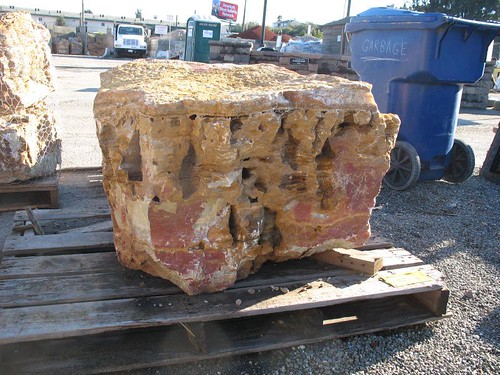
Rough rocks.

IMG_6414

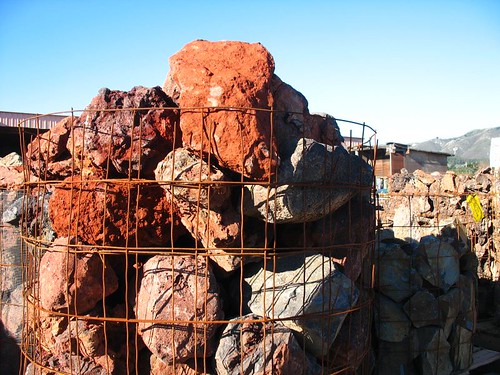
Rough red rocks.

IMG_6413

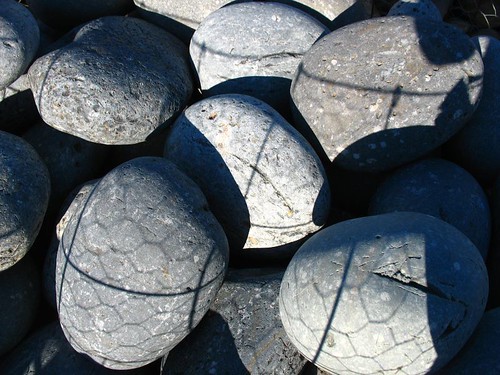
Round rocks.

IMG_6407

Small rocks.

IMG_6410

Really small rocks.

IMG_6411

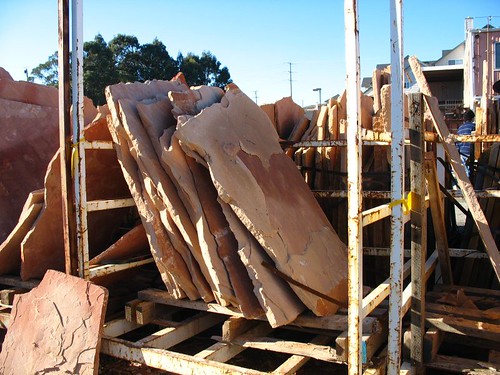
Flat rocks.

IMG_6421

Particularly old-looking rocks.

IMG_6436

And the rocks I came here for.

IMG_6423

They're just called San Francisco Cobblestones, or SF Cobbles, because they were used extensively in 19th century San Francisco. Construction crews find them doing excavation work downtown, and they end up in Bay Area stoneyards where people like me come along and haul them right back to San Francsico.

We bought our first 100 from a contractor we had a chance encounter with in a parking lot. He'd removed them from a garden in Noe Valley and was on his way to sell them to the stoneyard. He sold them to us at market rate and threw in free delivery.

These ten are going home with me. $41.14, a cash palindrome.
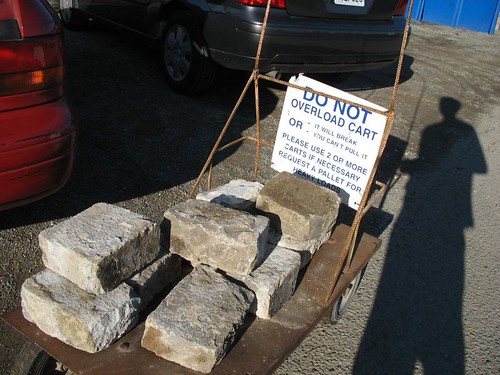
IMG_6443

These aren't the best cobbles I've bought. Kinda concretey. But I think some winter rain and summer sun will flake it off. Cobbles aren't cheap, and they don't always make for a smooth, easy walk in the garden, but they do create a cottagey vibe which is what I'm going for. And I think the varying color and texture of the cobblestones adds visual interest. I particularly like that they come with some local history.

We can take a quick look around, but we're not spending any more money today.

IMG_6431

Hm.

IMG_6437

IMG_6438

IMG_6440

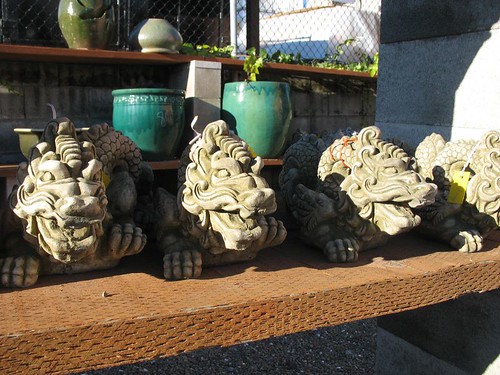
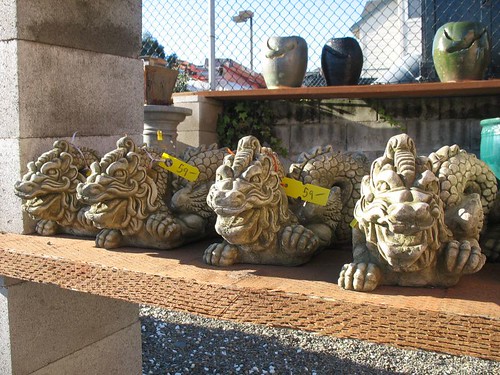
Raarrr!

IMG_6441

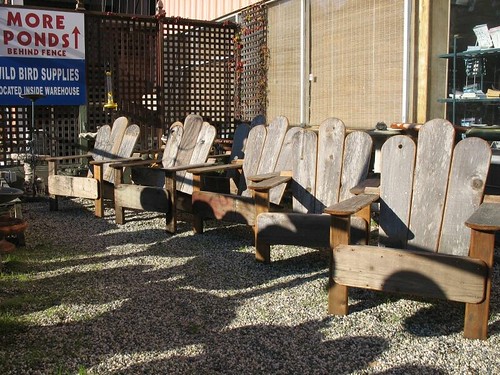
These chairs remind me of summer.

IMG_6432

Yesterday at 4:52 or something was the solstice.

Happy belated solstice!

Do you mind

another trip to the Botanical Garden?

Cupressus macrocarpa.
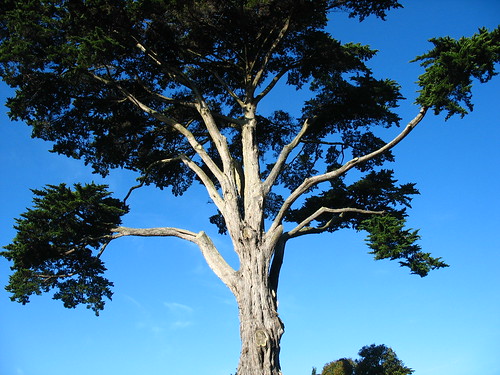
IMG_6321

There's that ginkgo again.

IMG_6325

IMG_6327

IMG_6328

It's 45 degrees F.

Let's work in the greenhouse today.
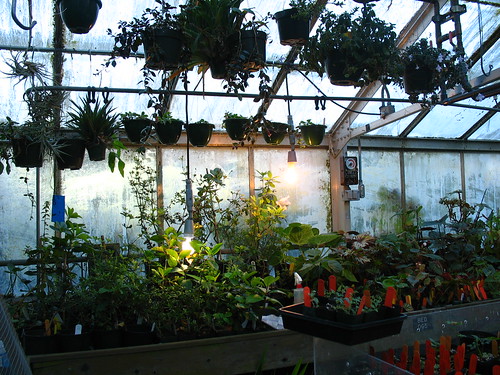
IMG_6331

IMG_6332

IMG_6334

IMG_6341

IMG_6343

IMG_6342

Okay, I've got to go back out into the cold now.

Christopher..? A Hawaiian native Metrosideros, or pseudo-native, I believe.

IMG_6354

The sun is giving sharp contrasts today.
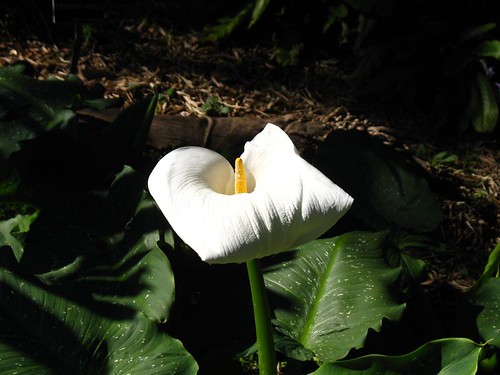
IMG_6402

Maybe too sharp.

IMG_6357

Maybe you think those pictures should go in this order...?
IMG_6357

IMG_6402

Get it? Get it? Heh, heh.

Erica caniculata.
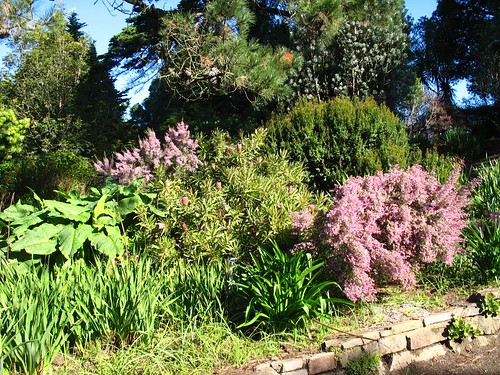
IMG_6381

Really old-school, huh? I like it.

IMG_6382

Melianthus major. In with the new...

IMG_6388

and out with the old.

IMG_6376

IMG_6392

12/21/2006

Rained out on my first day of Christmas vacation.

radar_anim (Image.)

I got a start yesterday tho'.

I bought cobblestones and got ten of them down before sunset.

IMG_6294 IMG_6296

I want to connect the two ends.

IMG_6307

The Geranium maderense is in the way. I'm eager for this biennial to do its thing this year, and die. Classic example of putting too-big a plant in too-small a space. Plus, it totally disrupts the nativity of the bed. S'okay.

IMG_6306

What am I going to do with all this dirt?

IMG_6297

Dump it in the neighbor's yard? Heh. Tempting. As it is, I'm dumping it in the garbage can a couple gallons every week. Noone's said not to yet.

I'm going to grow a pumpkin in that pot. I think it will look nice seeing the vines snake through the manzanita and ceanothus. I like to blend vegetable and ornamental gardening. And I really like that pot.

IMG_6304

IMG_6301

Bulbs. Mostly tulips, large and small.

IMG_6299

They're too big to call seedlings anymore.

IMG_6312

We've never seen the Cotyledon macrantha flower. I have other Cotyledon sp. tho', and I think they all make the same inflorescence.

IMG_6310

Indoor flowers.

IMG_6316

IMG_6317

My favorite houseplant...Spathiphyllum Aglaonema.

IMG_6319

I like the red leaf scars.

IMG_6320

12/20/2006

Earthquakes

I feel certain we're having a swarm of little earthquakes in San Francisco right now.

Is it just me? Link.

Apparently, it's just me.

UPDATE: No, it's not just me. (Phwew!) I'm calling it a bunch of 2's and 3's.

Garden to-do list:

My Christmas vacation began today. I'm off work until January 2. Or possibly January 3 depending on how I feel when I wake up on January 2.

1) Finish cobblestone path. (Buy ~20 more cobblestones, est. $80)

2) Turn compost.

3) Prepare for roses. I want two. I want my neighbor's rose, but that idea was slightly rejected when it was last discussed and I feel stigmatized going forward with that plan. Although some people were rooting for me. My true friends, perhaps. My kindred spirits. Okay, getting over myself now.... My nursery will have roses in January. I need to put out the big pot I have in the garage and prepare soil for it. And I have to improve the soil presently in the other big pot already outside. And I have to pick the roses. Am I going to go in knowing what I want, or see what they have and buy what grabs me? Or should I buy them from the Botanical Garden? What about that Wayside Garden purple climber related to Sally...Holmes? Do I want that after all? Brainstorm roses.

4) Contemplate trellis design. I'm thinking three posts and a triangular top.

5) Hypertufa. Find desirable forms. Learn whether a 2-3' tall hypertufa column is a good idea or a bad idea.

6) Buy another heating pad for seeds. Also buy chains to hang the fluorescent lights in the garage lower (because I'm not buying another ladder to bring the seedlings higher). If that makes any sense.

7) Sow Asclepias in two big terracotta pots that I still need to buy.

8) Finalize seed sowing/germination calendar for 2007, and design vegetable garden concept. Emphasize hanging baskets, containers, trellises. Buy pumpkin seeds because Jack O'Lantern pumpkin seeds all rotted.

Liriodendron tulipifera

In the Magnoliaceae, commonly called Tuliptree, or Yellow Poplar.

IMG_6271

You can ID it from the leaf shape which we describe as being lyrate.

IMG_6273 IMG_6274

Some factoids:

Deciduous, USDA Zones 5-10, to 120' tall, tallest native hardwood in the eastern US, fragrant flowers born high in the crown.

George Washington
and Thomas Jefferson both planted this tree at their respective estates.

Daniel Boone is said to have carved a 60-foot-long canoe from a single trunk.

12/19/2006

Just what I need:

More seeds!

IMG_6290

What did I get? Little California natives to tuck in here and there.

Isomeris arborea,

isomeris
Lotus formosissimus,

Lotus formosissimus

Mimulus pictus,

mimulus pictus

Streptanthus farnsworthianus (Huh. He said, "Anus". Huh, huh. Huh.)

Streptanthus farnsworthianus

and a *BONUS* freebie: Linanthus 'Stardust'.

Where exactly these are going to go in my over-planted 500 sq. ft. garden is anyone's guess. Who the heck knows. I think a couple on the roof garden for sure, and some maybe grouped in bunches around the artichoke bush and summer vegetable garden. Luckily for me, unlike some people, I'm not one to garden with "a plan" or an overall "design concept".

The more pressing matter is, do I coddle these seeds and sow them indoors with diurnal temperature fluctuation, or do I sow them outside in flats and let them fend for themselves like the tough natives they are? Decisions, decisions.

Where did I buy them? Seedhunt. She sells more than just CA natives, btw. The last seeds I bought from her came up within a week. She's got a lot of salvias, and plans to expand her collection of restios.

12/16/2006

It's the middle of December.

Want to visit the Bot Garden with me?

It's our time of year for magnolias.

IMG_6101 IMG_6097

And some lingering fall color.

IMG_6092

Ginkgo grow so slowly, it must have been planted several decades ago. They wanted us to enjoy it, and here we are.

I love the way the leaves decorate the Chamaecyparis obtusa (!) like Christmas ornaments.

IMG_6090 IMG_6089

So Ginkgo and Hinoki cypress makes a good pair. What other plants you can put together so colored leaves falling off one plant will land on another and serve as a decoration?

I'm not sure what this is, but I like it.

IMG_6096

This is the Fuchsia boliviana v. alba that I'm growing from seed. I was very proud of that, but Sunset says this plant will self-sow in moist conditions. Well, whatever. I sowed my own.

IMG_6107

Montanoa leucantha.

IMG_6112

IMG_6139

Every year, I'm surprised all over again by how flowery it gets. Most of the year I don't even notice it.

These trees are just here to hold up the vine. Someone's thinned it out recently, probably for winter storms.

IMG_6119

IMG_6117

I did this. I installed those stumps as a retaining wall, and I planted those little fuchsias.

IMG_6249

Looks like it's holding up. Yay me!

My second favorite tree.

IMG_6143

There it is.

IMG_6142

Restios and Protaceae. It must be South Africa.

IMG_6131

IMG_6127

IMG_6152

I want this one:

IMG_6155

This is Elegia capensis. I like it a lot. It must be the most well-known restio..?

IMG_6147

I would keep it in a container.

Washed-up Strelitzia. Aren't they cute?

IMG_6165

Banksia. Not from South Africa but it goes with the other Protaceae, so I'm putting it here.

IMG_6267

It's actually growing on the other side of the park, near the moon-viewing garden.

But back to South Africa, I wanted to show you one more thing: the silver trees. Leucodendron argenteum. If I had a bigger garden...

IMG_6159
IMG_6162

IMG_6171 IMG_6172

I actually do have some (volunteer) work to do today. Some cuttings.

The three on the right are mine, actually. (Ceanothus arboreus, unk. Arctostaphylos, Oenethera hookeri.

IMG_6196 IMG_6197

And I dug some slow-release fertilizer into the irises. Iris douglasiana...very diverse native iris, used a lot in hybridizing work.

IMG_6193

Pretty, isn't it?

But when the work is done, the strolling resumes.

Another Fuchsia boliviana v. alba.

IMG_6174

This time I grab a couple fruit. One to eat, one to harvest seeds from. You know all fuchsias make edible fruit?

This must be Echium piniana. I'm growing Echium wildprettii from seed. It's smaller, and makes a red spire, and it's a biennial.

IMG_6188

The Children's Garden is one of my faaavorite sections in the Bot Garden.

IMG_6203

The woman who runs it really knows how to use different materials in interesting ways, and her style is super cottage-y. I come by here all the time for new ideas. The place is under extreme renovation. Soon, this will absolutely be one of the coolest things to see in San Francisco. And noone knows about it. It's waaay in the back of the Bot Garden where noone knows to go. I'll take you.

IMG_6205 IMG_6208
IMG_6213 IMG_6206

IMG_6217

The totem pole can't wait.

IMG_6219

And there's a bit of planting already to go. It looks so easy.

IMG_6209

IMG_6216

You have to say that, otherwise the adults think everything's for them.

Have you seen a Casuarina stricta before?

IMG_6244

An acquired taste I suppose. I wish they'd feature it a bit more, but it's a toughie.

The junkyard of the monestary stones. You remember me telling you about them?

IMG_6237

IMG_6238

Now they're being used in the Children's Garden, which is nice.

Looks like I'm not the only volunteer today.

IMG_6225

I bet you guys can ID this south/east coast US native.

IMG_6271

IMG_6273 IMG_6274

I was shocked to learn this was a native tree.

A friend was joking with me about the Gunnera at last spring's big plant sale. She said only gay men buy Gunnera. In fact, only women with big hair bought it this year.

IMG_6270

Hopefully the kids who spend time in the new Children's Garden will have a good time and enjoy themselves and learn to appreciate plants and gardening, and not grow up to be people who do shit like this.

IMG_6281 IMG_6277

How sad.

IMG_6280

Vandalism in the Demonstration Garden is depressingly common. I cleaned up several ruined plants today, and lots of broken glass from beer bottles, left smashed all over the patio.

Is it wrong to end on a sad note? Not really. Just as there are people in the world who nurture and cherish, there are those who smash and destroy. That's what we have. It's who we are.

Maybe you want to contemplate that mystery while you gaze into Aloe polyphylla.

IMG_6284

Click here for a quick visit last October.

12/14/2006

"I've found yet another way to categorize people - those who say 'Cool!' when they see a cubic hard-boiled egg, and those who say 'Uh, why?'. I'm glad to be in the former category, as are my friends. I've also learned that many of my co-workers are in the latter."

Link.

Some of my own random gardening idiosyncrasies...

viewed through the lens of the Wayside Gardens Spring 2007 catalog, which came today.

I got on their list soon after I started gardening, but before I became serious. (Serious gardening to me means buying locally with an emphasis on natives, or growing from seed.) I bought a really crappy Hydrangea petiolaris from them that I eventually ripped out when it finally became clear to me what a dud that specimen was. WG has a very seductive print catalog. Their prices are on the high side. I'd rather be buying seed. I shouldn't even look inside...

But I had a beer and leafed through it while I rode the exercise bike tonight...

Coneflowers. Okay, I like them. But do I want them in my garden? I go back and forth on coneflowers all the time. They do well here. I like self-sowers. I like purple. Beneficials like them. They're not so overused I can't stand them anymore. But they're not natives. In my mind, they're kind of east coast-y, garden lady. I certainly don't like fancy-schmancy cultivars of anything, except maybe roses and Japanese maples--and even then I have limits. I'm a species guy whenever possible. I'm not going to buy any of Wayside Gardens' $15 coneflowers, but the coneflower conundrum continues for me.

I like this Climbing Rose 'Night Owl'.

45128

$20 for a bareroot. I like the purple, I like the yellow stamens, I like climbing roses. I especially like climbing roses that might be expected to top out at 14 feet like this one. And I just said I need more flowers in the garden. This pruple climber might be nice planted behind my pink-flowering Brugmansia that I also bought from WG last year when I was drunk. The one I go back-and-forth about. I'd be so grossed out having a "Wayside Gardens" corner in my little San Francisco garden, it would drive me freakin' nuts. And we San Franciscans have to be very careful with roses. The right ones do fantastic here, everything else is a mildewy horrorshow. Still, it's very pretty. The catalog says this is a purple version of 'Sally Holmes'. I'll look this Sally up in my SF rose growing resources and give it some thought.

They're selling Paris polyphylla and they say it's very rare. Not that rare...I've heard of it. I think they're calling it rare because the flower is so subtle and so not over-hybridized it doesn't really make sense in their catalog!

They have three pages of Japanese maples that don't excite me much. Still haven't made my choice on them, but I've already got enough information to work with, thankyouverymuch.

Several pages of hideous, over-determined Cornus sp., Hamamelidaceae, magnolias, Pieris, daylilies.

In the middle of all that ick is Poncirus trifoliata 'Flying Dragon'. This would look really cool in a succulent garden.

FlyingDragon1Main FlyingDragonMain2

Note: Photo credits for those pictures go to Greenwood Nursery.

Two pages of lovely Buddleia [sic]. Is that an east coast spelling? We go with Buddleja in California. I'm a huge, huge Buddleja fan. I never have a bad word to say about Buddleja. I don't want one of my own tho'. I'd be overwhelmed managing it.

Then several more pages of atrocious plants...occasionally interrupted by something nice...

A gardenia. Love them, but don't do well in San Francisco. A rather fastigate Berberis thunbergii cv. atropurpurea. Interesting, but no thank you.

This lurid Guara.

gaura

The most vulgar Cortaderia I have ever seen. Are you with me?

pampas

Eeccchhh.

Wait, am I going too far here? Is this terrible? Should I stop? I'm just blogging, right? This is of no consequence, right?

I'm glad people get satisfaction, and even better, income, breeding plants. I really am. For the most part. But that doesn't mean I can't be honest in my assessment of the results, right? I can express an opinion about art; I can do it about plants. Yes. I'm fine. At best, they can knock me for grabbing pictures without asking. But I gave links and credit. That's good, right?

Because I'm going to end by saying I love all WG's clematis. Every single one of them looks absolutely beautiful. Go see for them yourself.

12/11/2006

IMG_6080

What a difference a day makes, huh?

Here is last year's (it looks a lot like this year's!)...with a scary-ish looking picutre of me.

I think next year, we'll get a bigger tree.

12/10/2006

I have all this weird crap in my garage

from when I cleaned out my grandparents house some years ago. Like this Presidents of the United States commemorative plate from back when whatshisname was president.

IMG_6007

They really, really liked whatshisname.

IMG_6061

That 'Love those Republicans' button is cool. It has that polarized plastic covering, so those wheel-like designs look like they're spinning when you move the button. Everyone loves those wild and crazy Republicans!

It's not like I wanted these things, but noone else wanted them, and I didn't want to just get rid of it all...

This thing is hideous. HIDEOUS. It's a hand-painted lobster claw. My grandparents came from Maine. You know, Maine lobster. Anyhow, my grandmother had this thing hanging in her kitchen all my life. I have always, always hated it. When it finally came time to get rid of it, I suddenly couldn't let it go. Now it's mine.

IMG_6010

Also from grandmother's kitchen: mammies.

IMG_6051

I would never have these in my kitchen, but they don't seem as offensive to me now as they used to. Is that wrong?

In any case, they're a huge step up from these monstrosities.

IMG_6056

They're made out of some kind of hard plastic--probably recently invented at the time these salt and pepper shakers were fabricated.

What were people thinking? I cannot even begin to imagine.

More here and here and here.

Prelude to a Christmas tree.

IMG_5996

We here at Chez Whoreticulture know that size isn't everything.

Okay, stop laughing. Stop laughing now. Stop it!

We have some serious blogging to do. I want to know what kind of, ahem, "tree" this is.

Do think you know?

Here's a nifty stocking stuffer idea.

IMG_6001

These little books come from Nature Study Guild Publishers and cost a mere $3.50. They sell finders suitable for every part of the USA (except probably Hawaii), and they do more than trees. I have the berry finder, fern finder and flower finder, and you can get bird, fish, and animal finders too. My order came in just a few days--so there's still plenty of time left for you to place a Christmas order. (At the link, click Finders under Browse Products.)

Here's our sample.

IMG_5998

Shall we begin?

IMG_6003

Actually, let me read for you.

"If the tree has needles..." Check!

"If there are needles like these...[shows little picture of pine needles]" Check!

If the needles are bundled together..." No, they're not.

If they're not bundled, go to page 18.

Page 18. Okay, big decision point: "If there are smooth round scars where old needles have fallen off, it's a fir." There are smooth round scars. This tree is a fir, and this business of no smooth round scars is one reason why Douglas Fir is not a true fir (and also the cones). Doug Firs are more like hemlock pines. Other pines without those smooth, round scars: spruce, pinyon, nutmeg, redwood, and yew.

But we have a fir. Okay, moving on.

Do the needles narrow to a stalk where they join the twig, or are the needles wide at the base? This is a slightly difficult decision point. I have to look at a lot of needles to decide.

The needles are wide at the base. Go to page 21.

Are the needles flat and hard to twirl? Definitely hard to twirl. We're almost done.

Is the bark rusty red, or gray?

Definitely gray.

We have Abies lasiocarpa var. lasiocarpa, common name "Subalpine Fir".

12/09/2006

Fine Gardening, No. 113. February, 2007

I'll never understand magazine publication dates. How is it okay to get the February 2007 issue in mid-December 2006? (Please don't explain.)

This is my second favorite magazine. Let's see what we have this month. Japanese maples on the cover. Always love those. I have the wind blowing leaves from an unknown Japanese maple into my garden. Which is nice.

IMG_5951

I have the west coast native equivalent, Acer circinatum. It's still very small tho', and dropped all its leaves several weeks ago. More of an Oregon, Washington native, but we have some in northern California too. Because California's a really big state, we get to say we have an incredible diversity of native plants. Anyway, that's neither here nor there.

I was going to get a Japanese maple this year, but by the time I got around to it, they'd all dropped their leaves at the nursery and it was too late to pick. But couldn't I just go with a trusted recommendation? I mean, whatever it is, I'll like it, right?

Fine Gardening recommends: Waterfall, Inaba shidare, Mikawa yatsubusa, Aka shigitatsu sawa (which is the one that captivates me most), Shin deshojo (captivates me second most), Seiryu, Koto no ito, Sango kaku (that's one I've heard of before), Aconitifolium, and Vitifolium.

Aka shigitatsu sawa. Zones: 6 to 8, Height: 7-9 feet, Spring color: green, pink, red. Summer color: Green, pink, red. Fall color: Red

Sounds good.

Shin deshojo. Zones: 6 to 8, Height 10-12 feet, Spring color: red. summer color: red, green. Fall color: red, orange. And they add, "This cultivar's form naturally becomes a 10- to 12-foot-tall haystack, or the tree can be opened up to reveal its architecture through pruning."

Well, I'd like to have green, pink, and red during the spring and summer, and orange and red in the winter. Maybe I should get both.

Sunset's recommendations for Japanese maples (Sunset zones 2-10, 12, 14-24) back in November 2005 (but which I'm certain I read in August '05): For yellow-gold fall color, it's Aoyagi, Flavescens, Hogyoku, Koto no ito, and Sango Kaku. For
orange-red, it's Nicholsonii or Orangeola. For red, it's Bloodgood or Osakazuki.

They also suggest five for container culture: Fjellheim, Kamagata, Mikawa, Yatsubusa, Sharp's Pygmy.

[Note: as I sit here typing, we're having a seriously windy rain storm. I need to show you a movie of my neighbor's yard blowing around. It's incredible. I would be unsurprised if the tree dahlia doesn't make it through the night. Another good reason not to have that plant next year. A small branch broke off it last night. I just hope my neighbor's trellis doesn't come off his house and crush my tree fern. Eventually, it's going to. Sigh.]

Back to Fine Gardening...

The featured garden in this issue belongs to Brigit Piskor in Vancouver. She made "every fence, trellis, container, and sculpture in her garden herself." Wow! What an achievement, huh? [Note: Whoreticulture readers can look forward to future blog posts on the subject of hypertufa. Books have been ordered, I'll be picking up a bag of Portland cement next weekend...] In a small garden, Piskor emphasizes the importance of thin, airy plants. I'm particularly impressed with the self-sown mulleins and Culver's root, Veronicastrum virginicum f. album. Looking at pictures of her beautiful garden, I suddenly feel that I must build by own arbor. Okay, that'll happen after the hypertufa.

A plant I really like in this issue is Dryopteris erythrosora 'Brilliance'. I want a few other ferns in my garden to echo the tree fern, but I don't want to add any more predominantly green plants for awhile either. Ta da! Problem solved. They're only $6.99. I'll take three.

At least one of them will go somewhere in here.

IMG_5942

Okay, what disappoints you more--the azalea or the gnome?

IMG_5945

The azalea's just a temporary in that spot, but the gnome stays. He guards the compost bin from the raccoon. That area's real shady. I've got three clivia behind the fern, some tiarella and heuchera (I intended for there to be a lot more heuchera, but most of the divisions I took from elsewhere in the yeard died--to my surprise. These look like they'll make it if they survive the winter.), and hopefully the Symphoricarpus I planted a few weeks ago will take off next spring.

The other thing I have for that spot is the Fuchsia boliviana alba. Still seedlings, but coming along.

IMG_5914

I've got seeds everywhere.

IMG_5910

In every drawer.

IMG_5898

In the refrigerator with extra bulbs I'm not sure what I'm going to do with.

IMG_5900

My boyfriend is very sweet to let me have a little corner of our refrigerator for my germination trials.

IMG_5902

I have extra bulbs because I got a bag of them for my birthday. I can't even remember ever seeing a hyacinth flower before. Do you think it will be okay in this set up?

IMG_5980

I figure the roots will anchor themselves in the shells and hold the bulb upright. It's a pretty small flower, right?

Remember that Berberis wilsoniae? Look how red.

IMG_5912

12/06/2006

Getting lost

I don't know what it's like where you are, but people are forever getting lost in California parks.
In this and a few other searches I've been involved with, I've learned that finding a missing person in the woods can feel like looking for a polar bear in the desert.

These are the steps you take on a search, and what a lost victim can do to help...

at the link.

12/04/2006

Science Corner

Miscellaneous points of interest transcribed by me from recent issues of the estimable science journal, Nature. They don't put much out for free. I type pretty fast (with occasional typos).

Polish scientists fight creationism
Fifty leading scientists in Poland have signed an open letter in protest against an aggressive anti-evolution campaign launched by the League of Polish Families (LPR), the ultra-right-wing coalition partner in the conservative Polish government...

[Maciej Giertych], is an LPR member in the European Parliament and is lobbying for obligatory inclusion of creationism is Polish biology curricula. Maciej, who holds a PhD in tree physiology from the University of Toronto, Canada, claims darwinian evolution is refuted by scientific evidence...

Sigh. On a related note, elsewhere in the same issue, a favorable review of Sean Carroll's book, The Making of the Fittest: DNA and the Ultimate Forensic Record of Evolution.

Also reviewed, the new Richard Dawkins book:
[T]he strategy of focusing on telling people what not to believe is less compelling than positively demonstrating how the wonders of nature can suggest a world without God that is nevertheless both complete and wonderful--an argument that Dawkins reserves for the final few pages of the book.


Other book reviews that catch my eye: Lee Silver's Challenging Nature: the Clash of Science and Spirituality at the New Frontiers of Life and Marion Nestle's What to Eat: An Aisle-by-Aisle Guide to Savvy Food Choices and Good Eating.

About that one, the reviewer writes:
Like other areas of science, nutrition is framed by political realities. Whose interests are being served? Will this or that power bloc be affected if we tell people to cut down on sugar or meat? In a world where food is very big money, and where nigh on a billion starve while a billion overeat, we are seeing a bizarre globalization of 'pork-barrel politics' in which particular consituencies benefit while everyone pays. Land that should be producing food for health is producing food for wealth.

That's a book I should probably spend some time with. But maybe at the library. Once in awhile I like to take an inventory of my nutritional situation. Sort of like taking a financial inventory, or going to the dentist for a teeth cleaning. Just to sort of touch bases with myself and be self-aware about important things I otherwise don't care to think about.

The writer repeats that one-egg-a-day rule to keep your heart healthy. How am I supposed to limit egg consumption to one egg at a time? That rules out eating all kinds of things I like to cook. I would need some help implementing egg-discipline in my life.

I am careful with breakfast eggs. I like them scrambled, and scrambled eggs for me means two whole eggs + one egg white scrambled with 1% milk. I figure the addition of one egg white means I fill up with extra protein minus the yolky cholesterol; it also makes the eggs lighter--I highly recommend it. I guess I could have one egg + one egg white and add in something else. But I'm a hungry guy. I eat a lot of food. Aaanyway...back to Science Corner.

Pollinators in peril
In a report issued on 18 October [2006], the US National Academy of Sciences (NAS) found that pollinators such as bees, birds and bats are declining rapidly in North America....

The agricultural bee-keeping industry will probably ensure the honeybee's survival, but populations have still dropped by 30% over the past 20 years in North America, mainly due to the varroa mite...

Physiscist retires to work on 9/11 conspiracy theories
University [of Utah] officials had placed Steven Jones on paid leave last month while reviewing his work on 9/11 conspiracy theories. On 20 October [2006], the university announced that Jones had reached an agreement to take early retirement. Jones says he plans to continue his 9/11 research...

Antarctic ozone hole is bigger than ever
As ozone-depleting chlorofluorocarbons fade from the atmosphere, the ozone hole over the Antarctic continues to fluctuate in size. And this year it was the biggest it has ever been.

Both NASA and the European Space Agency documented the size of the 2006 ozone hole and found that, in late September and early October, it had broken records for both size and depth, previously set in 2000 and 1998...

The Christmas Invasion [a three-page article about poinsettia-vectored whitefly infestation]
In the 1990s, the B-biotype whitefly swept through North American crops, inflicting more than $1B worth of damage on farmers in the US and Mexico; it had hitchhiked from Israel to Florida to California, and from there it seems likely to have been spread nationwide via the imported poinsettias...

Now the spreading of whitefly by poinsettia is at risk of repeating itself in an even more devastating way. The Q-biotype, orginally observed in Spain in 1997, "is resistant to every pesticide we've tested", says [Timothy] Dennehy who co-chairs a scientific panel on the pest convened by the USDA.

Q&A with congressman Bart Gordon (D-Tenn.), in line to become chair of House Committee on Science.
Q: You've talked about censorship of scientists at agencies and politicization of science. Do you plan any hearings on that issue?

A: We hope that we can have some oversight hearings that are going to find out what was really going on. My goal is not to embarrass the [Bush] administration but to shed some light on this problem so that people will be embarrassed to do it again.

Embarrass the Bush administration?

Meanwhile, across the pond...
The cross-party group of 11 [British] MPs takes ministers to taks for labelling policies "evidence-based" when no relevant research exists, and criticizes the civil service for its poor interpretation of research results. Perhaps most worrying, concludes Phil Willis, the Liberal Democrat member who chairs the committee, is the fact that government-commissioned studies regularly go unpublished when they conflict with a department's policy.

Life goes on...for now.

12/03/2006

Plant ID final

I have my final next Tuesday. Here are some of the plants we did this semester that we'll be tested on. (I have about half as many more not pictured.) There really aren't that many plants here. Plus, her tests are easy so it won't be hard to get an A.

IMG_5839 IMG_5840

But I don't care about the grade; I just want to be able to identify lots of plants without having to think about it.

We'll start with the easy ones. The maple family, Aceraceae. Acer palmatum cv. dissectum atropurpureum and the species, A. palmatum. Even a sprig of A. palmatum under packing tape is enough to make me smile. Always a pretty plant. I don't care much for this cultivar tho'. It's a graft, and something about that bugs me. No thank you Laceleaf Japanese Maple. I'm just not that in to you.

IMG_5845

Okay, a little bit harder. Griselinia littoralis and Aucuba japnoica. Is that how you spell 'Griselinia'? What's the cultivar name for the Aucuba? What family are these plants in? That's all test material.

IMG_5854

Answer: They're in the Dogwood family, Cornaceae! These plants don't look like dogwoods, so how am I going to remember that? I spelt Griselinia right (I like to say "Grosselinia"), and the Gold Dust Plant's cultivar name is variegata. Easy enough. I'll just have to memorize Cornaceae.

The Berberidaceae are easy for me, except sometimes I have a hard time remembering that Nandina domestica goes here. For some reason, I want to put it in the Buxaceae.

IMG_5842

The teacher still calls two of these Mahonias (M. aquifolium and M. lomariifolia), although most sources I see have switched the genus name to Berberis. (And I have to remember it's lomariifolia with two i's.) I would like to some Mahonia aquifolium in my garden.

Okay Pepper Trees. Schinus molle is easy, and the other one (much less common, right?) is S. terebinthifolius. These are in Anacardiaceae, the same family as poison oak, mango and pistachio.

IMG_5844

I'm going to have to come up with something for the S. terebinthifolius.

Araliaceae. I hate all these plants, but they're easy to identify.

IMG_5851

Hedera canariensis has two different foliage forms, and only the mature one flowers. That's something I didn't know before I took this class. We have that dreadful Algerian Ivy everywhere. It's awful. Hate, hate, hate. The Hedera helix just sounds like English Ivy, doesn't it? If you cross it with Fatsia japonica you get x Fatshedera lizei, which is one of my favorite plant names, although I loathe the plant. Apparently a common name for it is Botanical Wonder. Whoever came up with that should be smacked. (The only way for me to identify Fatsia japonica is by knowing it's not any of the others.)

Buxaceae.

IMG_5853

This was my first exposure to Pachysandra terminalis. It's not used very much on the west coast, but we read about it in east coast garden books. I had thought that Sarcococca ruscifolia would be a hard one to remember because it's an anonymous green shrub, but I can ID it by the acuminate leaf tips. Fragrant flowers born under the leaves. And I like the name. I just have to remember it's Sar-co-coc-ca, not Sarcocoa.

The English boxwood (B. sempervirens) can be distiguished from the Japanese (B. microphylla cv Japonica) by the notched leaf tip on the Japanese. The word for that notch is "emarginate" or even "retuse". I also have to remember it's B. microphylla cv. Japonica, and not just B. japonica.

Okay, the Cupressaceae are going to be hard no matter what I do.

IMG_5856

I can pull out three right away that I always know. Clockwise from the top left: Cupressus macrocarpa, Juniperus chinensis cv. torulosa, and Thujopsis dolbrata. The first two are everywhere, but the T. dolbrata is totally new to me. But it's completely different than the others, so no problem. Also, I like one of its common names: False Arborvitae.

IMG_5857

I can probably pull out the native Incense Cedar, Calocedrus decurrens, as well. It's flat and smells nice. The needles or scales also have a particularly elongated aspect.

IMG_5859

That still leaves these.

IMG_5860

I'm supposed to have internalized some fact about how the Chamaecyparis are distinguised from the others by the presence of white lines on the undersides of the leaves. Of my specimens, this is really only true for the C. lawsoniana. I don't see any white lines on the C. obtusa (Hinoki Cypress). Also, must remember Chamaecyparis, not Chaemocyparis. I don't know why that's been so hard for me.

IMG_5863

Up close, samples of the x Cupressocyparis leylandii look a lot like Cupressus macrocarpa, but the former is flattened at the branchlet tips, whereas the latter is not:

IMG_5862

Of the others, Thuja plicata branchlets are particularly elegant among the Cupressaceae. Cupressus sempervirens cv. stricta seems to have swollen, slightly bulbous branchlet tips.

Okay, whatever. NEXT!

Easy.

IMG_5864

Easy, easy, easy.

IMG_5866

Okay, here are two hard figs.

IMG_5867

That's F. rubiginosa over F. retusa var. nitida. The rubiginosa has a rusty pubescence on the bottom of the leaf. The retusa has a tip like a nipple. What's the word for that?

You, I hate.

IMG_5883

You, I don't hate. Sollya heterophylla. As far as the Pittosporaceae go, I can deal with you. "Polypetalous, campanulate flowers. Berries are a nice feature. Climbs shrubs and trees. Can grow under Eucalyptus". That last detail can be especially good to know in California.

IMG_5882

And what's this generic bit of greenery?

IMG_5880

Must be another Pittosporum. But which one? P. tenuifolium. From New Zealand, the native common name is Tewhiwhi or Kohuhu.

I guess I didn't manage to successfully copy pictures of the other four Pittosporums on my plate. P. crassifolium and tobira both have revolute leaf margins, but the crassifolium additionally has a visibly tomentose underside, but the tobira does not. P. eugeniodes has a more undulated margin than P. undulatum. Okay, fine.

She only gave us the two most common willows. No problemo. Salix babylonica and S. matsudana cv. tortuosa.

IMG_5884

Isn't it funny that Populus nigra 'Italica' is in the willow family too? Here it is with the native holly leaf cherry, Prunus illicifolia (Roseaceae).

IMG_5885

Also in the roses, the dreadful cotoneasters.

IMG_5893

We have four: C. lacteus (easiest one to spot), C. microphyllus (the tiniest leaves), C. horizontalis (very round leaves) and C. conspicuous decorus (prettiest).

Why have a grody Pyracantha coccinea when you could have the lovely native Heteromeles arbutifolia? I don't get that.

Hissss!!!

IMG_5894

Yay!!!

IMG_5892

(Okay, yes, it's all rotty in my specimen card. Use your imagination.)

I still have a lot more to go, but I'm getting tired. I know you are too.

Let's finish this on an up note. A way high-up note. As in, 100, 200, 300 feet high up. Taxodiaceae. This includes the Giant Sequoias (Sequoiadendron giganteum), the Coast Redwood (Sequoia sempervirens), the once-believed-extinct Dawn Redwood (Metasequoia glyptostroboides), lovely Cryptomeria (Cryptomeria japonica), and that eastern fave, the Bald Cypress (Taxodium distichum). Beautiful, glorious trees, all of them.

IMG_5897

When the Dawn Redwoods were first collected in China in 1948, three were brought back to the United States. Harvard got two of them, and one went to the Strybing Arboretum in San Francisco's Golden Gate Park. When the trees dropped their leaves and went dormant in the winter, Harvard thought they'd died and ripped theirs out. Folks were a little more mellow in San Francisco. So now we have the only tree from the original collection. Sadly, however, some gardener many years ago lifted its skirt. Oh well.
"Tim Wood is a Modern Day Plant Hunter and horticulturist. He travels the globe to find new and interesting plants with unique garden potential. In his blog, learn about new and interesting garden plants as Tim shares his unique insight as to why each is speical and worth growing."
No matter where I’ve traveled, I have always eaten what my host has offered and I was always appreciative. In Mexico, I discovered that my host spent a week away from his family doing odd jobs just so he could buy the meat for our meal. While in Japan, a group of local nurserymen dug deep in their pockets to take us to one of the best and most expensive restaurants in Tokyo. In Korea, grower after grower bought the same expensive meal despite that fact that the price could have feed their families for a week. What message would I have sent to these people if I had refused their gift of a meal?

Via.

12/02/2006

"Fallen leaves are nature's gift to the soil, as well as significant worm-fodder, as Amy Stewart would tell you. Like any mulch, they will keep the frost from heaving plants out of the ground, a great killer of fall-planted things in my part of the world. It takes me only a few minutes to rake the leaves from my city yard into my flower beds. The usual recommendation is to chop up big leaves with a power mower first. I don't even bother with this step and still have had zero problems with rot and smotherment in my sandy soil."

Link.

Ruth Bancroft Garden

IMG_5452

For you, dear readers, I ventured into deepest suburbia today to bring you pictures from the lovely Bancroft Garden.

This is the land called Walnut Creek.

IMG_5457

Were you here when I visited the Ruth Bancroft Garden last time? It was June then, now it's December. What does it look like now?

IMG_5506 IMG_5505

More leaves on the ground, but that Tecoma stans is still covered with yellow flowers six months later. No, that's not Tecoma, it's Senna bicapsularis. This was not blooming in June.

IMG_5467

IMG_5469

Leucospermum. No, I don't think that's right either.

IMG_5475

IMG_5476

Brachychiton rupestris

IMG_5498

Brachychiton discolor for sale.

IMG_5771

IMG_5492 IMG_5495

They've got frost structures up already. You can see them in the background. Apparently, the suburbs get frost from December through March.

IMG_5731

Frost isn't a problem for the giant agaves.

IMG_5509

Of which there are many.

IMG_5588

IMG_5708

I guess it can be a problem for Beschornea tho' (right?) We're inside a frost shelter here.

IMG_5718

IMG_5700

IMG_5690 IMG_5689

Trichostema lanatum, Lamiaceae. One of my favorite natives.

IMG_5601

Short-lived. The one looks like it's nearing the end. The foliage smells nice and the flowers attract bees.

IMG_5603

Another southwestern desert native native, Cercidium floridum. Palo Verde.

IMG_5720

We'll come back in the spring to see it in bloom.

IMG_5635

This is my favorite picture for today:

IMG_5648

IMG_5676

IMG_5483 IMG_5465

IMG_5487

IMG_5607

IMG_5568