1/31/2007

omfg!

Gavin, say it ain't so! Link.

Added:
When I wrote a column earlier this week suggesting that many San Franciscans were ready to let the mayor move on, my e-mail box filled up with men who disagreed. So did The Chronicle's voice-mail system. Most of the men who called to react to this week's scandal were upset with the mayor, while most of the women weren't.


Emphasis added.

1/30/2007

Hey, everyone

Commentor Anile inaugurated her own blog.

http://worldofconfusions.blogspot.com/

Go visit. Go right now. You'll want to see what she's got up today!

Oh yeah!

1/29/2007

In which I experience rejection

and don't feel all that bad about it.

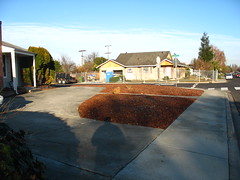
That electric red spray-painted "No" practically radiates rejection. Nada. Nyet. Nein. Fuggetaboutit. Or as the French would say, "Pardonnez-moi monsieur, mais non."

IMG_7155

I'm pretty sure this means the utility company (Pacific Gas and Electric) has rejected our application for a street tree planting. (The application actually goes to Friends of the Urban Forest, but PG&E has approval powers.)

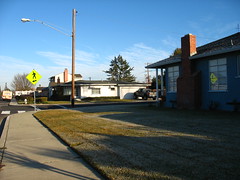
The only square I have available in the sidewalk in front of my house is too close to the gas line and the electrical utility pole for a tree. I thought that might be the case, but I figured I'd give it a shot anyway. Perhaps you can see for yourself why this was never going to work.

IMG_7157

Why am I not sad? I was starting to have second thoughts about the whole thing.

First of all, I wasn't thrilled with the tree choices. I had six evergreens and three (or four) deciduous trees to chose from. (Why isn't there a noun for deciduous?)

Evergreens: Arbutus 'Marina', Tristania laurina, Eriobotrya deflexa, Callistemon viminalis, Melaleuca linariifolia, Magnolia grandiflora.

Deciduous trees: Crataegus phaenopyrum, Pyrus calleryana 'Aristocrat' or 'Chanticleer', Liquidambar straciflua.

Tristania laurina is nice, but rather dull.

Eriobotryae grow everywhere in this neighborhood. I'm tired of them, and I think it's too windy in front of our house for this tree.

I don't like Callistemon or Melaleuca that much. At least the Callistemon would stay small, but every successful Melaleuca around here is too successful. They all look like they're about to burst out of the sidewalk. And the crowns are really heavy. Once that tree got going, I'd have to pay for an arborist once a year.

I love Southern Magnolia but, again, I'm not sure about the wind. There aren't enough Magnolias in my neighborhood on which I can base a sound decision. In fact, I can't think of a single one.

Arbutus 'Marina' is a fine tree, but ultimately I wanted something deciduous that wouldn't shade the front of my house in wintertime. But if I was going with an evergreen, that would be my pick.

The Crataegus intrigues me. I like those small red flowers. But the one around the corner gets sooty mold (or something that looks like sooty mold) during part of the year, and I don't think I want that in front of my house.

I've never heard anyone say anything nice about pear trees. And the calleryana is the Bartlett pear, right? Is there a more widely despised tree?

Liquidambar stryaciflua is okay, but it gets too big. They say 30-45' on the mailer, but I think 60' is more like it.

What was I hoping to get? Aesculus x carnea. 30' tall, nice red flowers in earliest spring, deciduous. What could be better than that?

I was also having second thoughts about the commitment. You really commit to your tree once it goes in. If it doesn't work out for some reason, you're on the hook to make it work out. I'm a little reluctant to invite the City of San Francisco into my life even more than it already is.

But it would have been a good deal if everything had worked out. We'd have gotten the permit, the tree, and the sidewalk cement lifted and removed all for $100. Plus, trees raise property values.

What do you think this means?

IMG_7156

1/28/2007

Aww!

Cuteness overdose!

String 'em up.

Plant thieves.

The Woodside Library Garden

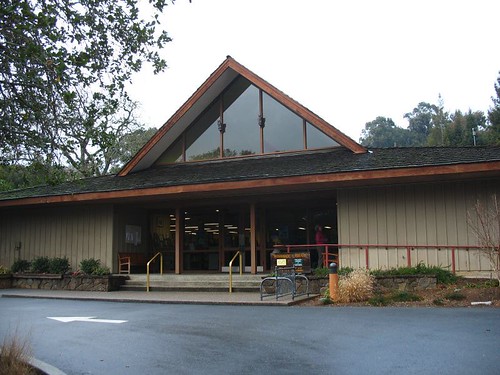
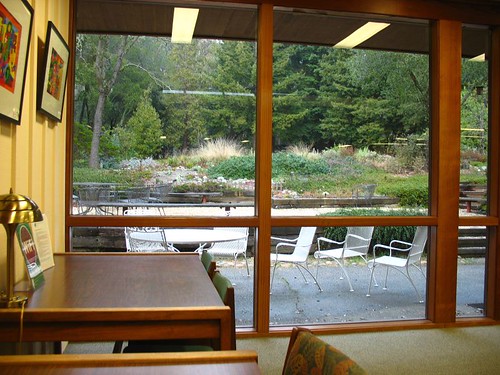
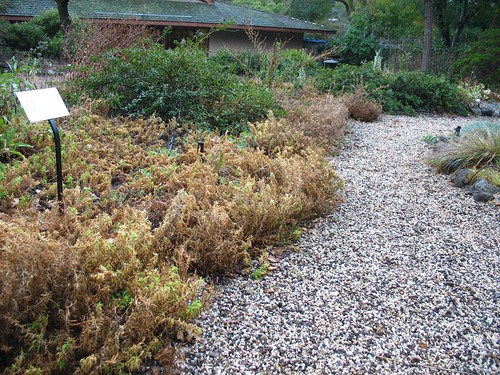
I'd heard there was a nice garden of California native plants growing behind the public library in Woodside.

IMG_7148

There is!

IMG_7143

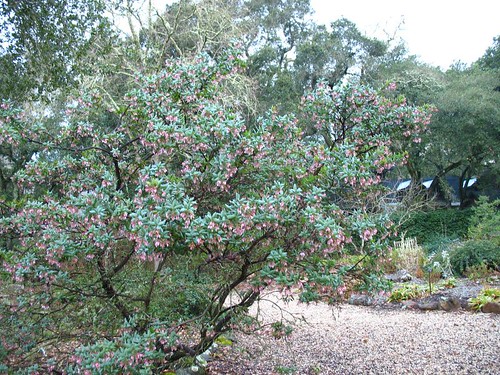
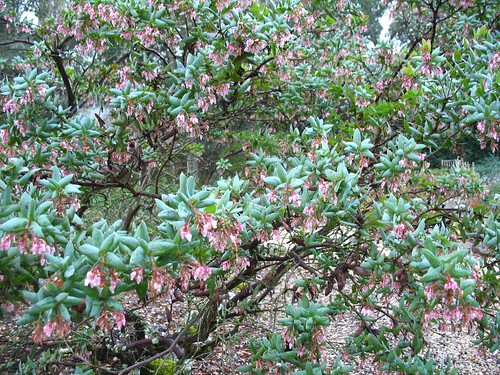
This is Arctostaphylos pajaroensis (Pajaro Manzanita). I have this in my garden and I've pinned all my hopes to it; this is the key specimen planting in my small garden.

IMG_7123

Manzanitas flower in winter and this one flowers pink and white. The red bark on the contorted trunk exfoliates in long strips, and the foliage changes color all year long. This plant has a small native range in Monterey County (a place I love) which has a climate very similar to San Francisco's.

IMG_7137

I have a lot of this blue Festuca idahoensis too.

IMG_7135

Here's Muhlenbergia rigens again. Deer Grass. We just saw it at Stanford.

IMG_7127

I don't have this, but I would like to. I can spend a long time gazing at the picture on page 210 of this book which shows blue elderberry growing with salvia and what could be deer grass. (It's like porn to me. I get lusty.)

IMG_7130

A long shot.

IMG_7128

I have no trouble at all enjoying the seasonality of dead plants. This is Epilobium canum. It would have just finished flowering a couple months ago. When the rest of the garden is shutting down at the end of summer, this one kicks in with small, fluttery reddish flowers that welcome the fall. Then it leaves this golden dead stuff to contrast with evergreen ceanothus and manzanita.

IMG_7131

It spreads unbelievably. Last year, it steamrolled the other plants growing in the same bed and I had to remove it before I could enjoy the flowers. Things will be different this year.

Horses next door.

IMG_7136

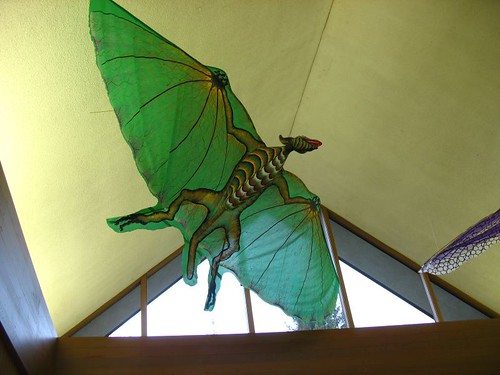
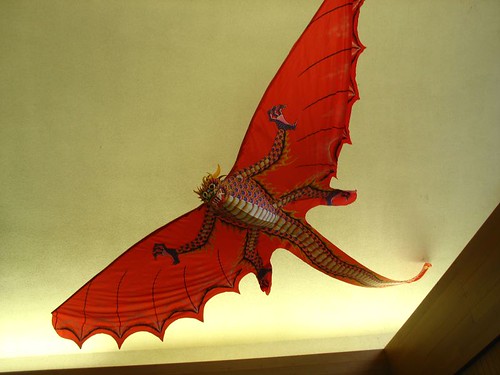
And dragons inside the library.

IMG_7139

IMG_7140

IMG_7141

Andy Goldsworthy at Stanford

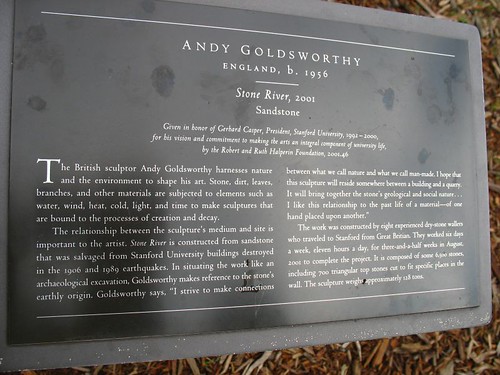
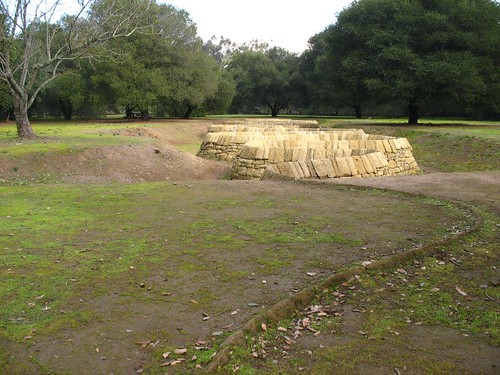
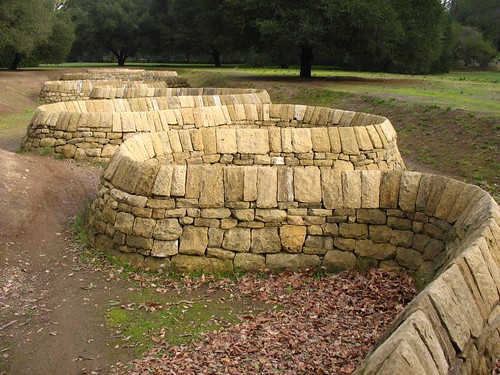
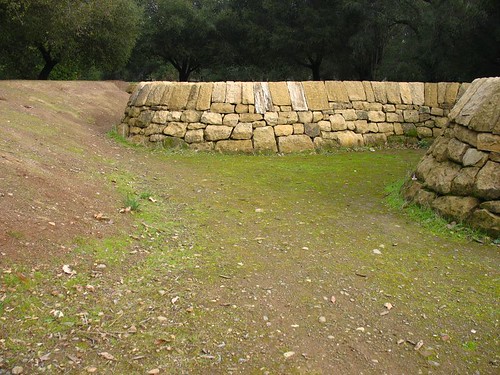
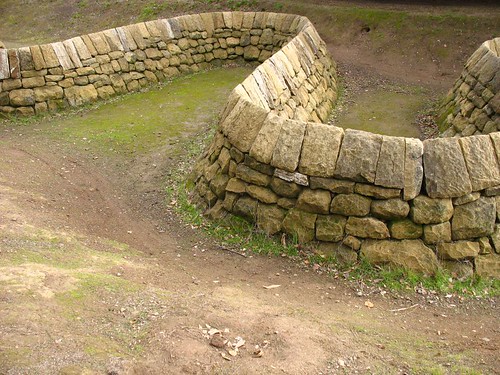
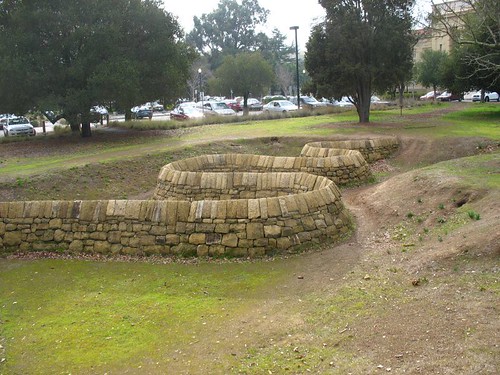
Among my little excursions in Palo Alto yesterday, my friend Emma took me to see the Andy Goldsworthy sculpture at Stanford. I don't have time to blog the whole day right now (later, later), but here are some shots of the sculpture.

IMG_7113

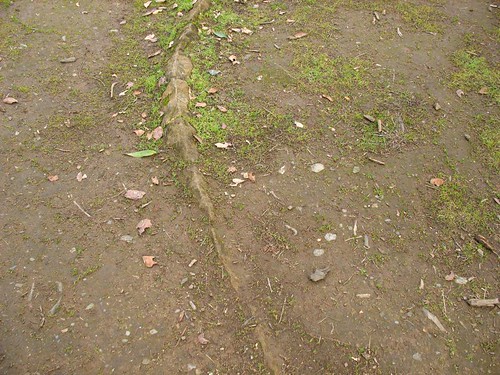
It starts here. See the rocky line in the ground?

IMG_7114

Look up!

IMG_7115

Stanford was built with these standstone rocks, unused since the 1989 Loma Prieta earthquake. Some hadn't been used since the 1906 earthquake.

IMG_7116

You can see the whole thing is below grade. The pointy tips of the sculpture are at grade.

IMG_7117

It's beautiful and groovy and I just wanted to garden it up so bad! But go minimal.

IMG_7119

A single palm tree amid some papyrus. A clutch of frittilaries. An opuntia next to a rose bush. Native wildflowers like poppy and layia. Are these not garden rooms? Of course they are.

IMG_7120

Another time I'm going to blog the landscaping at Stanford. They've done a lot of incredible, really subtle work that deserves to be more widely appreciated. ("It's no wonder they're always asking for money," said my friend Emma, a Stanford alum.)

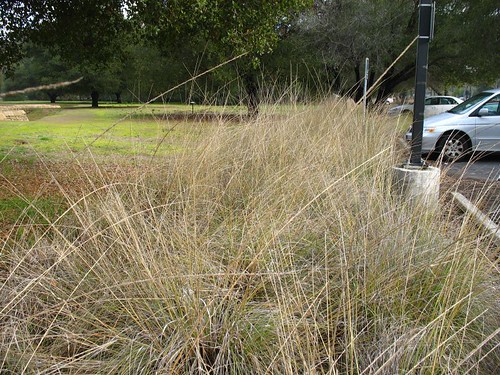
Look at the fabulous Muhlenbergia rigens lining the parking lot!

IMG_7121

Okay, maybe that's not the most convincing picture. Trust me. It's stunning.

1/27/2007

My pruning class, the third meeting.

Warning: I feel cranky and tired right now. I probably should not be blogging. If I say something hateful... I was going to say, "You'll have to forgive me", but of course you don't have to forgive me at all. Most of you don't even know me. Whatever. You might want to come back later and skip this post altogether.

I didn't have to drive all the way to Santa Clara this morning. Which was so nice. I only have one more week of this Saturday class, and then I have a month off before my summer vegetable class begins. I like sleeping in on Saturdays. I miss it.

Anyhow, we worked in Menlo Park today in a really awful garden. Not even a garden. A yard. If last week's theme was fruit trees, this week's theme was renovation. Specifically, how to renovate badly pruned plants.

Perhaps more specifically, and unspoken, how to renovate plants pruned badly by mow & blow crews of Mexican day laborers without any horticulture training whatsoever hired because the clueless homeowners are cheap and just don't care.

Ladies and gentlemen, don't string trim phormium. You'd think that's a no-brainer, but you'd be wrong. I should taken a picture of it. Oh well.

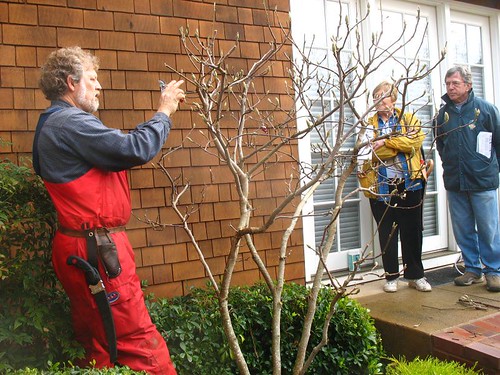
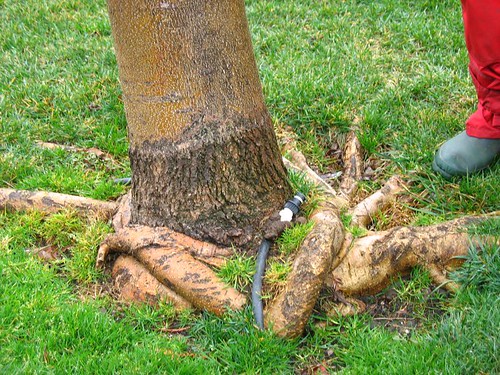
This poor Magnolia x soulangiana will take years to recover. But recover it shall. Teach explained Magnolia are very forgiving of bad prunes.

IMG_7056

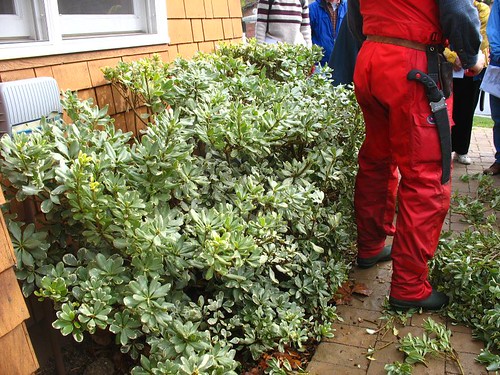
It thrilled me to watch him de-box this pittosporum.

IMG_7055

It made me want a pittosporum of my very own. Not really. I never want a pittosporum. But doesn't it look nice like this? He talked about doing this to escallonia, abelia, and buxus as well.

What is teacher wearing? He said West Marine makes the best rain gear. No need to try anything else. You'll just be wasting money.

We walked down the street and he showed us sad things. Like this. (Tho' the dog shit on the drip line makes it fabulous, doesn't it?)

IMG_7051

I feel angry when I see things like this. I was going to say, "In a perfect world, someone would get punished for this." But, really, in a perfect world, this would never happen in the first place. Like I said, I'm cranky and kind of tired. Am I making you cranky too?

Let's just get out of here.

But, wait, one more thing:

IMG_7048

See those two tree trunks back there? Those are two separate trees. One is bigleaf maple, the other is coast redwood. They're growing 12 inches apart. Enough said. Let's go.

***

After class, I visited a friend and we went to the Gamble Garden, and then we visited the Woodside Library which has a native plant garden in the back. I'm going to blog them in separate posts so my foul mood here doesn't seep over into those posts too. But first, I'm going to take a little nap or something.

Later!

Last week's class here.

1/25/2007

Disneyland

I'm reading an old issue of Pacific Horticulture. Fall 1996, to be exact.

I'm obsessed with Pacific Horticulture. There are several boxes of back issues stacked in the main classroom where I take most of my horticulture classes. You know I totally raid them. I think maybe 30% of my horticulture education has come just from reading Pacific Horticulture.

Anyway, I'm reading an article about Morgan (Bill) Evans, garden designer of Disneyland. Here are some excerpts:
Eager to explore the world beyond southern California, Bill became a cadet in the merchant marine in 1928 and began an around-the-world trip on the SS President Harrison. This and subsequent journeys afforded him the opportunity to begin lifelong contacts, collect exotic seeds for his father, and visit arboreta in Singapore, Hong Kong, the West Indies, Trinidad, Tahiti, the South Pacific, Australia, Europe, South Africa, the Suez Canal--twenty-five botanic gardens in all. He returned to southern California to study at Pasadena City College and then transferred to Stanford to major in geology. Bill left college to help his father turn the family garden into a nursery business. What he thought would be an interim detour from a quite different career turned into what he calls a "benevolent entrapment that continues to this day."

A benevolent entrapment! I can identify with that!
"[Bill's dad] Hugh Evans was the first to grow hibiscus to any extent in California, and his garden contained 150 varieties, many of which attained tree-like proportions. Outstanding garden introductions emanated from Australia, New Zealand, and South Africa. Growing sturdily in their new home were Aster fruticosus from South Africa, the Chamalaucium ciliatum from New Zealand, the Abelia schaumannii from China, the Hiberrtia volubilis from Australia... Other plants tested and introduced to the California garden under Bill's discriminating eye include Schefflera pueckleri (Tupidanthus calyptratus), Chamelaucium uncinatum, Tibouchina urvilleana, thirty-five species of araliads, thirty species of bamboo, twenty-four bougainvilleas and Philodendron 'Evansii', a cross between P. speciosum and P. bipinnatifidum carrying the family name."

Bill got a teaspoonful of Ficus microcarpa seeds from the the director of the Foster Botanic Garden in Honolulu; he was the first to sell that tree in the mainland United States. Heh, heh--whoops! That tree's a big invader now.

The article goes on to talk about how Bill's brother Jack started designing gardens for the Hollywood stars and how this led to a meeting with Walt Disney...
"It was 1954 when Bill and [brother] Jack were called down to the Disney studios in Burbank to meet with Walt about a park he wanted to build. Walt quickly came to the point: "How about you fellows landscaping Disneyland for me?" The schedule was to be rigorous, with the opening set for July of 1955--just one year to transform 80 acres of Anaheim orange groves into a Magic Kingdom.... The master plan was finalized in January 1955. As Ruth Sellhorn, landscape architect for the Main Street, Town Square, and Tomorrowland portions of the project said, "When one considers that no steel framing was started until December 1954, it is unbelievable that this 160-acre project could have been developed in this time."

Disneyland construction quickly exhausted all of the regional nurseries of plant stock and Bill soon searched estates, old gardens, and even city parks to meet the demand for mature specimen trees. Luckily, Los Angeles was building the Santa Monica, Pomona and Santa Ana freeways through tree-lined neighborhoods. Bill describes how they went along the projected roadway and tagged trees slated to be removed. They paid twenty to twenty-five dollars for each tree to the contractor to avoid damaging the trees, then went in as fast as they could to box the trees--some weighing up to ten tons--and give them a home in the new park. Many of these trees ended up in the Jungle Cruise, Town Square, and the Hub, while in Frontierland on opening day there was nothing but five-gallon trees."

Moving big trees:
One of the most striking trees in the Jungle Cruise started out in the Polynesian Terrace restaurant. Bill describes how it was moved: "We had this big Erythrina caffra as a focal point for the patio area. Great flowering tree. But Walt wanted a fake tree there so he could have music and lights. We wanted to save this tree. We couldn't box it; it was too far away from where a crane could reach it. We decided to take a chance and move it bare root. We drilled two inch and a half holes in the trunk, one in a north-south direction, and the other east-west, and put steel pins through the tree. We took a fire hose and washed all the soil off the root system. I took a chainsaw and pruned back the roots to a more manageable twelve feet across. Then it was picked up by the pins and put next to the boat landing. We filled the holes with epoxy and hardwood dowels. It flowered about two months later, happier for the move.

[Note: I'm not sure the tree flowered because it was happy! It could have flowered because it thought it was going to die! "Thought"? Sensed?]
Bill follwed that success by moving maples, oaks, and pines in a similar fashion. Two thousand trees were moved for Walt Disney World in 1971. The largest of these was the Liberty Oak, a fine example of Quercus virginiana with a sixty-five foot spread and a root ball thirdy inches deep and twenty-two feet across. It was carried by the two-pin system five miles from its original location to Liberty Square where it grows today.

Amazing.


Added:

A website devoted to the Plants of Disneyland.

Bill Evans' biography.

1/20/2007

Pruning class

I enrolled in a pruning class at a community college several miles south of San Francisco. Today is the second of four class meetings. (A rundown of last week's class in Part IV of this post.) We're assembling in a backyard fruit orchard in Santa Clara to prune fruit trees. I have to be there at 9 a.m.

I shot a little video of me driving south down 101, but accidentally deleted it before uploading to YouTube. Whoops!

Santa Clara. I was born near here and lived here for 18 years, but I haven't got a clue what distinguishes Santa Clara from the cities and towns that surround it. Everything runs together, here in the heart of residential Silicon Valley. And for the most part it's not especially pretty.

I was a little kid before there was a Silicon Valley. I remember orchards and fields and roadside produce stands. The soil under the asphalt and expressways and factories is among the most fertile and rich you could ever hope to find. But Bill Hewlett and David Packard started something in their Palo Alto garage the old orchards could not withstand, and the rest is history.

Today Santa Clara feels dreary and dated in that uniquely suburban way.

IMG_6814 IMG_6813

Rocks and agapanthus figure prominently in the local mise-en-scene.

IMG_6818 IMG_6816

(FYI: these ugly, low-slung, knock-ups sell in the $800,000 to $900,000 range.)

We're here to prune fruit trees in the backyard of this house.

IMG_6821

My teacher owns it. He used to live here, but now he rents it out.

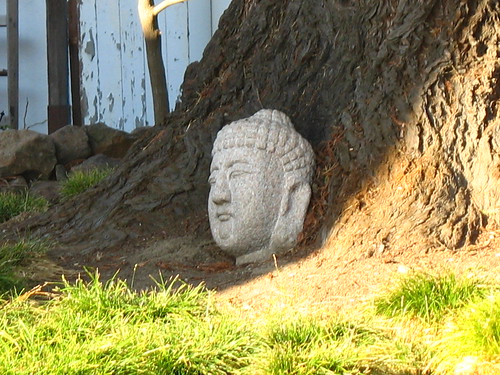
Note Buddha head under Sequoia sempervirens. So California.

IMG_6822

You expect your hort teacher to show up in a truck, but our's drives a beamer!

IMG_6823

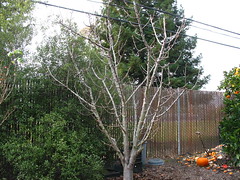
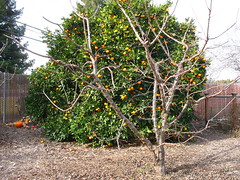
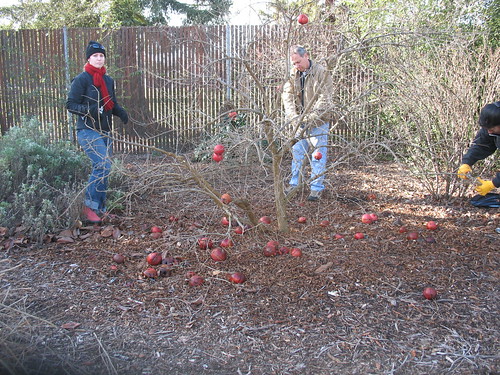
Okay, we're not here to compare cars; we're here to prune trees. Let's get down to business. Fruit trees. Lots of them. Apples, cherries, peaches, oranges, pomegranate.

IMG_6870 IMG_6871

IMG_6872 IMG_6868

IMG_6867 IMG_6866

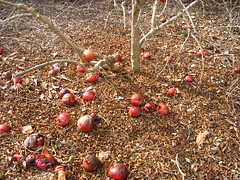
This woman thought I was "Gross!" for tasting seeds from a fallen, partly rotten pomegranate. As a rule, I despise people like her and avoid them at all costs. (The seeds were delicious.)

IMG_6838

However I do deserve some disdain because I picked an orange without permission and ate it. How unbelievably rude of me. Driving home afterwards, I could not believe I did that! I must have been rendered temporarily insane by the sight of a bountiful orange tree. We can't grow them in San Francisco. We can hardly grow any fruit in San Francisco. Lemons (Meyer, and better, Eureka) and pineapple guava work best. Anyway, I deserve a spanking for picking an orange.

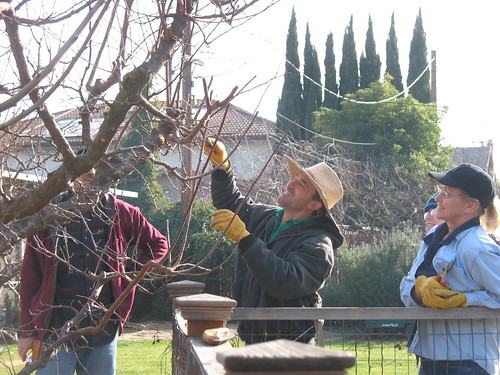
What is there to say about pruning fruit trees? Rule of Thirds. Don't remove more than one-third of a tree's crown in any year. Cut back to lateral branches that are at least one-third the diameter of the wood below the lateral. He couldn't remember if there's a third rule of thirds and I wouldn't know if there is or not.

Teacher shows us how it's done. Isn't he cute?

IMG_6833

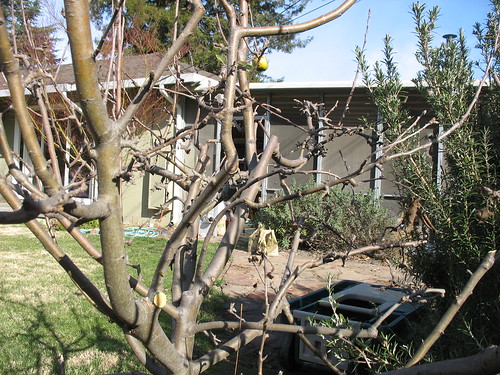
We pruned the trees to keep them small and healthy, cutting out dead and damaged wood and always leaving the collar so the tree can close the wound.

Before: IMG_6845

After: IMG_6847

These pots are groovy as hell.

IMG_6877

IMG_6878

IMG_6880

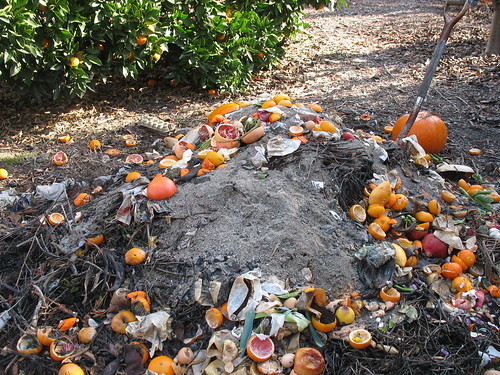
I'm always taken aback by the sight of an exposed compost pile.

IMG_6842

Rats? Raccoons?

IMG_6843

I used to add charcoal to my compost pile too. But I thought it was a no-no.

He has a beautiful garden with a unique style that I can't capture on camera with 30 horticulture students milling around. I'll just say the garden is simple and understated and feels very nice to be in.

After a few hours, I felt satisfied. This was fun, and I'm looking forward to next week. As I understand it, we'll be pruning ornamentals in Palo Alto.

I rarely drive this far south of San Francisco. Since I'm in the neighborhood, I call my dad to see if he wants to have lunch. He still lives in the house where I grew up. He's at a Macintosh workshop when I call, but he'll be home in an hour. What's more, he's delighted to hear I'm pruning fruit trees because he needs some help with his fruit trees--apricot, apple, pear. When I was a kid, we also had loquat, miniature orange, and two kinds of plum.

I have only vague ideas about where I am when I start out in Santa Clara, but having grown up in this area, I find my way intuitively without getting on the freeway. It takes me 30 minutes to reach my childhood home.

Here it is: the house where I grew up.

IMG_6957

A neighbor told us the house went up in one day in 1970. My dad bought it in 1973 and he's lived there ever since. He's not home and I don't have a key. I hop the fence into the backyard.

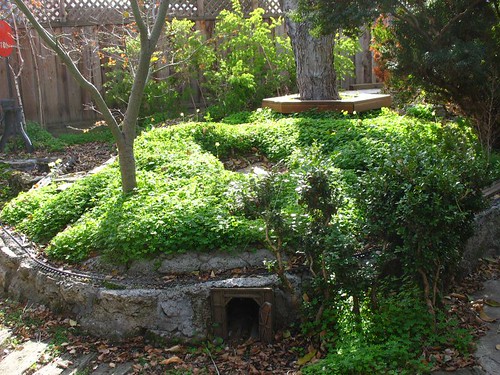
My dad's got a thing for trains. These narrow-gauge train tracks circle the house, cross trestles, pass through tunnels and exert their trainy charm on all who are susceptible to it.

IMG_6956

IMG_6967

IMG_6962

Dad's got his work cut out for him getting this place in shape for his summertime train club get-togethers. A bunch of old geezers come over to drink beer and watch the trains roll. The next weekend, they do it at another guy's house.

The garden's gone to pot. The pond is empty and oxalis is the key planting.

The people dad bought the house from did a lot of interesting landscaping during the few years they lived here.

IMG_6966

Lots of paths, raised beds, big trees, interesting lines and textures. Most of it is lost, but no doubt my immersion in this backyard affected me deeply. This was a happy place during my childhood.

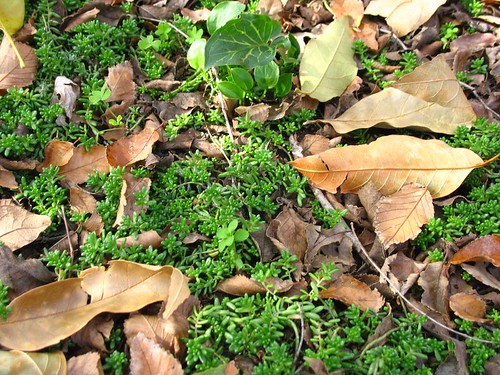
This sedum under the leaves is at least 34 years old.

IMG_6968

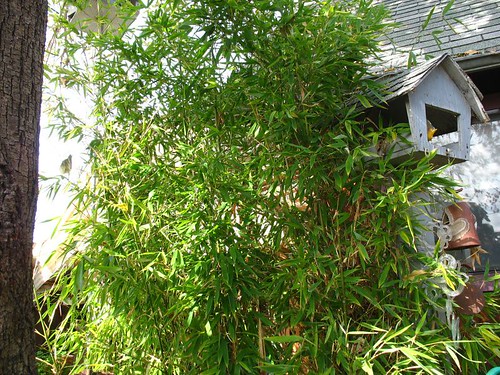
As is this bamboo and that birdhouse.

IMG_6973

And whatever that dark green shrub is. I've never liked it.

IMG_6964

I can see why he needs help with the apricot tree. What a mess!

IMG_6959

He's still not home, so I go for a walk.

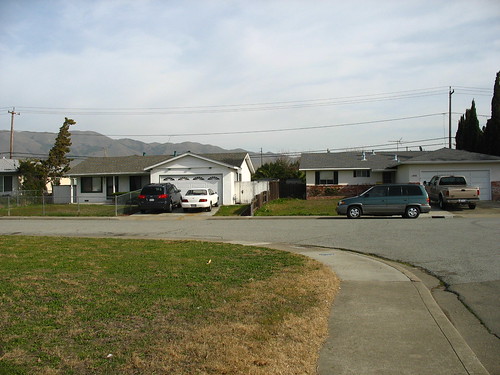
Our house was always special. The rest of the neighborhood looks like this.

IMG_6898

For miles.

That cortaderia's been here forever. I remember playing in it as a little kid.

IMG_6896

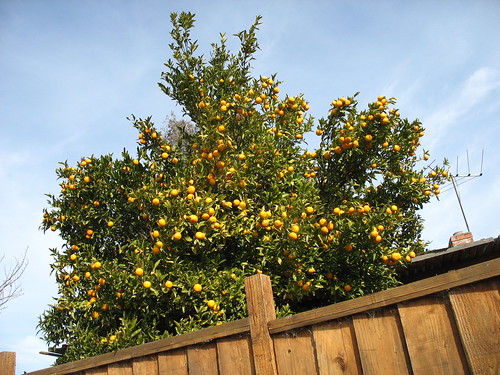
Despite the recent cold weather, everyone's citrus looks fine.

IMG_6909

IMG_6949

This house has been this color since I started walking to school in 1974.

IMG_6938

It looked cute in 1974. Now it's just shabby.

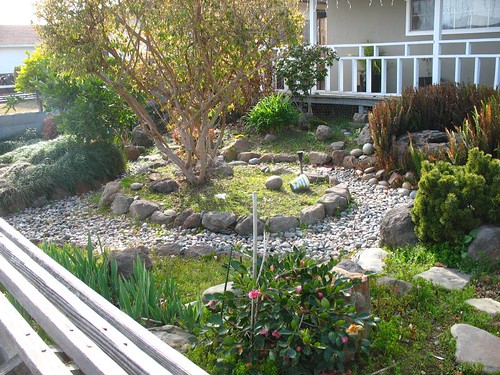
Tucked in between the banality, interesting signs of horticultural life.

IMG_6942

IMG_6937

A lonely Nolina.

IMG_6940

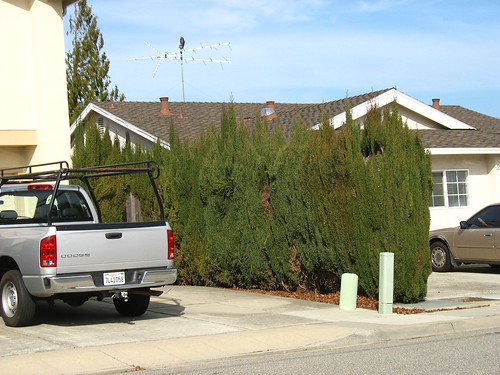
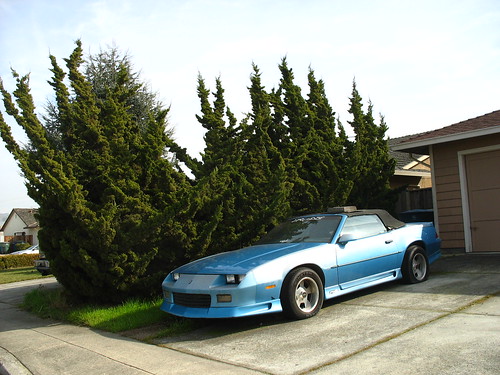
Hedges are the main thing.

IMG_6924

IMG_6923

IMG_6925

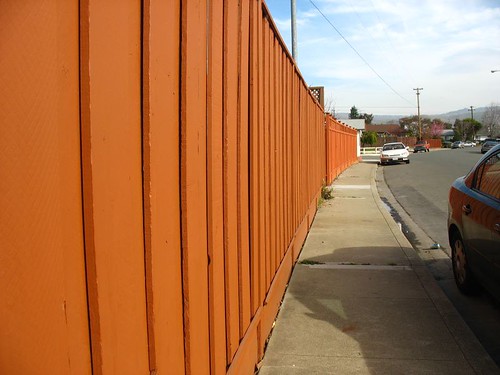
And long fences.

IMG_6952

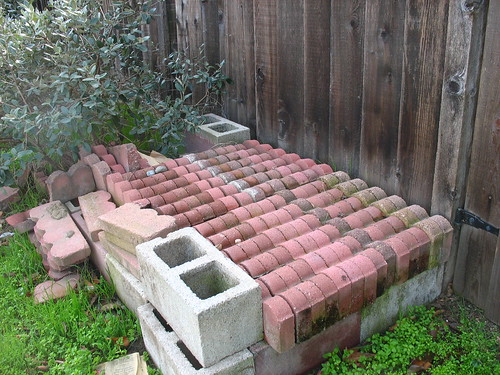
This picture speaks one million cruel words about the suburban landscaping mind:

IMG_6928

Look what's growing next to the bricks...Feijoa sellowiana. The pineapple guava that grows so well in San Francisco.

IMG_6929

My dad calls to tell me he's home. On the way back to his place, I walk through my old elementary school.

IMG_6911

The kickball diamond--a site of much humiliation.

IMG_6913

This is cool.

IMG_6920

IMG_6921

I have a John Cage moment.


My dad's new best friend, Mr. Bojangles. Dad's girlfriend found him and brought him here. He's a sweetheart.


(Note: This is my "here kitty, kitty" voice; not my normal speaking voice.)

Inside, I'm reminded of why I don't visit very often. A bachelor with manic-depressive tendencies and an artist's temperament equals chaos.

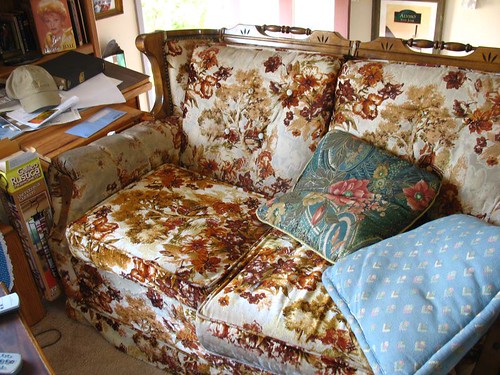
And fabulous taste in furniture.

IMG_6985

IMG_6998

IMG_6984

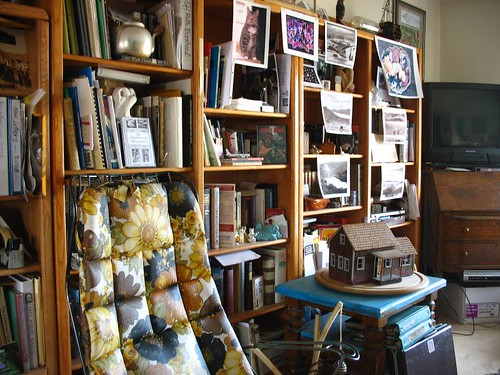
Wait, what's that? Apparently my dad carved Dorothy Gale's house out of wood "a long time ago". But since I have never seen this before today I am skeptical about the "a long time ago" part.


It's kind of scary that we both know Dorothy's last name is Gale.

He's a wood-carver my dad.

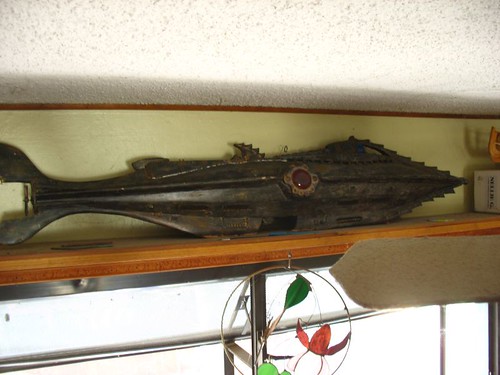
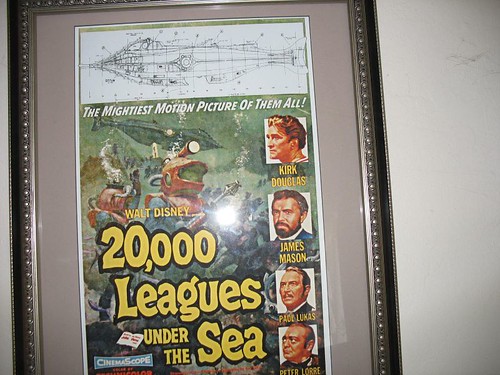
He carved the Nautilis from 20,000 Leagues Under the Sea. It has lights and a motor and everything.

IMG_6988

It was his favorite movie from childhood.

IMG_7002

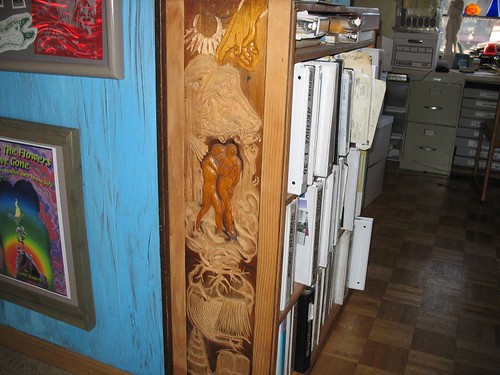
The Adam and Eve bookcase always makes me smile.

IMG_7003

Please don't ask me why he painted the wood paneling blue. Some questions cannot be answered.

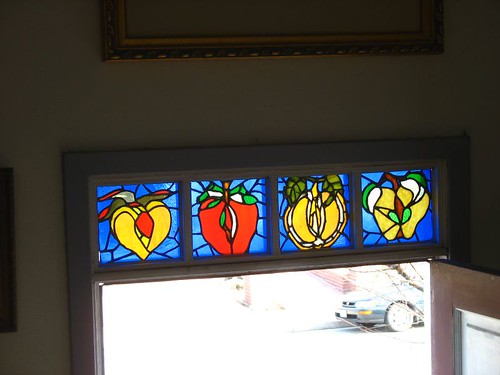
He had a stained glass phase in the 1970s.

IMG_6990

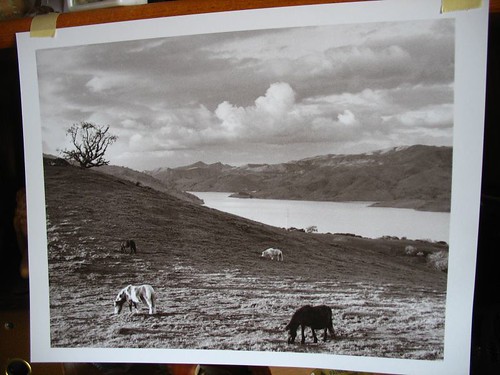
But mostly he's a photographer. These are the hills just two miles out of town.

IMG_6991

IMG_6992

We drink coffee and talk. He videotapes me pruning his fruit trees. He actually directs me pruning his fruit trees. "Let me focus in on that branch and then you come in and talk about it." Ugh. I try to get through it as best I can, and I'm on my way.

I take Highway 280 home.


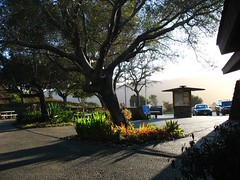
Along the way I stop at a couple rest stops.


IMG_7007 IMG_7017

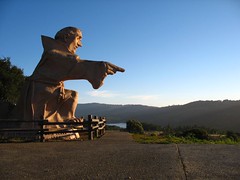
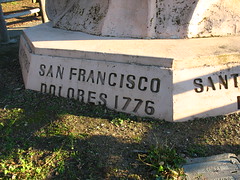
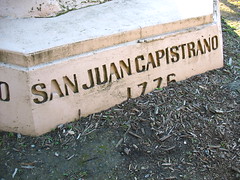
California's Missions are carved into the base of the Father Junipero Serra statue. I spot two of my favorites.

IMG_7028 IMG_7026

I wish I could take you to San Juan Capistrano. But I visit Orange County even less often than I visit Santa Clara County.
"Arthur Shapiro, who teaches entomology at UC Davis, has a standing offer: If you bring him the first cabbage white butterfly of the year caught outdoors -- and that part is important -- in Yolo, Solano or Sacramento counties, he'll buy you a pitcher of beer."

Do you know the word "phenology"? Learn about it at the link.

1/19/2007

In which I amuse myself


Yeah!

1/18/2007

I don't know what's going on in my birdbath.

Do you?

IMG_6802

The birds are leaving all this crap behind. And by crap, I do not mean shit.

Are they seeds? Why are birds leaving seeds in my birdbath? (I guess it's their birdbath, but I have title to it, right?)

Are they softening the seedcoats? Birds don't care about germinating new plants. They just want to eat, right? Maybe the birds know soaking these seeds makes the seeds taste better. Birds can't taste capsaicin, but maybe there are other tastes birds cannot abide.

Softening the seedcoat might make the seed more digestible. But how would a bird know that? A bird doesn't understand that it digests its food. And birds eat plenty of seeds without soaking them first. How would they know these seeds need soaking?

And what about the seed? What's it getting in the bargain? (And what kind of seed is this anyway? I can't take a good picture of it. It's kinda spotted, and when I cut it open, it's white inside.)

Does the seed expect a bird to soak it in water before it germinates? Birds and seeds evolved without birdbaths. Where would a bird find water right now if my birdbath wasn't here? It's been cold and frosty. There is no standing water anywhere right now. There would have been streams without all these buildings, but leaving food in streams doesn't seem like a good idea to me.

Am I being too rational about this? Birds have tiny little brains. Maybe they're crazy. Maybe the bird vomited these seeds in my birdbath. Eww!
P.S. Please share your ideas about this in the comments.

1/16/2007

Woodsy Owl

is going to be incinerated.

Link and link.

1/15/2007

IMG_6723

Like a lot of people who live in tourist destinations, I rarely think to visit the beautiful places that make my city famous. The beauty doesn't just belong to me as a San Franciscan or a Californian. It belongs to everyone.

In that spirit, on this MLK Day, would you like to come along for a visit?


You recognize this place, don't you?

IMG_6706

Alcatraz. My dad's godmother's father was a sign painter on Alcatraz during the entire time it operated as a prison. They lived on the island. My dad's godmother frequently took my dad and his twin brother to stay with her family on Alcatraz for weekends. There are endless family stories about the trouble they got into there.

My grandfather worked for the Department of Public Health when he first came to California. As the county doctor, it was part of his job to operate on Alcatraz prisoners when they needed surgery. I've had all kinds of behind-the-scenes tours of over the years, including the surgery suite where my grandfather operated. The operating tables are still there.

The Garden Conservancy has taken custody of the gardens on Alcatraz and hired a gardener to renovate them. They were once quite beautiful. I would give my eye teeth to have that job some day!

Angel Island. My aunt was a docent there for awhile.

IMG_6708

San Francisco Bay's version of Ellis Island. The government kept Chinese immigrants here for months, years while determining whether or not to grant them entry to America.

Adrienne Rich:
[N]o icon lifts a lamp here
history's breath blotting the air
over Gold Mountain a transfer
of patterns like the transfer of African applique
to rural Alabama
voices alive in legends, curses
tongue-lashings
poems on a weary wall

And when light swivels off Angel Island and Alcatraz
when the bays leap into life
views of the Palace of Fine Arts,
TransAmerica
when sunset bathes the three bridges
still
old ghosts crouch hoarsely whispering
under Gold Mountain


My own San Francisco story is a cliche. You've probably heard it before. I first moved here as a runaway when my father chased me out of the house after finding out I'm gay. I went from being a runaway to being a homeowner. How's that for the American dream?

The dunes at the beach went into restoration in the mid-1990s when the park service took custody of the land from the military after base closures some years before. Volunteers planted coyote bush, lupine, artemesia and coast strawberry. Once upon a time, this was what a lot of San Francisco looked like.

IMG_6717

I love the old military buildings.

IMG_6727

The big container ships sail in and out all day long.

IMG_6753

Other kinds of ships sail in and out all day too.


I highly recommend the bay cruises offerred by the various ferry lines at Fisherman's Wharf. One goes just outside the Golden Gate; it's quite thrilling.

Another time we'll go across the bridge. But this is as far as we're going today.

IMG_6741

I want to visit the Palace of Fine Arts too.

IMG_6756

IMG_6757

IMG_6776

IMG_6759

Surely San Francisco's most exquisite landmark.

IMG_6764

IMG_6767

Acanthus mollis planted beneath Corinthian columns!

IMG_6777

This is the plant whose foliage inspired the Corinthian capital.

IMG_6773

Coprosma repens, Mirror Plant. Popular with the Victorians. There's a lot of it in Golden Gate Park.

IMG_6779

Maytenus boaria, the lovely Maytens tree.

IMG_6783

Around the park, beautiful homes with some nice front gardens, all professionally done I'm sure.

IMG_6788

IMG_6789

IMG_6794

IMG_6799

1/14/2007

In which I write an absurdly long blog post while stoned.

Let me try to make it more digestible.

Part I. In which I am alone and make brownies and garden.
Part II. Where I note that my devotion to the Botanical Garden has crossed a line.
Part III. Where I garden some more and cut tree fern fronds.
Part IV. Where I take a Saturday morning pruning class at a junior college and what I learn on the first day.

Part I

Guy went off to visit the 'rents in Florida for a few days, and left me home alone. He had some use-or-lose vacation time, and I did not. So he gets to wear shorts outdoors and sip gin and tonic while I'm home alone huddled under two comforters.

I made a pan of pot brownies and did some gardening today. I planted two Dryopteris erythrosora (not the 'Brilliance' cultivar, just the usual), divided some Asarum caudatum, cleaned pots and tools, and piled several handfulls of compost over the spreading stems of a seasonally leggy Plectranthus. I love Plectranthus. It solved at least three big problems under my deck--covering ground, lightening darkness, and unifying a hyper-texturual space. Seriously! I'd show you a picture, but I can't seem to find one. I'll find it later, and post Before and After shots.

I went to the nursery this morning to buy new hand pruners to celebrate the occasion of the pruning class I'm taking which started yesterday, and which I neglected to tell you about. Okay, we'll get to that later. I only went to the nursery for pruners, but I also walked off with a bag of seedling starter, two Camissonia cheiranthifolia ("Annie's Annuals, back at last"--you know, since November), and three discounted strawberries.

They're, like, Fragaria 'whatevers', several-months post-season, crispy red and brown, and dry as a bone, but perfectly good filler potential for out-of-the-way spaces and attracting birds. And hopefully naturalizing. I fantasize about all the strawberries I have getting together and creating the most amazing strawberry ever which I will discover growing in my backyard and be forever changed. Changed into what, I don't know. Besides, I'm not even sure if these commercial strawberry hybrids are fertile or sterile.

I buy a lot of the discount plants and they're always really dry, so I tip them out of their pots and let them soak in a bucket of dilute Miracle Gro for an hour or so before planting.

Regarding the seedling mix, I should sow seeds for my vegetable garden next week. Or, rather, just the tomatoes. The squash and melons can wait. I want to plant out vegetables the weekend nearest March 15. The little guys'll have moderate sunlight for two weeks before they get full sun back for 6 months.

Seriously, April 1 is a great day around here. Most years, it's the first day of summer. I get full sun for six months, from April 1 to around mid-October (with a three week break for winter every August). The period between mid-October and mid-March is grim, and I don't want to talk about it.
Part II

The bag of seedling mix also prompts me to mention that I am now at the point where I actually bring plants to the Botanical Garden, not just carry them away.* I sowed 10 Banksia coccinea seeds I bought on eBay in a plastic salsa tub about two-and-a-half weeks ago, and today, I could see little seedling roots threaded through the peaty puck. I only want one of them for myself; the rest I'll take to the Bot Garden. I've already bought seeds from several other species of Banksia and Grevellia, and they're on their way to me now.

(*In fact, I crossed that line a few weeks ago when I gave a gardener some Echium wildprettii I sprouted. He's actually going to plant them in the garden. Plants from seeds I sowed! In the Botanical Garden! I feel so honored. Even tho' Echium wildprettii is really easy, and basically functions as a high falutin' bedding annual. Germinating the Banksia seeds for them makes it official. I'm totally committed to the Botanical Garden.)
Part III

I used my new pruners to snip three fronds off the bottom of a Tree Fern I bought two years ago. It's not a tree yet, but I'm eager for it to become one. Right now it's at that awkward stage ("The Terribel Two's", I guess you could say [I know that apostrophe doesn't belong there gramatically, but I think it belongs because the Twos are, you know, terrible). Ahem, the tree fern's at that awkard phase where you have to force your way past it when you walk down the garden path. Eventually the fronds will be overhead where they belong. Won't that be nice? One's own tree fern to walk under.

I cleaned up the area next to the tree fern to get it ready for the Fuchsia boliviana 'alba' I've been raising from seed and which will be ready to plant out in a few weeks. The clean-up entailed another use of the new pruners: to destroy a garish azalea I've been hanging on to for years. Buh-bye!

I'm eager to see my tulips pop up. I feel like I had tulips blooming this time last year. Here, then, is one of those opportunities I have to remind myself that gardening in San Francisco means letting go of seasonal expectations. Our weather is far too mild, and the weather changes too inextreme to guarantee any promises. Things happen when they happen and you deal with it.

Part IV

Okay, so my pruning class. It's a four-Saturdays-in-a-row thing, at a junior college in Los Altos. The place seems so much farther away on Saturday mornings at 8 a.m. when I'm trying to get there than it does during normal hours. Anyway, I got there. It was very cold. I could feel my toes going numb standing around waiting for someone to open the classroom. I don't really own any winter clothes. My socks are a joke.

We met for one day of theory, followed by three days of practical work in local gardens owned by my instructor's clients. Next week, we work at a fruit orchard in Santa Clara, and after that, private homes in Palo Alto. Most of the students are older than I am...like late 40s to mid-50s. Compared to me who's 37. Not so young myself anymore. There were about 30 students. Only two or three were hort students, several more were wannabe garden designers, and a few were thinking about changing careers to some kind of green industry job. About five said they were hobbyists, like me.

The teacher was cute! I thought he was gay, but then he said he was married and referred to his partner as a "she". Silly, but he had an earring in his right ear, and that's part of what made me think he was gay. Totally embarrassing to admit that...

Anyway, he' really cute and he's talking about plants, so you know I'm having a good time. He's a local tree professional and a member of the International Soceity of Arborists. He's had his own business since the early 1990s and he employs 8 people. And he's here to teach us about pruning. He talked about his tree business, and how it's all about the roots. He described the physical aches and pains associated with pruning trees every day, day after day, for several years. Sore wrists, sore arms, sore shoulders, sore back. And, my favorite, hands clenched in pruner grip while sleeping.

He doesn't do any pruning nowadays. Last week, a client flew him to Los Angeles to pick out $15,000 oak trees in 64-inch "buckets". He talked for about two hours about what time of year to prune, when to prune (safety, then health, then beauty) and all the other usual stuff. He said beautiful pruning results naturally from doing what's best for the tree. He said to prune fruit trees just as you would any other tree to get the best overall results. No mention of building a low crotch, but that was sort of implied. He had nothing good to say about anvil pruners (I asked). He said AGR makes the best pruners, followed by Felco. And he said to always use a scabbard.

He talked about how dangerous ladders are, and how ladder work is the reason why arborists pay the highest worker's comp rates of anyone. The three-point orchard ladder is much safer to use in the garden than the usual four-point ladders most homeowners have.

He described the hand pruners, the tri-edge toothed saw, and the 4' pole arm pruners as the three essential tools of the pruner's trade. Then he made it four, and pulled out a laser pointer with a green light. He said it's essential to have a good laser pointer when discussing work with clients. He said the green light shows up better than the red light in part-sun conditions. And he said, "Buy the expensive laser pointer, not the cheap one."

He wore a big, blue, poofy North Face coat, typed messages into his Treo, and sipped orange juice (with ice) from a big nalgene sippy cup. He gave out post cards from his business (and made sure everyone got one) and told us he knows his website looks dated (too much old Flash).

I was going to get something to eat afterwards and take you to see the Gamble Garden, but I was too tired. I went home instead. Next week, I'll take you to the orchard. At some point I'll get to the Gamble Gardens. There's also a hillside planting of natives among the junior college's gardens I want to show you. All in good time.

1/10/2007

Ask for an ocean view...

Nina takes it to the next level. Check it out!

Don't miss the travel archives, particularly Sicily '06 and Canadian Rockies '06.

It's the time of year...

...for seeds! I just added four of my favorite seed-sellers to the links list. They all have interesting websites and/or catalogs you might find useful and/or enjoyable.

(They're all in California, except for Territorial which is in Oregon.)

J.L. Hudson, Seedsman: I keep this groovy old-school catalog in the drawer of my nightstand. He also sells gibberellic acid kits.

Peaceful Valley Farm & Garden Supply: I did my soil test with these folks.

Swallowtail Garden Seeds: Great website with lots of pictures; they sell some hard-to-find seeds too.

Territorial Seed Company: I ordered most of my vegetable seeds from them.

Two links I've had up for awhile:

Seedhunt: This woman works at Suncrest Nursery (wholesalers) in Watsonville and runs her own seed business. She sells rare CA natives and exciting restios, among other things.

Theodore Payne Foundation: Dedicated to preserving and disseminating CA natives and wildflowers.


Please feel free to list some of your favorite seed sources in the comments.

1/08/2007

Can you identify birds?

I'm really impressed with Firefly's birding abilities. I bought a book to help me recognize avian visitors to my backyard, but it hasn't panned out. I see birds that aren't in the book, and the birds that are in the book don't seem to come around here. Except for the blue jays, and possibly some finches.

So I was happy to see Anne Raver's column in the New York Times. She's really good at birds too. She references the Cornell Lab of Ornithology website, and I want to say, "Why not just call it 'Cornell Ornithology Lab'?"

Well, they didn't ask me. Anyhoo, I've spent quite a lot of time at this dandy site, and it's much better than the book I bought. I want to alert you to it too in case you don't read the NYT. Because let's face it. Their Home and Garden section rarely has anything to do with actual gardening and that really bugs me.

1/07/2007

January's prelude to spring.

I planted the amaryllis in the white pot first and it took forever to come up. Then I planted in the one in the blue pot and it came up right away. I meant to stagger them, but now I have two at the same time. There are worse calamities. (They don't live outdoors...I just thought they'd like some direct light for a couple hours.)

IMG_6652

Cistus skanbergii usually has one or two flowers on it all year, but all the sudden I have a dozen this morning. By early spring it'll be covered with little flowers. Should that be Cistus x skanbergii? I'm too lazy to reach under the bed for Sunset.

IMG_6654

Next year I'll make a small pot of the strappy black ophiopogon and bright green ipheion. Don't you think that's a nice, easy combination? Bright green and black? And the ipheion makes that little blue star-flower.

IMG_6671

The little seedling back there is Heracleum lanatum (Cow parsnip)--a native I picked for habitat interest (that is, to attract bees and butterflies). I tucked a few seeds here and there and then sowed some in pots for good measure. Now I have five of them coming along. Which is fine, but they're biggish plants. I'm not sure how that's going to work out.

IMG_6666

Small narcissus of some sort. I've already forgotten what to expect from these.

IMG_6655

Two kissers kissing. Very spring-y.

IMG_6681

Noticing how old you look. Very winter-y. I'm getting puffy! And where's my chin going? Come back, chin!

It's hard to take a picture of yourself kissing.

The official history of the Garden Club of Palo Alto...

...[A]ll 85-some years of it, is full of library book donations, checks sent to the Save the Redwoods League, and all sorts of landscaping projects around town.

But between the lines of its staid minutes is some of the stuff of soap opera -- there's no real explanation, for example, of what led to the fuss of April 1924, when all the club's male members resigned en masse. Men were thereafter allowed as honorary members only.

Sometimes, the ire was a bit more public...

Link.

Wouldn't it be wonderful to follow the ins and outs of local garden club in the paper? I would love that.

I'll take you to the Gamble Garden in Palo Alto next week. I'm going to be down that way for a pruning class.

1/05/2007

More about bacteria.

This time in the air over Texas:
"[D]aily air samples were taken at several locations in San Antonio and Austin over a 17-week period. The samples were sent to Berkeley Lab where they were analyzed by the microarray. It found 1,800 types of bacteria, including some pathogens, wafting in the air over the two cities. This diverse population matches the complexity of soil populations, which is considered to be one of the richest habitats for microbes."

Link.

You hear that, Texas readers? Your air is teeming with bacteria! What do you have to say about that?

Note that this research is being funded in the name of homeland security. Everything's gotta have a reason I guess, but science for its own sake is fascinating enough, imo.

I composted my Christmas tree.

This guy gets to eat his.

070104-christmas

Is it me, or is there something slightly disturbing about this picture? It bothers me a little bit. He looks happy enough, but there's something unnatural looking about a baby elephant eating a tree. I feel worried for him.
Unlike the pie, pudding, and honeyed ham that may be haunting your fridge, though, pine trees' unique oils may actually help some animals' digestion, Kuehne said.

People too might benefit from a little bark—but not necessarily in their bites. Some doctors are touting supplements with a pine bark extract called Pycnogenol. Supporters claim the antioxidant compound can reduce asthma attacks, thin blood, improve circulation, lower blood pressure, and relieve symptoms of diabetes.

Link.

Pycnogenol? I've never heard of it. But then I don't know much about natural products. Pycnogenol.com has this to say:
More than 170 scientific articles and clinical trials have confirmed Pycnogenol’s safety, absence of toxicity and clinical efficacy over the past 35 years. Today, Pycnogenol® is one of the most researched ingredients in the natural product marketplace. Published findings have demonstrated Pycnogenol’s beneficial effects in cardiovascular health, skincare, cognitive function, diabetes health, inflammation, sports nutrition, asthma and allergy relief and menstrual disorders, among others.

And there's this 1998 report from UC Berkeley:
Pycnogenol is a combination of some 40 chemicals extracted from the bark of the French maritime pine, Pinus pinaster, which grows in many areas along the Atlantic coast of France and into North Africa. Extracts and teas of pine were commonly used by early Europeans and native Americans, and reportedly are used in Asian medicine as well.

While many scientists eschew research on chemical mixtures like Pycnogenol, Packer has long seen the value of looking at natural plant extracts, most of which are a mélange of chemicals.

It's true: most scientists do eschew research on chemical mixtures. Chemist that I am, I would have to number myself among the eschewers. I was trained to study one variable at a time. Plus, that's how the FDA likes it. Although Pycnogenol® is in some small clinical trials, lotsa luck getting the FDA to embrace those trial results.

I think some companies bankroll clinical trials just to get the credibility of being in clinical trials. They have no intention of launching a drug. They don't need to; they'll sell plenty of extract without the hassle of seeking FDA approval. Saying your stuff's been through clinical trials will be enough for some consumers. But people shouldn't think something is safe and effective just because it's been through clinical trials or scientists at notable institutions support it. (Thalidomide? Vioxx?) Be wary about what you put in your body.

1/03/2007

Science Corner

Read in Nature, vol. 444, issue no. 7122, page 982:
Climate change is allowing subordinate male [seals] on a remote Scottish island a chance to mate. Higher temperatures and lower rainfall mean that female grey seals forage over a wider range, making it more difficult for the top male to keep an eye on them all.

(Ambiguous references provided, so no source. Take it or leave it.)

ADDED: One of my favorite subjects of late is on the cover, the role of gut microbes in obesity.
"Although there is no doubt that human genetics plays a large part in determining body weight, it is equally undisputed that the increase in prevalence of obesity over the last 25 years cannot be attributed to changes in the human genome. The inference is that other factors are responsible, such as the availability of calorically dense foods, or the reduction in human activity in our daily lives. [Other work] raises the possibility that our gut bacteria are another factor that contributes to differences in body weight among individuals."

Two reports in this issue describe studies that suggest obesity alters the composition of intestinal microbiota. Of the trillions of bacteria that live in healthy human intestine, two groups dominate: the Firmicutes and the Bacteroidetes. It turns out the guts of obese people have a higher ratio of Firmicutes to Bacteroidetes than do the guts of lean people.

When two groups of obese people--one group eating a carbohydrate-restricted diet, and the other a fat-restricted diet--lost weight over the course of a year, both experienced a decrease in the ratio of Firmicutes to Bacteroidetes. That is, the composition of their intestinal microbiota became more like that of lean people. That's interesting, because how do the bacteria know whether they're living inside obese people or lean people?

It gets more interesting when those results are considered along with results from two studies in mice.

First, the scientists found the Fermicutes/Bacteroidetes situation in mice to be similar to that in humans.

Then they did a controlled experiment where they transferred obese mouse microbiota into the guts of lean, microbe-free mice.
Over a two-week period, mice [receiving] microbiota from obese mice extracted more calories from their food and had a modest fat gain that was statistically greater than that of mice receiving microbiota from lean mice. [T]hese data suggest that differences in the efficiency of caloric extraction from food may be determined by the composition of the microbiota, which, in turn, may contribute to differential body weights.

How did the researchers determine that mice receiving 'obese microbiota' extracted more calories from their food than the control group (who received 'lean microbiota')? They measured and compared calories left over in feces.

Interesting that 'obese microbiota' extract calories more efficiently than 'lean microbiota'. Lean hosts are the ones who need to extract calories most efficiently; obese hosts have stored calories to burn.

The authors note that questions about how and why gut microbiota is regulated should be answered before manipulating the microbiota to effect changes in obesity.


You know, it took the medical community almost twenty years to fully accept the idea that bacteria can cause gastric ulcers. Now everyone's heard of Helicobacter pylori. But that idea was a hard sell for a long time. Today we hear about viruses causing cancer and all kinds of things previous generations didn't connect. There's a long way to go before concluding bacteria cause obesity, but it shouldn't be deemed too far-fetched to consider.

Why does this interest a whoreticulturist?

When plants depend on soil microbes to fix life-sustaining nitrogen in nitrogen-poor soils and absorb minerals that are otherwise unavailable, and when those microbes depend in turn on the plant for food and whatever else, where does the plant end and the microbe begin? Separate the two and both fail. So it is with human life, going all the way back to the very beginning.

P.S. Mark my words: I predict we'll be hearing a lot about Fermicutes in the near future, just like we hear about good and bad cholesterol and trans fats.

1/01/2007

Snipped from the San Francisco Rose Society 2007 events calendar:
"BIG ROSE DADDY PRUNES"
by James Armstrong
For our first membership meeting of 2007, James Armstrong, SFRS Member, Consulting Rosarian and Prize Winning Rose Exhibitor will arrive with his gear in tow and proceed to demonstrate how to sharpen your tools and prune your Roses "Big Rose Daddy Style".
Jim will show more than one technique, regale us with antidotes and generally keep us in a happy mood.
James has also written CR Reports for our newsletter, with excellent advice, for the last three years! If you have not yet met him, now is your chance.

What more do you people want? I am so there. I'm gonna get down with the Big Rose Daddy style, be regaled with antidotes, and be kept, generally, in a happy mood. Do you think they'll let me blog Big Daddy? Do you want me to blog Big Daddy? You know you do.

Buena Vista Park

in the Haight-Ashbury. If these trees could talk, the stories they would tell. I lived in this neighborhood for a year in the early 1990s (1990, in fact--I was 20 and 21 years old then), but I don't recall ever visiting.

37 acres (and, hey, 37 years), and all I know about the place is what I've heard from other people and read in books. How different I am now!

IMG_6643

For one thing, I can identify most of the plants growing here! Quite a few are Bay Area natives, including these three:

Garrya elliptica (Garryaceae), the coast silktassel bush. Those long, white catkins start growing in Nov-Dec, and put on quite a show in Jan and Feb. The whole tree becomes festooned with white tassels. Then it looks pretty ratty when the catkins die, so time to prune. This one needs at least another two weeks before it's ready for prime time.

IMG_6638

Another good one for winter interest: Ribes sanguineum var. glutinosum. Currant, in the Grossulariaceae. Semi-deciduous shrub. I have three Ribes in my garden. This one could use some thinning. Clusters of pink flowers hang from mostly leafless stems. By Feb-Mar, the whole thing is covered in bloom. Hummers sip the nectar, and then finches eat the berries. (The building in the background used to be a hospital, but now it's condominiums. It's on the National Register of Historic Places for some reason.)

IMG_6607

Ceanothus (Rhamnaceae). I can only ID a few species of Ceanothus and I'm not going to take a shot at this one. They all look alike to me except for a few that have very distinct leaves or growth habits.

IMG_6627

Mostly mansions ring the park, and I've always wondered about that because I think of it as a seedy park. Probably San Francisco's seediest. (And by seedy, I mean, you know, rundown, disreputable...not full of garden seeds. Although, I'm sure there are a lot of seeds here too.)

IMG_6623

We're on a hilltop--so nice views.

IMG_6611

This is also San Francisco's oldest park (established in 1867), and some of the trees are believed to be original, but I wouldn't know which ones.

IMG_6644

Believe it or not, WPA workers built these drainages with marble from tombstones when San Francisco's cemeteries were moved to Colma!

IMG_6641

File that under things that would never happen today.