9/30/2007

IMG_6956

IMG_6960

9/28/2007

Behind the Makeover!

Extreme Gets Exposed!

Oh, enough with the sad attempts at cleverness.

Link.

9/27/2007

Yes.

"If [Thomas] Jefferson had dined only with those who'd been a force for good in the world, Jefferson would often have dined alone. If we insist only good and moral leaders talk to us, we'll wind up surrounded by silence. In fact, if we insist we talk only to those whose good deeds have matched their high aspirations, we won't always be on speaking terms with ourselves."

I'm not generally Peggy Noonan's biggest fan, but when she's right, she's right. RTWT.

Link.

9/26/2007

"A garden is an artificial construct. It shares some aspects with wild nature, but sometimes the two are at odds with each other. We shouldn't be surprised when nature complains about being contradicted." --Pam Peirce.
Article about garden coaches, here.

Fine Gardening

The new issue (No. 118, Dec-07) has an interview with Napa County designer Brandon Tyson who, if the pictures of his work are any indication, is very good at what he does. The piece is titled Designing with Form & Texture. Sounds good! I'm all about form and texture.

Should I be disappointed when the interview sends mixed messages?

Consider the discussion of cuphea.
"Cupheas have a weak form but possess an extremely light, fine texture. They can set a receptive mood in which to stage more-assertive plants."

Okay, pair cuphea with assertive plants. I'm on board with that. But then there's this:
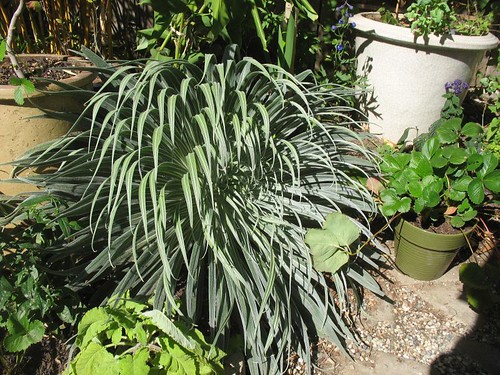
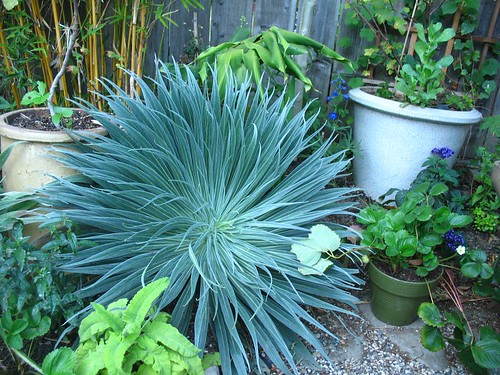
"Many of the sculptural plants that I love to use--beaked yucca, for example--have powerful forms, smooth textures, and subtle colors. [Sounds like an assertive plant!--ed.] If you combine them with another plant with the same qualities, the combination comes alive. Surround beaked yucca with cuphea--a lively plant that I see more as texture and color and less as form--and the yucca will steal the show."

But I thought we should use cuphea to set a receptive mood to stage assertive plants...?

Well, whatever. Design is an art, and you can't teach it like a science. Me, I am a scientist, and design can be a real challenge. I expect that, and I don't really mind. I enjoy tweaking my garden, and it's possible I enjoy the process more than the result. Well, that's me.

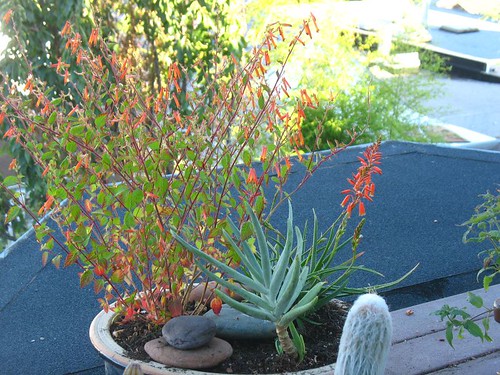
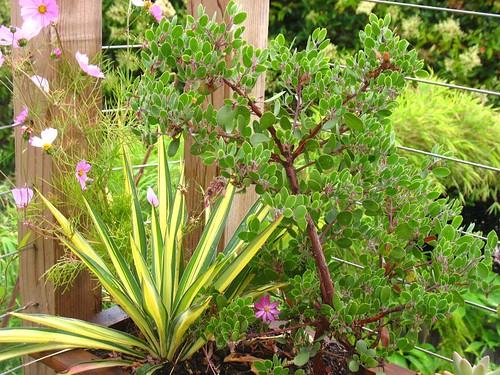
I have a cuphea on my roof deck. Cuphea turns out to be an excellent container plant for a hot, sunny roof in San Francisco. This one's looking a little piqued right now, but aren't we all? I had it with a fine-textured, hyper-flowery white angelonia and dusty lavendar agastage--it was horrible. Today, I took those out and added passalong orange-flowering aloe and passalong orange-flowering Cotyledon orbiculatum v. longifolium.

IMG_6926

I happen to really like orange.

The neighbor, S

Although I haven't posted about it since I started, work in my neighbor S's garden is ongoing.

IMG_6914

Since that inaugural post, I've probably worked ten hours.

IMG_6912

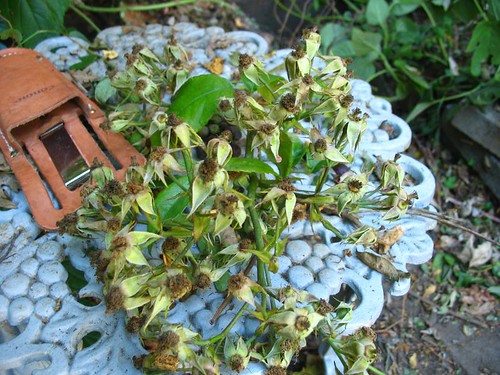
Mostly culling deadwood.

IMG_6921

Not enough to make visible headway.

IMG_6916

I can't even say we've turned a corner yet.

IMG_6915

But soon.

IMG_6919

In exchange for today's haul...

IMG_6923

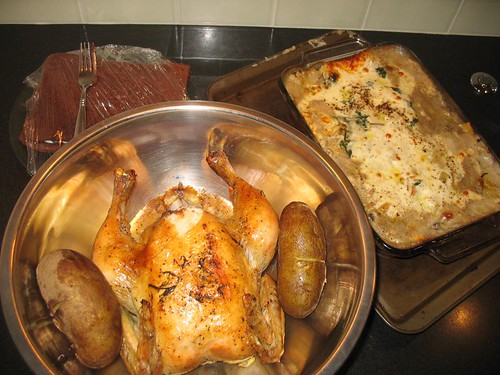
I was sent home with a wild mushroom lasagna, roasted chicken, baked potatoes, and chocolate cake.

IMG_6950

I enjoy listening to Fred's conversations while I work. Of course, he doesn't want to go on record. Maybe next time.

Indian summer

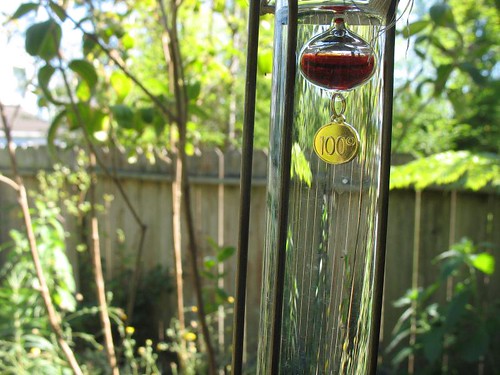
It's hot.

IMG_6900

(You will note this picture was taken in shade.)

The Echium wilts daily...

IMG_6905

And perks up when the sun goes down.

IMG_6938

Indian summer is one of the few reliable seasonal features of the San Francisco Bay Area. While shorter days mean cooler temperatures for the rest of the country, things start heating up here in coastal California this time of year.

Cold, moist ocean air gets pulled in from the Pacific all summer long when hot air in the Central Valley rises. That convection gets shut off when the Valley air stops rising as the days get shorter. But there's still plenty of sunshine during the day. At night, it's cold.

Perfect time to put out last year's amaryllis bulbs, which I did a couple weeks ago.

IMG_6902

9/23/2007

Planet Earth

IMG_6870

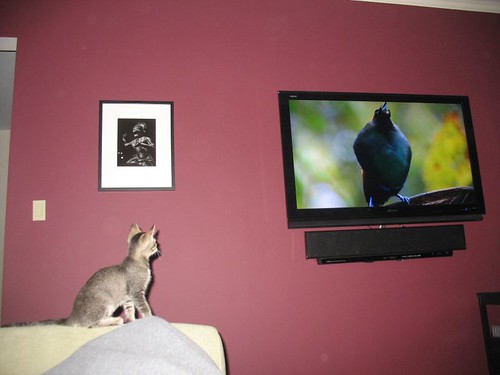
Are you watching (did you watch) the BBC documentary series Planet Earth? If not, you should put it in your queue.

IMG_6871

Penny makes a strong endorsement.

IMG_6892
Southern Bulb Blog visits Los Angeles. Lots of pictures.

Link.

9/22/2007

IMG_6817

Some garden notes.

A light rain fell yesterday and today! California's second spring.

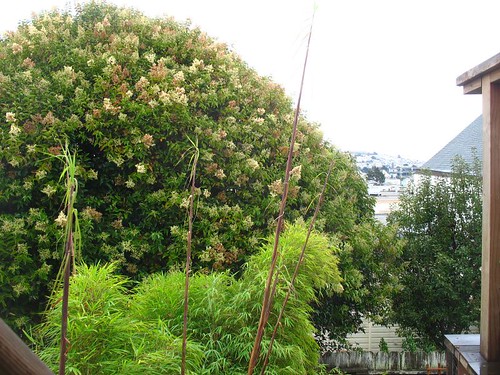
The bamboo shoots grow so fast. I wish I could remember which species we bought. I know the genus name for one was Bambusa, but I'm not sure if that's the tall one or the short one. Oh, well.

IMG_6819

A few more Cosmos getting in under the wire.

IMG_6830

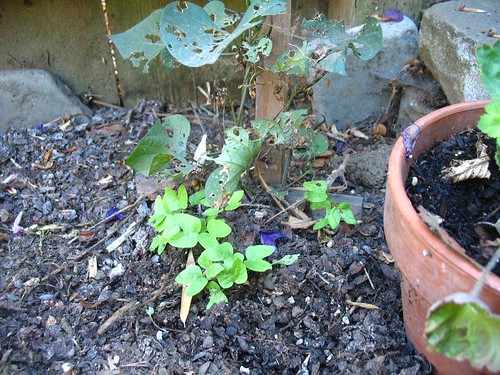
Morning glory seeds coming up everywhere. Yikes!

IMG_6757

Carrots and radishes too. I'd really like it if the carrots self-sowed in the garden.

IMG_6835

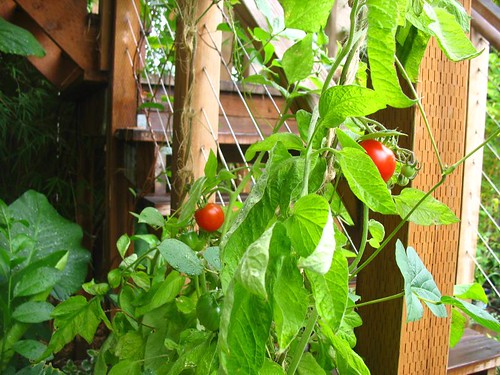
One tomato plant is still producing.

IMG_6833

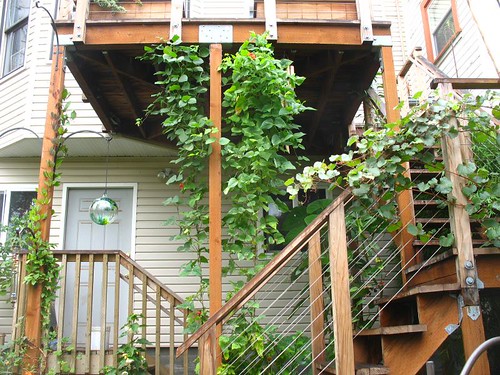
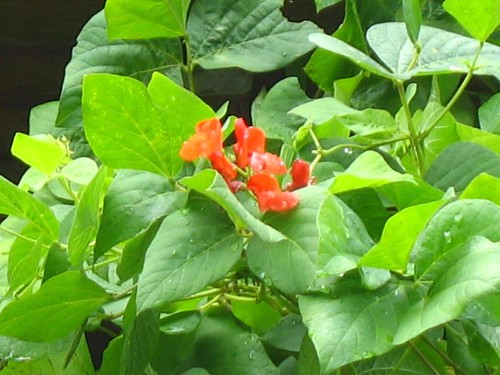
The runner beans not so much.

IMG_6860

IMG_6862

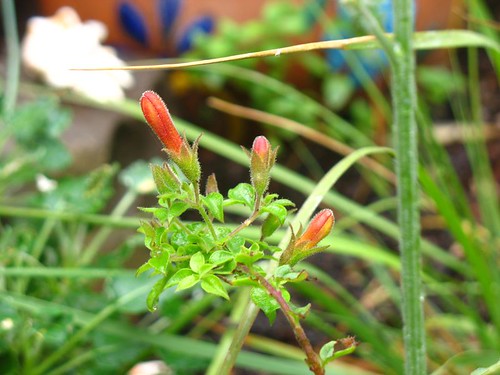
In bud:

Delphinium.

IMG_6859

Keckiella cordifolia.

IMG_6857

It's a small plant now--there it is under the yarrow.

IMG_6856

Epilobium canum. Cuttings from my guru's garden.

IMG_6854

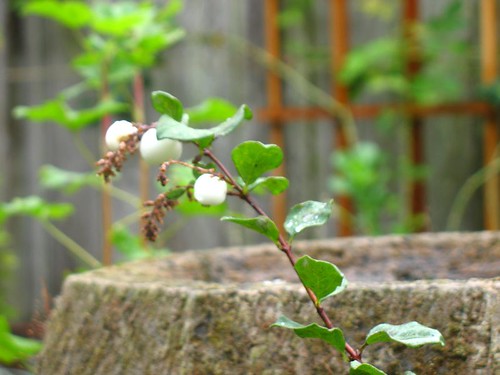
No more flowers on the snowberry...

IMG_6847

But big berries.

IMG_6848

New leaves budding out on Arctostaphylos pajaroensis 'Lester Rountree'.

IMG_6864

Behind/underneath, Eriogonum grande var. rubescens. New plants. I'm hoping for bigger, pinker, fluffier flower heads next year.

IMG_6865

Madia elegans not even close to slowing down. You can see it back there.

IMG_6842

Something's eating the Fuchsia. No biggee.

IMG_6850

I really love this mimulus.

IMG_6867

I think we still have a few weeks of hot coming up, so too early to plant most of the bulbs. But I planted the quamash.

IMG_6739

I took a cue from the last issue of Fine Gardening and bought a bulb auger. So much better than digging them in with a trowel.

Look at this freak-o bulb.

IMG_6737

It's Fritillaria biflora. Most native bulbs don't want any summer water, so I'll wait a few more weeks to plant the rest. This batch came from Telos. I bought one Fritillaria, they sent me two. I bought three Camassia, they sent me four. Nice people!

I potted up some cineraria volunteers I found in the garden. Maybe I'll plant these in S's garden.

IMG_6882

And I dug up my little clump of Sisyrinchium californicum and divided it.

IMG_6884

I guess that little white spot on the right is scale.

9/20/2007

"On the world's list of weird foods, ortolan — a bite-size songbird roasted and gulped down whole — can claim a place of distinction."

Link.

I remember reading about this before there was an Internet. I'm just as horrified today as I was then.

9/17/2007

"Native Treasures: Gardening with the Plants of California"

This is Part 1 of 2. I'll add Part 2 tonight or tomorrow.

I attended this month's meeting of the California Horticultural Society last night to hear nurseryman Nevin Smith talk about gardening with California native plants.

Mr. Smith grew up in Sonoma County, California, working at his father's nursery. He earned a graduate degree in political science at Johns Hopkins University thinking he wouldn't enter the nursery trade, however that turned out not to be the case. He later started his own company named Wintergreen which he sold to the wholesale operation Suncrest and he's worked there ever since.

Suncrest is a key wholesale provider of retail nursery plants to all of California, well regarded for offerring quality material suitable for mediterranean climate gardens. Probably half the 1-gallon cans I've taken home from my local retail nursery had Suncrest labels, and I know the San Francisco Botanical Garden augments its plant sale inventory with an annual trip to Suncrest. I know because I had the good fortune of tagging along on last year's shopping spree. I was physically exhausted after visiting Suncrest's enormous, sprawling facility.

By now, even beginning native gardeners have ready access to a familiar palette of garden-friendly choices: ceanothus, manzanitas, salvias, currants, redbud, mimulus, lupine, buckwheat, erigeron, et cetera. All these plants are discussed at length in several recent books. However this talk emphasized species not commonly found in gardens many of which Mr. Smith is still working on developing for the market. After a brief introduction, he launched into a discussion of native trees, shrubs, vines, and perennials.

On the subject of trees, Mr. Smith seemed desolate. He said, by and large, people are not planting trees or even large shrubs in their gardens anymore. The emphasis now is on perennials and flowers. I cannot imagine enjoying a garden without some large plants for very long. Especially in a tiny garden like mine, it's absolutely necessary to have some vertical interest. To that end, in my garden, I picked the first tree Mr. Smith discussed, our native buckeye Aesculus californica (well, he went through a list in alphabetical order!). He described an especially shrubby selection of buckeye he made from Goat Mountain where the trees averaged only 6-10 feet in height. I'm planning to keep mine somewhere around 12 feet. A. californica is apparently quite amenable to that.

People are very reluctant to plant this tree now because it hosts Phytophthora ramorum, the fungus associated with Sudden Oak Death. Well, there aren't any oaks anywhere near my house. Also, I'm tired of this Sudden Oak Death hysteria. I've lately heard some authorities say Sudden Oak Death has not exactly lived up to its billing. California oaks are still in trouble, yes, but other problems may be more urgent than Phytophtora. And many of the exotics are susceptible to Phytophthohra too. So it goes.

He suggested several other species that straddle the tree/shrub size regime. Cupressus macnabiana is a garden-worthy cypress with excellent fragrance, but noone plants cypress anymore, and the only native cypress people are interested in having is the famous Monterey cypress (that's Cupressus macrocarpa--the first picture in this post), which is ill-suited to most garden environments. I can't say I blame people for not being enthusiastic about cypress in the garden, or wanting to have the most inappropriate cypress of all. Although, we did have a sample of this C. macnabiana for sale at the Botanical Garden recently and it smelled wonderful and I was sorely tempted. Someone bought it before I could tho'.

Other native shrubby trees he mentioned include Betula occidentalis, Fraxinus dipetala, and Cercis occidentalis. I guess I didn't realize Fraxinus dipetala (Flowering Ash) remained relatively small for its whole life. Maybe one day I'll get tired of having a summer-dormant buckeye in the garden and get Flowering Ash instead. He discussed a Cercis collected on the eastern slope of the Sierra Nevada that turns scarlet in the fall, instead of the usual yellow--even when its grown at the coast, where fall color is generally not impressive. (Sidenote: my ecology teacher recently mentioned Cercis flowers are edible and taste good! I had no idea. Now I have a reason to live through winter.)

Also mentioned in the talk: Arbutus menziesii (challenging in any garden), Populus tremuloides (excellent selections currently in development), Quercus garryana var. breweri (very variable, can be anywhere between prostrate mat to tree-form)

Moving on to shrubs, he discussed the difficulty of bringing several plants into commercial production. Arctostaphylos nevadensis (collected at Black Butte) might one day be an alternative to A. uva-ursi, but current selections are hard to maintain.

Artemisia tridentata v. vaseyana is a more compact and manageable wormwood than the widely available A. californica, and it deserves more exposure.

Very drought tolerant Cercocarpus betuloides is a plant "we will have to see more of" in ornamental landscapes of the future due to anticipated water shortages in California. I'm on board with that. See it in the second, third and fourth pictures, here.

Chamaebatiaria millefolium is native east of the Sierra all the way to Colorado. Its toughness and incense-like fragrance recommends it for gardens west of the Sierra as well. Apparently it's much used around Denver. Chrysothamnus nauseosus is a much overlooked desert plant much loved by butterflies. The best toyons (Heteromeles arbutifolia) come from Lake Berryessa. He sees toyons used a lot in commercial landscapes, but not enough in the garden. He said his popular Malacothamnus fasciculatus 'Casitas' came from an illegal collection (cuttings) made "a long time ago".

Other shrubs discussed: Ceanothus oliganthus var. sorediatus, Eriogonum parvifolium , Eriogonum umbellatum var covillei, Holodiscus microphyllus, Lupinus albifrons, Philadelphus lewisii 'Covelo'.

He says many common garden Ceanothus have C. oliganthus in their lineage. Eriogonum parvifolium is available in many native plant nurseries. He described it as a tidy mound, but mine ranged and trailed. Seeds are available from Theodore Payne in my links. My notes don't describe why he thought that species of Holodiscus merited special attention over the common Holodiscus discolor, and the specimen in the slide he showed didn't look very good either, so I have no comment. Lupinus albifrons is the Silver Bush Lupine I've mentioned before (so has Amy Stewart). Flowers and fragrance can vary dramatically from specimen to specimen. Mine smells like grape soda and I couldn't be happier.

In Part 2: Vines, perennials, and sub-shrubs. And I'll talk about how I absolutely loved the Cal Hort meeting itself.
9/15/2007

Ten things to remember from the seed saving class I took at the San Francisco Botanical Garden

As taught by Don Mahoney, Ph.D., Curator.

Unfortunately, I cannot find my notes anywhere! So this is from memory. Maybe my BFF Kirsten will help me recollect some other interesting details.

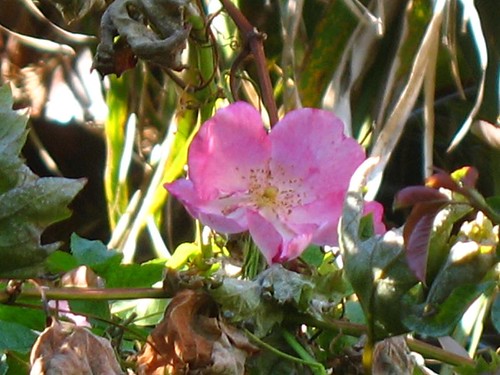
1. To grow wild roses from seed, collect the hip before it turns red and sow immediately.

2. Genetic damage from inbred plants shows up in seeds from successive generations, not in seeds collected from the first isolated parent(s). This is one of those things that I find intellectually obvious, but not intuitively obvious. It means that you may grow vigorous plants from seeds collected from an isolated parent (grown from healthy parents) over and over again, but successive generations of offspring from these same vigorous plants will produce weaker and weaker seed.

3. Ethical seed collection. Get permits to collect on public land, and permission to collect on private land. Get permits from the USDA to import or export plant plant material to/from the USA, here. Take no more than 10% of the seed from any plant, or any plant population. Permits to collect can be hard to get. While there is legislation requiring you to have them, there is no mechanism in place for issuing them.

4. Collecting a few seeds from many plants is better than collecting many seeds from one plant.

5. Whenever possible, let seeds clean themselves.
Step #1) Take whole dead or nearly dead inflorescence (or what have you).
Step #2) Put in a paper bag, flowers pointed down.
Step #3) Wait.
Step #4) Collect loose seeds at the bottom of the bag.

6. A subscription to Rock Garden Quarterly is apparently a must for horticulture sophisticates. The Summer 2007 issue has some of the best writing about seed collecting Dr. Mahoney has ever seen.

Note: He also extolled the Deno book (link and link), but did not discuss Deno's passion for giberellic acid (link).

7. He joked about botanists' talent for distinguishing every teensy, tiny, minute micro detail, and why doing so makes perfect sense to botanists (so they can communicate clearly with one another).

IMG_6695

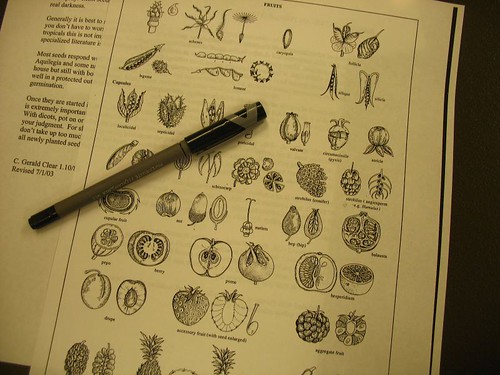
No need for amateurs to exert themselves with all the fine distinctions. There are four basic seed vessels to remember: pods, capsules....nuts and berries? (Kirsten, help me out!)

8. Environmental Impact Reports do not typically take account of seed banked in soil. This is a serious flaw from a botanical-ecological perspective since large amounts of viable, quiescent native seeds may reside in a given volume of undisturbed soil. (An anecdote was shared about a forest fire in a redwood grove that yielded a vigorous, valley-wide stand of Ceanothus where no one could recall having seen a Ceanothus before. Within five years, the stump-sprouting redwood trees had shaded out the Ceanothus.)

9. The big thing for the last few years is using smoke to germinate seeds from fire-adapted ecosystems like South Africa and California. The active ingredient is nitric oxide and artificial smokes containing nitric oxide are now available (from two places I won't remember until I find my notes). Smoke is absolutely essential for germinating restio seeds and these artificial smokes will do the trick. (Nearly all grass-like plants fit in to one of four categores: carexes, sedges, rushes, and restios; you could add bamboos and make it five.)

10. Don't lose your notes.

IMG_6693

Gunnera tinctoria in front.

Strybing, 8:30 a.m. 15-Sep-07; Part I

IMG_6619

IMG_6622

IMG_6624

IMG_6625

IMG_6627

IMG_6630

IMG_6633

IMG_6635

IMG_6637

IMG_6638

IMG_6639

IMG_6651

IMG_6652

IMG_6672

Watsonia.

IMG_6680

IMG_6673

Arbutus canariensis (above and below).

IMG_6675

IMG_6684

IMG_6687

IMG_6688

Link to Part 2.
IMG_6615

IMG_6787

Garden Blogger Bloom Day

I don't have anything new, except for Centaurea cyanus. I have a pot of mixed blue and purple. But there's only a few flowers. It's often the case that we have Bloom Day, and then a week or two later I do a garden post, and it's Bloom Day all over again, but better. Carol, the 15th, just doesn't work for me. How about the 25th? Just kidding!

IMG_6707

You can kind of see the blue one back there, blurred. Anyway, whatever.

IMG_6708 IMG_6709
IMG_6710 IMG_6743

(Above: Madia elegans (the yellow tarweed) grows over the Colocasia escuelenta 'Illustris'. This combination might make some CA native plant gardeners want to vomit.)

Here you're seeing yarrow and salvia, with a bee on the yarrow:

IMG_6713

Mimulus aurantiacus a non-stop show since (well, I'm not sure when this started...too durnk right now to click back and find out).

IMG_6718

No blooms in this picture, but mark my words, Salvia spathacea (foreground) + Fuchsia boliviana 'Alba' (background) will rock.

IMG_6726

Trichostema lanatum
(Betsy Clebsch pronounced it tri-COST-ema--much better than TRICK-o-stemma, my former pronunciation).

IMG_6730

As far as appreciating banal garden plants go, I have a real weakness for primrose. I just love 'em.

IMG_6732

Violets and pansies and impatients make me want to hurl, but primroses make me smile.

Obligatory summer princess.

IMG_6751

Okay, CA garden snobs, one reason I will keep this plant is the purple petals that litter the garden. Late summer color in the San Francisco garden.

IMG_6756

I found a place to plant my Lewisia. Is this Lewisia cotyledon or some other species? I wish I knew. Because L. cotyledon is the native. Right? Or, all they all natives? I don't know. I'm quite irritated the tag just said "Lewisia". Is that a clue that it's just some hybrid? Does saying "just some hybrid" make me a CA native snob?

IMG_6752

(You may recall I bought two--on a whim. The other one's in bloom too, but the pictures are blurry. So, please--just be happy with this one, won't you?)

Poppies everywhere, always. This one seems unusually...receptive.

IMG_6742

IMG_6725 IMG_6721

IMG_6703

Last month's Bloom Day here.

ADDED: for a totally incredible west coast Bloom Day, pop up to Seattle real quick.

9/12/2007

In which I get legit

Too legit to quit?

You can decide that for yourself after reading this post. Although you might not have enough information to reach a decision.

I began my gardening-for-food arrangement with Neighbor S today. This is S's beautiful wolfhound-shepherd mix.

IMG_6572

And this is her garden which has gotten away from her, as you can see.

IMG_6574

Gardening efforts began here in the mid-1980s. I'd say this is a 250 sq. ft. space--about half the size of my backyard.

There's a too-large pear tree, an espaliered apple tree distorted from planarity....

IMG_6576

Two lilacs, at least one fuchsia, three or four abutilon (one variegated), comfrey...

IMG_6583

Lavandula, nastirtium...

IMG_6577

a Brugmansia, various salvias, oxalis, Parietaria judaica, and other stuff including this fragrant, herbaceous thing--what is it?

IMG_6584

(And, oh look, Japanese anenonme--she loves it and wants more.)

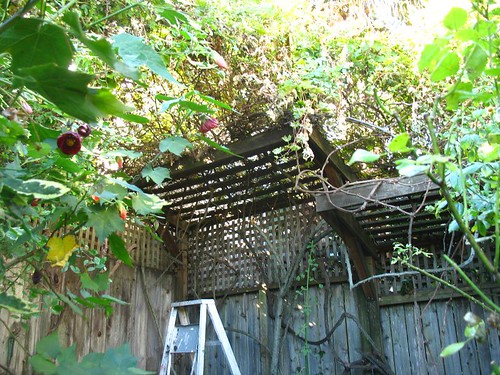
But what dominates the garden, and dominated today's gardening efforts: wild grape (on the right) and a huuuge old Rosa 'Mermaid' (center-ish):

IMG_6593

The result is deep shade and extensive deadwood.

IMG_6582

Mermaid's trunk is a good 4-5 inches in diameter.

IMG_6585

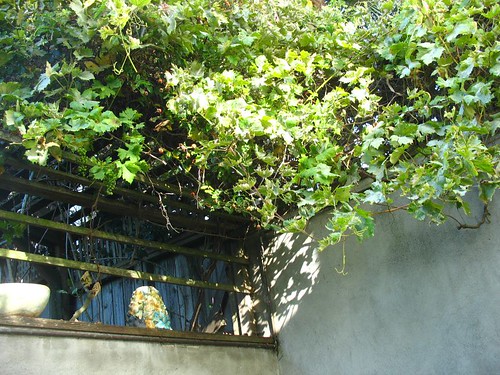
I'm very excited about the sinuous old trunk of the wild grape vine.

IMG_6589

IMG_6591

You can't buy that kind of established effect--I'm excited about finding a way to feature this character more effectively.

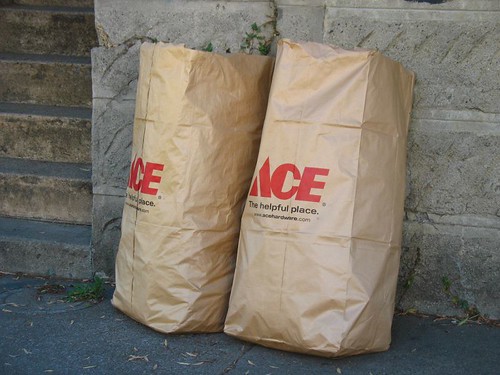
Anyhow, with trusty loppers, hand pruners, and a hand-saw S loaned me because I don't own one, I filled two big bags of dead rosewood. What I really needed for this job was safety glasses to keep all the falling plant litter out of my eyes while I pruned overhead.

S loves her roses and she has a lot of them. And those roses have a lot of crossed wood.

IMG_6595

I feel comfortable (i.e., competent) about pruning this kind of stuff out and getting some better structure in here. But I also know doing what has to be done will create some dramatic changes in her garden that she might find surprising. I want her to trust me, so I tell her exactly what I want to do and ask her to think about it for now.

Knowing the names of most of her plants during the walkthrough helped instill some confidence and I think demonstrating that I can distinguish living wood from dead wood did too.

I do not think this garden has strong bones. But there are some strong elements: the fruit trees, 'Mermaid', the grape, several othe roses. Also, the fence and various trellises seem to be in great shape considering.

IMG_6592

I think most of the other plants are subject to transplanting (or expendable). But there's still lots of pruning to be done before decisions like that get made.

S sent me home after two hours with delicious rice and chicken I should have photographed but didn't think to until it was too late. Next time.

9/10/2007

What else did I do this weekend?

Not much.

I buzzed through the arboretum before Betsy Clebsch, but I wasn't feeling particularly engaged.

IMG_6368

Maybe that comes through in my pictures.

IMG_6357

Or is it just the time of year?

IMG_6363

Summer dormancy. You either get it, or you don't. I get it, but I can't explain it.

This is Judith Larner Lowry, from her book Gardening With a Wild Heart:
There comes a time in the landscape of California, even along the coast, when nothing much is growing. Summer dormancy, in those plants that employ that drought avoiding tactic, holds sway in the native garden. Wildflowers have gone to seed, grasses are semi-dormant, and some perennials have died down to their roots.

Slanting shadows of late summer and autumn afternoons, golden grasses, ripening acorns. A meditative, not lively, time. Newly arrived from the East Coast, I used to be impatient for the quickening of the rains... Depending on the year, this might last into January. I often found myself apologizing to visitors for the unspectacular state of my garden.

A century ago, Clarence King called summer dormancy "a fascinating repose...wealthy in yellows and russets and browns." I measure my true life as a Californian from the time that I stopped apologizing for a garden exquisite in its light and shadow, its still endurance. Reveling in shades of gold, blonde, palomino, gray, and muted greens, it seldom occurs to me to do so now.

A deepening into the season was required, a renewed acceptance of the solemn stillness of golden days, when grasses, perennials, and wildflowers have gone to seed, and shrub and tree seeds are still not ripe. I slide at this time into a kind of suspension, held in that same sensation of stored quiescent power I used to get in wintry woods back east... One may fall so entirely into this state of somnolent stillness that the onset of rain brings a sense of disruption rather than of relief. For just a moment, though, before the rains sweep it all away. Pounding or light, cold or warm, the sweet rains of California. How could anybody say there are no seasons here?

In fact, not everything dies down by summer's end. The Epilobium, for example, is just getting started.

IMG_6365

I guess the nectar helps the hummingbirds wash down all the spiders they eat.

IMG_6367

IMG_6354

IMG_6355

IMG_6358

If none of this is working for you, there's always more anenome.

IMG_6331

IMG_6332

IMG_6333

Or maybe we could go shopping together.

IMG_6343

Actually, let's not. I don't have the right energy for a plant sale today. I'm not getting any closer than this.

IMG_6347

Sometimes the sales are fun and relaxed, and sometimes they feel like Altamont, and I'm Grace Slick. "Easy, people. Eeeaassyyy."

I always suggest they define the sale space in a larger area, but noone listens. I think they secretly enjoy producing that cattle car effect that engenders shopper competition and gets the blood pumping. I know I spend more money when I'm under that spell.

***

On Sunday I went to a party at my neighbor's house across the street. Or as she introduced me to her guests, "This is Chuck from across the road." Guy opted to stay home and bond with the new kittens, so I went solo.

IMG_6506

My neighbor is English, from the countryside, but she's been in San Francisco for 30 years. Let's call her S. We started talking only recently, but you'll be hearing a lot more about her in the near future because I'm going to help her with her garden.

IMG_6504

In exchange, she's going to cook for Guy and I once in awhile.

IMG_6503

S is a professional chef.

IMG_6501

But her passion is painting. She's been so busy with catering jobs lately, there hasn't been much time left for painting, much less gardening. So I have my work cut out for me.

IMG_6511

The party is fun and laid-back and the people are interesting. I think San Francisco is full of interesting people. The most interesting San Franciscans are often the ones who come from farthest away. I learn S once had a store in London next to Herrod's where she sold avant-garde children's clothes "before anyone else was doing that."

IMG_6509

Now she lives in Bernal Heights with a wolfhound-sheppard mix and a talking parrot.
She fed the parrot a runner bean from my garden.

IMG_6508

We're drinking French wine, the tennis game is muted on TV, and the Rolling Stones are playing somewhere. Hot Rocks 1964-1971. I know the flow of songs on this album like the back of my hand. The last five songs make up my favorite string of five songs on any album. Gimme Shelter, Midnight Rambler, You Can't Always Get What You Want, Brown Sugar, Wild Horses. Perfect.

The guests are a good 20 years older than I am, and much more interesting. Which is fine. As it happens, I've had a lot of practice at parties appearing more interesting than I really am, and I can turn that on when I need to.

You would be surprised how big a part being a scientist plays in that. Many people are both fascinated and bewildered by science, especially chemistry which is a subject most people don't understand. So I give them a little atomic theory or quantum mechanics, and voila! People are charmed. I've been doing it for years. The trick is to speak slowly in a low voice, and smile like you're telling them gossip.

But I didn't have to reach very deep this time. Instead, I merely elaborate on the difference between what is organic, and what is inorganic. Olive oil is organic, while table salt is inorganic.

The subject came up because apparently artisan salt is the big thing in food now. Silly me, I thought it was vinegar. Turns out vinegar was at least five years ago. Salt is the thing now.

9/09/2007

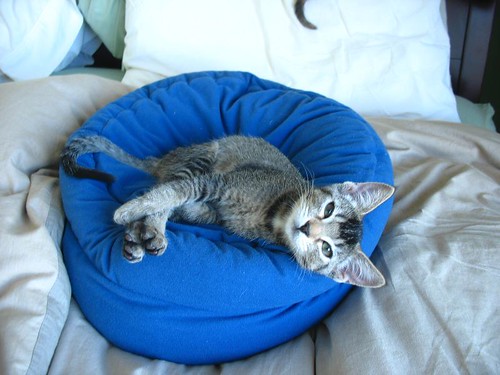
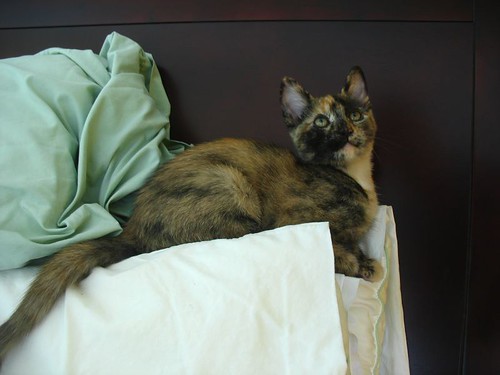
Monday morning kitten flick


We'll get back to gardening soon enough.
Visit a remarkable treehouse in Austin, TX here. Via.

The other new love of my life

Miss Patty La Quinta resists photography.

See what I mean?

IMG_6404

IMG_6405

IMG_6406

IMG_6407

IMG_6408

A movie is the only way to go with this cat.

9/08/2007

Meet the new love of my life.

One of them anyway.

IMG_6412

Ladies and germs, Ms. Penelope La Palma (Penny).

IMG_6436

(Come back tomorrow and I'll introduce you to her sister Miss Patty La Quinta.)

Betsy Clebsch, Native Salvias with Native Plant Partners

Today was the Betsy Clebsch class at Strybing. Ms. Clebsch brought a slide show featuring approximately 40 California native plants and gave a solid, two-hour talk peppered with audience Q&A to more than 30 amateur and professional gardeners.

Ms. Clebsch gardens at 3000' elevation (if I understood her correctly) in the coast ranges not far south of San Francisco. She lives next door to a rock quarry whose owner she has befriended and who provides her with small sedimetary rock--variably sized and sharp edged--that she incorporates heavily into her medium clay soil. For amendments, she favors mushroom compost and "chip-chop" i.e., chipper product. The resulting rocky soil is excellent for growing California native salvias, and she spoke at length on that subject.

She began with three named cultivars of my favorite salvia, S. spathacea (she spelt it with an extra letter e at the end): 'Kowatre', 'Powerline Pink', and 'Avis Keedy'. 'Avis Keedy' is the rare yellow-flowering form from Santa Barbara that I've mentioned on this blog before. 'Powerline Pink' must be the tallest flowering spathaceae; she said the inflorescences reach four-and-a-half feet! 'Kowatre' (ko-WA-tree) is a maroon-flowering selection made by Suncrest Nursery's Nevin Smith. She didn't talk about how ragged this species gets at the end of the season. My advice? Cut it to the ground, or keep it going with supplemental water.

She raved about annual Salvia columbariae. It took her years to get it established in her garden, but "now it takes care of itself". She admires this plant for its deeply divided green leaves. In the native habitat, S. columbariae might be only a few inches tall, but in gardens it can reach a few feet. (Btw, you can get seeds from Seedhunt in the links.)

She emphasized the necessity of cutting back all varieties of S. sonomensis after flowering to control woody growth at the base and keep the plant vigorous. She said she wrote in her book that 'John Farmer Bowers' does well in heavy clay, and right after the book came out, hers died. "So scratch that." She advised not letting 'Bees Bliss' get over 18" tall. While 'Dara's Choice' is taller than the species (up to 2 feet), 'Mrs. Beard' makes an effective groundcover.

Salvia leucophylla
comes from Southern California and Baja, but it grows like a native in the Bay Area where it's hardy down to 19 degrees F. Her favorite cultivar is Carol Bornstein's selection 'Amethyst Bluff'.

She talked about the well-known cultivars of S. clevelandii, 'Winnifred Gilman' and 'Allen Chickering', and pointed out that 'Gilman' is a true clevelandii while 'Chickering' is not, and noone has yet been able to determine its parentage. She also discussed the more obscure, bi-colored lavendar and white flowering 'Betsy Clebsch' and explained it's a difficult plant to grow and she's had a hard time with Betsy. She mentioned two other clevelandiis in passing, 'Aromas' and 'Pozo's Blue' and said it takes an expert to distinguish them from each other and from 'Allen Chickering'.

She was uncommonly enthusiastic about Salvia brandegei. I have it in my garden, but I know most native plant freaks don't get excited about it. First collected on Santa Rosa Island in 1888, this salvia's small, narrow green leaves with white undersides feels light in the garden as opposed to many other native salvias which feel heavy. She called attention to the lightly scalloped leaf margin which is something I'd noticed but never paid much attention to.

She praised the surprising wind tolerance of Salvia apiana's tall, rangy inflorescence and said this plant "belongs to the bees". She seemed unaffected by its smell (your blogger absolutely cannot tolerate it), but acknowledged that she once heard it described as "upstairs maid underarm". She asked everyone who grew this plant to please raise a hand, and hands went up from half the people in the room. Whatever.

She had pictures of spiny, prickly Salvia caraduacea, aka Thistle Salvia, but she's never tried growing it herself. I've noticed a lot of interest in growing native thistles lately. Speaking for myself, I know I'm content to let that gardening experience pass me by.
The last salvia she talked about was S. mellifera, Black Sage. These are exceptionally drought tolerant natives, especially 'Shirley's Creeper' and 'Terra Seca'.

Someone asked about Salvia pachyphylla. She's killed every pachyphylla she's ever been given but she encouraged us to try it, and recommended High Country Gardens in Santa Fe, NM as a source.

She said the best place in the world to see salvias is the salvia garden at Cabrillo College.

I don't want to write up everything she talked about, but I will mention a few more things...

She had highest praise for the five-feet-tall red inflorescences of Delphinium cardinale, seasonally available from Annie's Annuals. She said she was happy when she had one of these plants, but much happier when she had three.

She says the best fruiting manzanita is 'John Dourley' and she loves to use the tight young buds of Rhus ovata is flower arrangements.

She's had no problems growing Dendromecon hardfordii or Trichostema lanatum, and this is where I'll end by saying this testifies to the benefits of her rock-amended soil; those are both notoriously challenging plants in clayey Bay Area gardens.

List of Botanic Gardens in the United States

Pam blogged her recent visit to the lovely San Antonio Botanical Garden. A comment I left led to a question about how many botanic gardens there are in the United States. I posted this link once before, but here it is again:

http://en.wikipedia.org/wiki/List_of_botanical_gardens_in_the_United_States


Wouldn't it be nice if more garden bloggers posted pictures of their local botanical gardens?

(Note: Yours may actually be a "Botanic" Garden. I see that word used a lot too.)

ADDED: Check out the the quilt garden at the North Carolina Arboretum here.
"Nearly one in four people in the Atlanta area are exercise enthusiasts stuck in neighborhoods without sidewalks or other walking amenities, according to a study that illustrates a problem for many Americans. Researchers said the findings point to the need for more exercise-friendly places to live." Link.

So true. It really blew me away when I lived in Atlanta how there were no sidewalks. People there thought I was weird for complaining. "Get a car." I heard that all the time.

9/07/2007

The Hawaiian tarweed evolution

So Madia elegans was not the tarweed that evolved in Hawaii like I said.

It was a different tarweed; the modern species is Hemizonia fasciculata.

The Hawaiian species are Dubautia laxa, Dubautia waialealae, Dubautia scabra, Dubautia linearis, Argyroxiphium sandwicense.

Here is a reference.

Cool, huh?

I don't have anything new,

but this is cute.
"Last year, Miraloma Elementary School principal Ron Machado promised his students that if their test scores improved, he'd get a mohawk. On Thursday, Machado delivered on that promise."

Link.

I'll have lots of new stuff up tomorrow night.

9/05/2007

If you're free this Thursday...

There's an interesting event at Strybing.
Most Bay Area residents are unaware that Golden Gate National Recreation Area (GGNRA) contains more federally threatened and endangered species than any other unit of the National Park System in the continental United States. The goals of the 2008 GGNRA Endangered Species Big Year are to introduce people to each and every one of the 34 federally listed threatened or endangered species found there, to help people take specific recovery actions for each species, and to help folks engage with GGNRA in ways that enhance the park's preservation mandate...

Link.

Unfortunately, I have class that night.

9/04/2007

Visit Bali with the Deviant Deziner, here.

9/03/2007

A few random pictures from my garden

Madia elegans. My ecology teacher told us seeds of this coastal California native found their way to each of the Hawaiian islands and evolved in to very different plants. She showed us pictures, but I couldn't see the botanical names. I will seek details.

IMG_6244

IMG_6248

Yellow opening next to red; a cardinal gardening Don't!

IMG_6279

IMG_6250

IMG_6275

Speaking of seeds, longtime readers (as in, last spring) may recognize this plant with the dissected leaves...

IMG_6256

It's Geranium maderense. I took this plant's sire out of my garden before it went substantially to seed. Way before. But apparently, it set enough seed to give me three volunteers!

IMG_6259

This Ipomoea 'Split Identity' is my least favorite plant in the garden.

IMG_6263

IMG_6313

IMG_6307

IMG_6304

As much as I love summer, I'm itchin' to rip out the last of the tomato plants so I can use this container for winter lettuce and cabbage.

IMG_6288
Julie bought five Cryptomeria. I didn't know young ones looked so trippy.

Link
.

9/02/2007

Not all fennel is weedy.

Link.

9/01/2007

"Now it's the Dead Can Dance album from 1996, and the
second track is on, and it takes me back to San
Francisco 1996. In 1996, it felt like everybody in San
Francisco was listening to that album. Today, it seems the second track is the
song that becomes imbued with that 1996 energy--the
song's secret messages really a spell you cast to
contain the essence of a moment in time within a
song."

Link, and link, and link.

A long walk, Part VII

IMG_6197

IMG_6199

IMG_6200

IMG_6201

IMG_6202

IMG_6204

IMG_6206

IMG_6209

IMG_6212

IMG_6213

IMG_6215

IMG_6217

IMG_6218

IMG_6219

IMG_6220

Eriobotrya deflexa.

IMG_6221

I call it Tristania laurina, but I understand it was recently re-named?

IMG_6222

IMG_6227

IMG_6230

IMG_6232

IMG_6239

Got milk?

IMG_6242

Ack! I don't got milk!


Link to Part VI
Link to Part I

A long walk, Part VI

Holly Park.

IMG_6145

IMG_6152

Leonotus leonoris (sp?) getting a late start.

IMG_6153

That's either Hebe or Ceanothus, I can't tell from the picture, and I know they use both here.

IMG_6154

Cupressus macrocarpa.

IMG_6155

IMG_6158

IMG_6162

Before I took this picture, I approached this lady and asked for permission. I told her I'd be standing way back here and they'd all be really small. She smiled and said, "Oh, sure!"

Then I took the picture.


IMG_6164

Then she said, "Nice day out to take pictures."

And I said, "Yeah, I like to put pictures of the neighborhood up on my blog. People really enjoy them."

Her eyebrows raised and she seemed curious about the blog so I gave her the URL, or told her she could look up "Bernal Heights garden blog", but I don't even know if that works--I just wanted to give her an idea what the blog is about.

And she said, "Oh, I know there is a guy who has a garden blog on Bernal Heights and I know because my friend told me because she recognized my planter in one of the pictures, and she told me and I looked and it was my planter."

I said, "That was probably me."

And she said, "So I went there and I looked and it was my planter, and it was nothing, it was just...(made a face) 'blah'!"

Then I said, "Oh, people really enjoy seeing pictures of the neighborhood..."

I didn't explain that I like to capture a variety of everything in Bernal Heights, not just what's nice and "pretty", but to get a feel for the whole texture of the place, this place most will never see or walk through, and how really fun it is, maybe, to sort of put yourself in a different place for awhile, and how many different ways it's possible to do that..."

And, I pushed off.

This guy's got a garage sale every Saturday and Sunday.

IMG_6169

Guy says, "The IRS would like to know about this man." Or something sort of like that.

IMG_6174

Then, walking, I sort of remembered how awhile ago someone in the near suburbs recently came to this blog searching for "Bernal Heights" and spent considerable amount of time surfing around. And then someone else came to the blog soon afterwards from an e-mail (but without any location tagged in SiteMeter) and that visitor spent a long time, and came back for later for more extended visits.

Cistus.

IMG_6181

As I walked , and continued taking pictures I sort of imagined the conversation that might have gone on if she had said, "You're the blogger who does "whoreticulture", aren't you?"

I thought maybe we'd talk about how she didn't understand why I put that picture of her blah-looking flowers on my blog when it didn't look nice, and how subconsciously she felt personally singled out or something, but of course, I go to lengths to avoid singling anyone out, including rarely posting any pictures of identifiable people."

IMG_6185

I sort of wondered what might have brought her friend to the blog looking for "Bernal Heights." Maybe the woman in the picture just moved to Bernal Heights and she'd never even heard of it before until recently, and her friend was like, "San Francisco? Is that safe? You have kids!" And looked up Bernal Heights to check.

And I'm like, "Is it safe? Not really! People walk around stoned here, all the time."

IMG_6187

By now I was like, geez, look at me taking pictures of peoples' houses like this. There are people who would be really freaked out by that idea. That would be an honest, good faith reaction to pictures like mine. "In this day and age of insecurity, is it really appropriate for you to be taking pictures like this?" I'm not asking that question in my own voice, but I can hear it being asked of me.

IMG_6189

They would feel kind of ambivalent about visiting this blog. Not just ambivalent about visiting, but ambivalent about whether there should even be a blog such as mine.

That's definitely Ceanothus (so the other one is too), with lantana in front of it.

IMG_6192

Maybe those were things that woman in the park might have wanted to say to me. But maybe she didn't feel comfortable doing that for some reason.

IMG_6193

I thought how it would be my enjoyment of the blog, and I what I enjoy using it to think about, how that would have to yield to her concerns about safety if what some people say about the world turns out to be the one thing people really are concerned about, more than anything else. I thought, "I learned to panic like this in college."

IMG_6196

Do I really want to live that way? Do I carry that message with me forever?


Link to Part V
Link to Part VII
"And then I'm thinking how after Garlands, I went back
to the CD album and flipped a few pages, going from
"C" through to "F" and there's Cocteau Twins' Head
over Heels". Okay, so I didn't get all my CDs mixed
before the garage sale, they're just mixed up. A much
more minor concern. Head Over Heels is a good mellow.
Oh, and it was released after Garlands which was
there first album. So, so far, my high is following
the trajectory for the Cocteau Twins' career."

Link, and link.

A long walk, Part V

I still don't have a better name.

But here's the red-flowering Eucalyptus ficifolia I told you about at the beginning.

IMG_6083

IMG_6085

A woman crossing the street. I rarely include pictures of people in the blog, but I like to.

IMG_6087

Another E. ficifolia, behind Maytenus boaria. A tree that brings a lot of visitors to this blog.

IMG_6091

IMG_6094

From a block away, I mistook this Tibouchina for a Bougainvilla (sp?).

IMG_6097

IMG_6098

IMG_6103

But I did not mistake thsi Bougainvilla for a Tibouchina.

IMG_6105

Planted by an owner (or, more likely, a previous owner), and professionally pruned by a maintenance gardener, clearly. You can see this was done by someone who's pruned many bougainvilla in San Francisco, and knows what he or she has to do.

Another Maytenus boaria.

IMG_6109

IMG_6111

IMG_6113

IMG_6114

IMG_6117

IMG_6118

IMG_6120

IMG_6130

IMG_6133


And in the middle of it all, there's one of these.

IMG_6126

IMG_6123

IMG_6138

Link to Part IV
Link to Part VI

A long walk, Part IV

Maybe I should title this series something better than "A long walk". "A long walk" does not sound like fun. I want a name that says more about what this series means to me while I'm preparing it. Something that has very much to do with 'San Francisco'.

At the three-way fork in the road, I pick the middle path.

IMG_6057

That doesn't mean anything tho'.

IMG_6060

Concerned about safety?

Lavatera.

IMG_6061

Pelargonium tomentosum, my favorite Pelargonium.

IMG_6063

I have to take a leaf with me. The smell is out of sight.

IMG_6066

A smell that's out of sight. Ugh!

I like this secret door.

IMG_6067

IMG_6068

I thought this was a fork in the road, and I picked the upper fork.

IMG_6069

But it wasn't a fork in the road, it was the walkway to someone's front door.

The meaningness of the middle fork in the road, coupled with any falsity of the middle fork, also doesn't mean anything.

A native plant, with Port-A-Potties. That also doesn't mean anything.

IMG_6071

IMG_6072

Is this neighborhood safe?

IMG_6075

San Francisco has Crime Maps online. You can go to the SFPD website and click your way through to crime reports for very specific areas in San Francisco. We've done it a few times. Several car break-ins reported where we live over the course of a few months. Only a few assaults, and they were all reported in at 3 a.m. Who's walking around at 3 a.m.? Probably people breaking in to cars.

Should I have better things to think about?

IMG_6077

IMG_6078

IMG_6081

Link to Part III
Link to Part V

A long walk, Part III

It's "Last Acanthus Standing!"

IMG_6040

Coprosma repens (Rubiaceae). Mirror Plant. "Popular with the Victorians." Distinguishable by the pinhole sized pores open along the midvein on the back of the leaf. And the leaves are shiny as mirrors.

IMG_6043

Color in San Francisco on September 1.

IMG_6044

IMG_6046

IMG_6048

IMG_6052

I can't decide which picture to use.

IMG_6050

I like this picture because it has a sign about Iraq in the window, and the house is built at a three-way fork in a road. I think I should go back and get a better composed picture of that--the sign, and the three-way fork.

IMG_6056

I don't have big feelings about Iraq. Acknowledging that, and thinking about what that acknowledgement means brings up a bunch of stuff going on in the back of my mind while I'm preparing this series of posts.

Link to Part II.
Link to Part IV.

A long walk, Part II

IMG_6017

IMG_6019

IMG_6021

IMG_6023

These people must have gophers.

IMG_6025

Artichoke thistle.

IMG_6028

IMG_6029

Straight ahead is Ceanothus arboreus.

IMG_6027

IMG_6033

IMG_6034

IMG_6036

IMG_6038

Usually, the blue flowers are a late winter early spring thing. But in San Francisco we can get seasonal flowers at any time of year.

IMG_6039

While I'm posting these pictures, I'm thinking about a story that comes up in a couple chapters.

IMG_6038

Link to Part I.
Link to Part III.

A long walk, Part I

I believe this is the pink-flowering Eucalyptus ficifolia. We'll see the red one later.

IMG_5989

IMG_5990

IMG_5992

IMG_5994

IMG_5995

This is a rose.

IMG_5996

IMG_5998

IMG_5997

IMG_6010

IMG_6013

Link to Part II.
"I just had that classic moment when you're stoned and
you look for a specific album you want to hear, and
it's not there, and you're really bummed. And then
got preoccupied about how bad music is nowadays, and
then it's all second thoughts about the garage sale
because the CD I wnated probably got mixed in there and,...then I
started laughing and decided to write you.

So, the album I wanted was Cocteau Twins' Treasure,
but I had to settle for Garlands and I'm thinking,
this is 'too acid.'"
Link.
"Ms. Ryan had been coming down some stairs when she saw a brown recluse spider on the ground and backed away from it.

However, she didn't see the rattlesnake that was behind her.

Mrs. Wisconsin called 911 and Mrs. Mississippi helped calm Christina down."

Link.

Artemisia, maybe they really are cooperating!