Showing posts with label strybing. Show all posts

12/27/2007

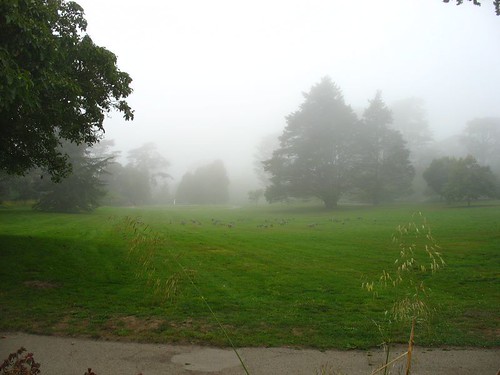
Today was rather gray.

It's supposed to rain for a few days, starting tonight. Then it will be clear again.

I had some errands and a date for lunch at the Botanical Garden this afternoon. After lunch, I strolled and took some pictures.
1

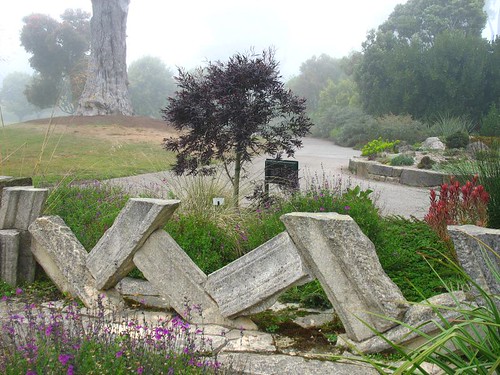
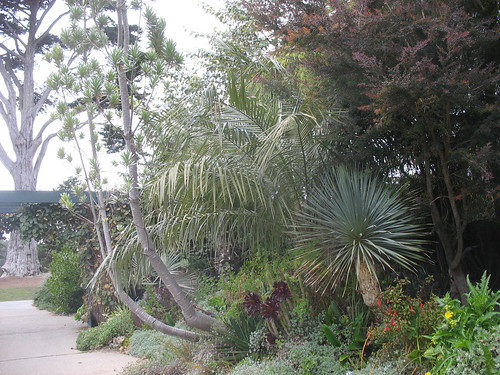
It was hard to escape the gray.

IMG_0310

Things on my mind: recent events at the Zoo (putting me in an especially sour mood), scheduling a follow-up appointment with veterinarian (Penny came down with giardia while we were in Hawaii over Thanksgiving--a protest statement? The symptoms are gone, but we need to make sure the parasite is gone), paying for a swing I want to put in my garden (I saw one I like in Half Moon Bay; it costs $500, and that doesn't include any kind of delivery expense which I haven't figured out yet), finding a job (vs. not finding a job), and wondering why I didn't bring a jacket because it was rather cold.

3

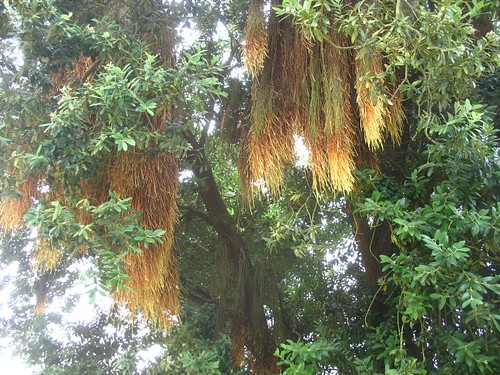
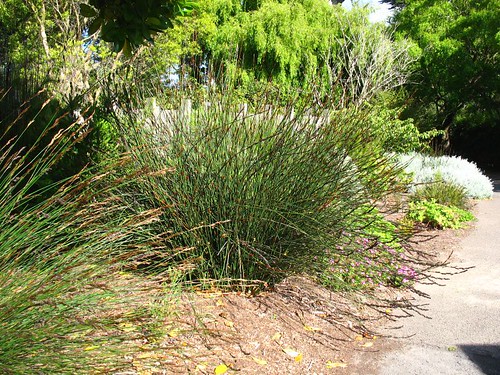
What is this? I have no idea. If there was a sign, it was obscured under rampant growth.
4

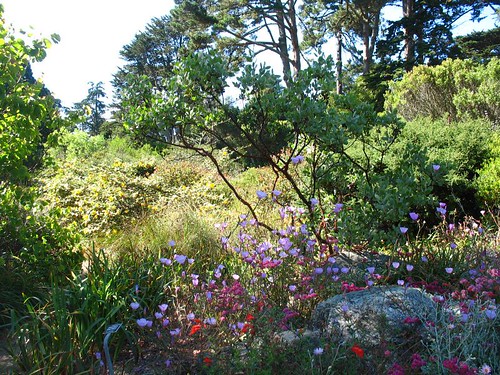
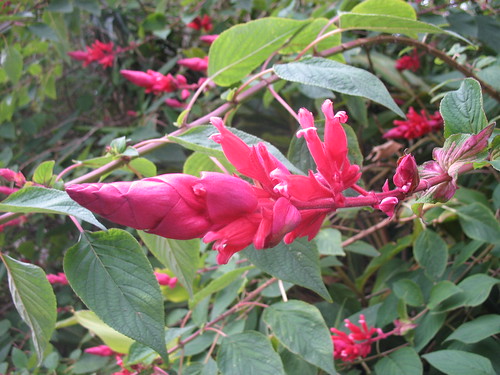
There are still many plants here that I don't know anything about.
11

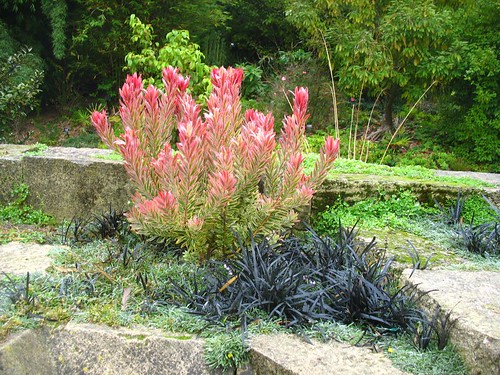
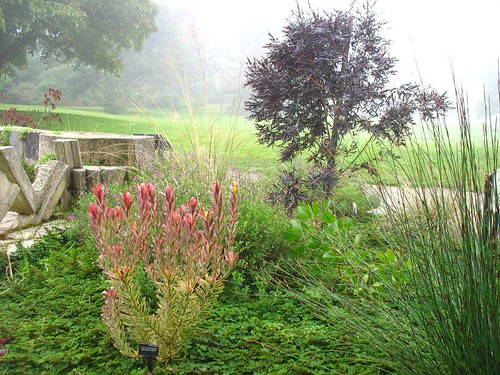
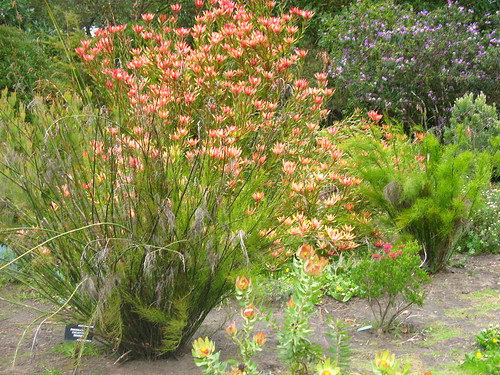
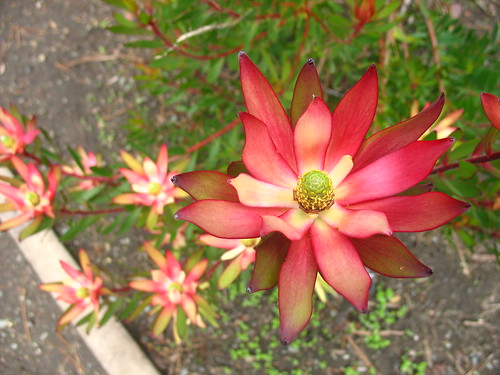
Most of the flower action's in the South Africa section right now. This is Leucadendron 'Red Gem'.
12

This would be a good time to visit the arboretum at UC Santa Cruz. They have a large collection of Protaceae.

7

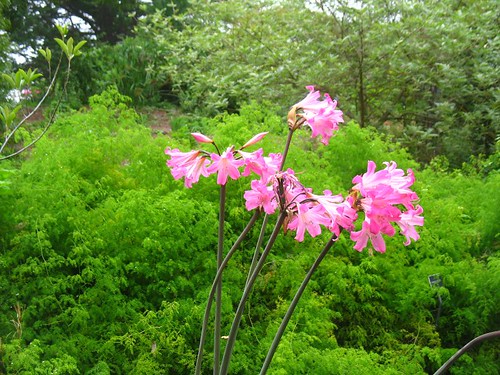
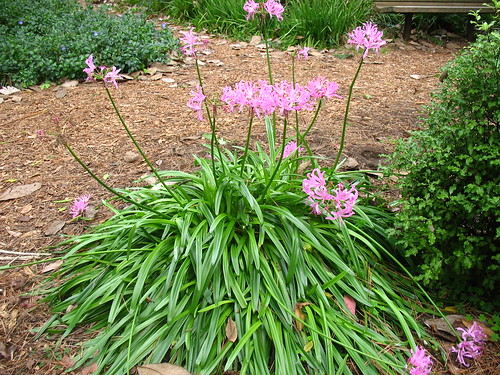
Pink Nerine.

9

Pretty flower, but a ton of strappy foliage.
10

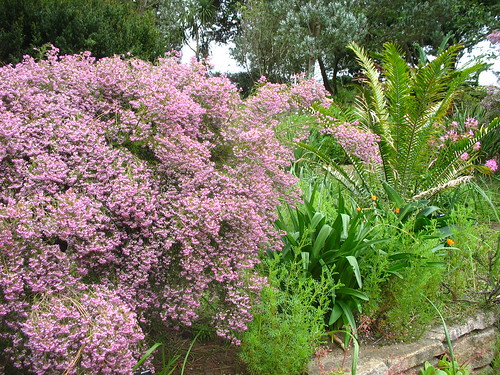
Pink Erica.

8

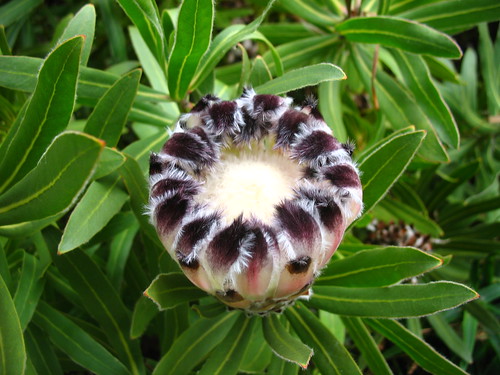
This pink Protea always makes me think of a bird. Don't those look like feathers?
13

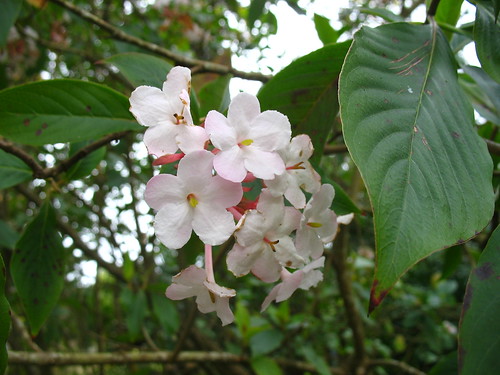
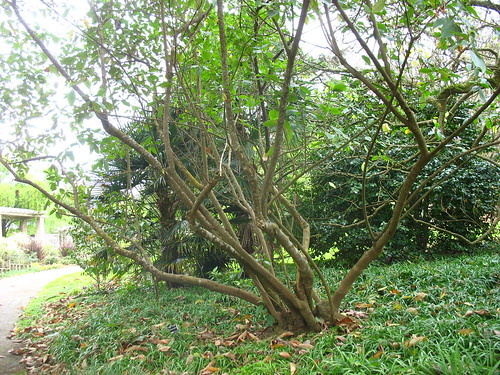
This is a tree I don't see very much, Luculia pinceana (Rubiaceae). The flowers are highly fragrant and sweet.
16

The nicest specimen I know of is just outside the Botanical Garden, between the two entrances. This one seems too woody.
17

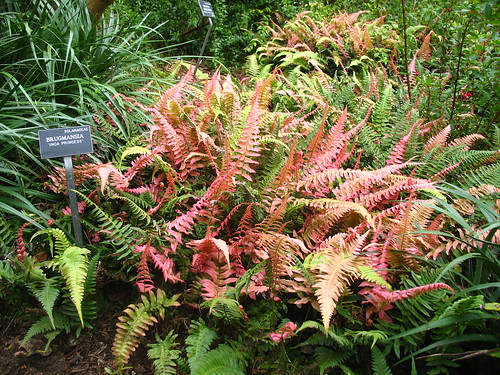
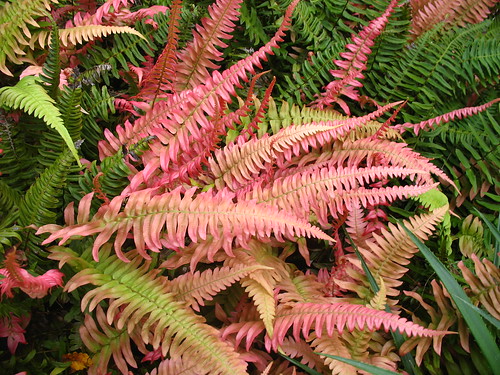
Do you know the name of this fern?

5

Could it be an especially pink Dryopteris erythrosora? I think of D. erythrosora as being more copper colored, but "erythros" means red.
6

Quite a lot of pink today. Let's move on.
15

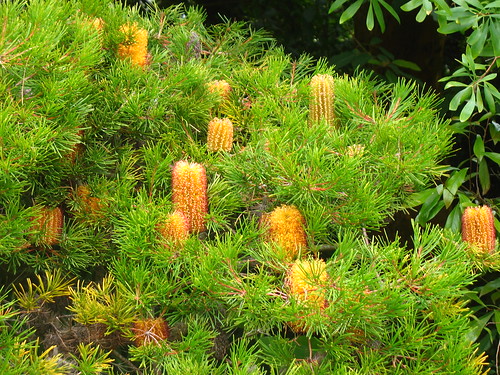
More Protaceae. These are Banksia.

14

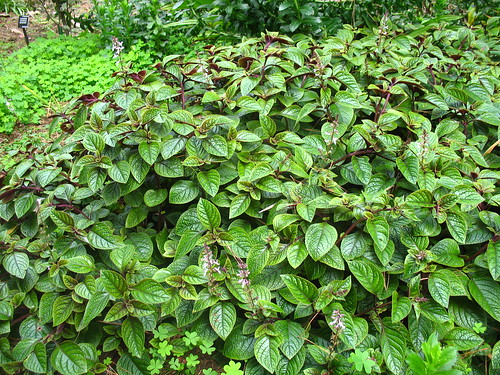
And this is Plectranthus; I'm a big fan. I helped to plant this patch.
18

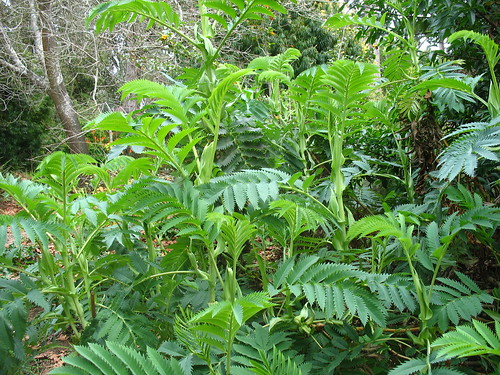
Sometimes this plant has a different texture when you approach it from the shady side; I like that.

19

Melianthus major has foliage I admire too.
20

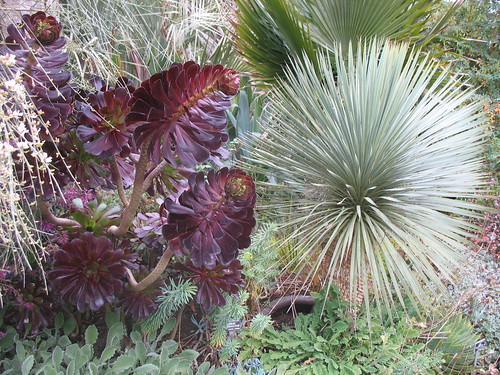
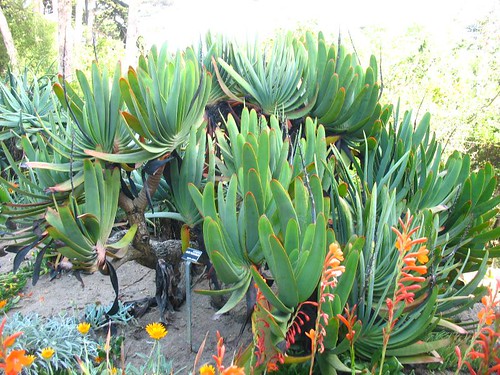
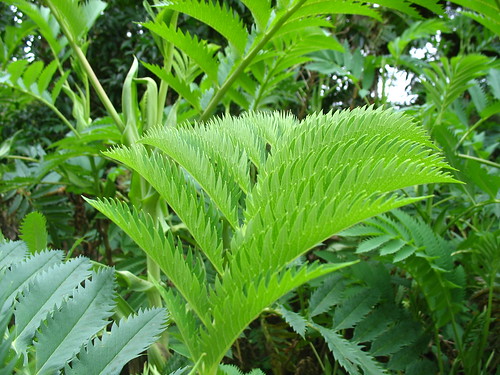
This reflects how I feel a little bit today. Pointed and sharp.
21

But if you actually touch it it's not sharp at all.

12/05/2007

This sounds good.

Gardens That Work: More than just another pretty place
Design Symposium co-sponsored with Horticulture Magazine
San Francisco Botanical Garden

Sun, Jan 27, 8:00am--5:00pm

Flowering herb knots, productive potagers, home orchards ripe with fruit – these are some of the joys of gardens that function as more than superbly designed and meticulously maintained spaces. These are gardens that pay back hard work with fresh food, cut flowers and sustained enjoyment.

The trend in garden design has been focused on these workhorse gardens for some time, but beautifully executed gardens that produce for our vases and tables are classics that will always be in fashion.

Join us for an exciting and inspiring day working through the design principles and horticultural techniques as well as sharing in some of the delights of beautiful, bountiful gardens that work.

Our speaker line-up features Jennifer Bartley, author of Designing the New Kitchen Garden, SFBGS Curator and "workhorse garden" expert Don Mahoney, and McEvoy Ranch Head Gardener Margaret Koski-Kent. Rounding out the day will be Garden to Vase author Linda Beutler.

Registration includes all handouts and refreshments, as well as lunch. There will be plenty of opportunities to shop, visit the Garden and network with other Bay Area garden lovers.

Link.

10/29/2007

The Garden at Night

"Noted photographer Linda Rutenberg invites you on a nocturnal journey as share stories and images of twenty public gardens throughout the United States and Canada. Her newly published book, The Garden at Night: Private Views of Public Edens features our very own San Francisco Botanical Garden along with 19 other spectacular gardens seldom seen at night. Refreshments, book signing and evening tours of the Garden."

Link.

9/15/2007

Ten things to remember from the seed saving class I took at the San Francisco Botanical Garden

As taught by Don Mahoney, Ph.D., Curator.

Unfortunately, I cannot find my notes anywhere! So this is from memory. Maybe my BFF Kirsten will help me recollect some other interesting details.

1. To grow wild roses from seed, collect the hip before it turns red and sow immediately.

2. Genetic damage from inbred plants shows up in seeds from successive generations, not in seeds collected from the first isolated parent(s). This is one of those things that I find intellectually obvious, but not intuitively obvious. It means that you may grow vigorous plants from seeds collected from an isolated parent (grown from healthy parents) over and over again, but successive generations of offspring from these same vigorous plants will produce weaker and weaker seed.

3. Ethical seed collection. Get permits to collect on public land, and permission to collect on private land. Get permits from the USDA to import or export plant plant material to/from the USA, here. Take no more than 10% of the seed from any plant, or any plant population. Permits to collect can be hard to get. While there is legislation requiring you to have them, there is no mechanism in place for issuing them.

4. Collecting a few seeds from many plants is better than collecting many seeds from one plant.

5. Whenever possible, let seeds clean themselves.
Step #1) Take whole dead or nearly dead inflorescence (or what have you).
Step #2) Put in a paper bag, flowers pointed down.
Step #3) Wait.
Step #4) Collect loose seeds at the bottom of the bag.

6. A subscription to Rock Garden Quarterly is apparently a must for horticulture sophisticates. The Summer 2007 issue has some of the best writing about seed collecting Dr. Mahoney has ever seen.

Note: He also extolled the Deno book (link and link), but did not discuss Deno's passion for giberellic acid (link).

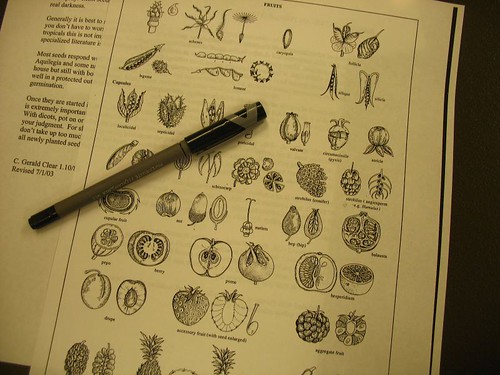
7. He joked about botanists' talent for distinguishing every teensy, tiny, minute micro detail, and why doing so makes perfect sense to botanists (so they can communicate clearly with one another).

IMG_6695

No need for amateurs to exert themselves with all the fine distinctions. There are four basic seed vessels to remember: pods, capsules....nuts and berries? (Kirsten, help me out!)

8. Environmental Impact Reports do not typically take account of seed banked in soil. This is a serious flaw from a botanical-ecological perspective since large amounts of viable, quiescent native seeds may reside in a given volume of undisturbed soil. (An anecdote was shared about a forest fire in a redwood grove that yielded a vigorous, valley-wide stand of Ceanothus where no one could recall having seen a Ceanothus before. Within five years, the stump-sprouting redwood trees had shaded out the Ceanothus.)

9. The big thing for the last few years is using smoke to germinate seeds from fire-adapted ecosystems like South Africa and California. The active ingredient is nitric oxide and artificial smokes containing nitric oxide are now available (from two places I won't remember until I find my notes). Smoke is absolutely essential for germinating restio seeds and these artificial smokes will do the trick. (Nearly all grass-like plants fit in to one of four categores: carexes, sedges, rushes, and restios; you could add bamboos and make it five.)

10. Don't lose your notes.

IMG_6693

Gunnera tinctoria in front.

Strybing, 8:30 a.m. 15-Sep-07; Part I

IMG_6619

IMG_6622

IMG_6624

IMG_6625

IMG_6627

IMG_6630

IMG_6633

IMG_6635

IMG_6637

IMG_6638

IMG_6639

IMG_6651

IMG_6652

IMG_6672

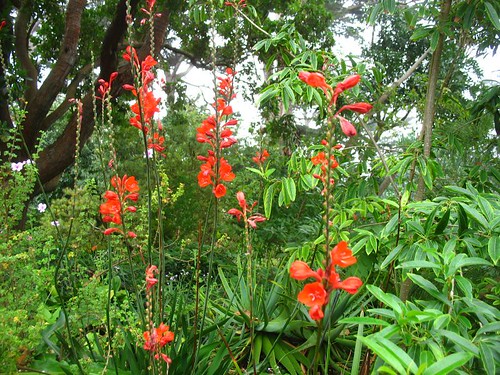
Watsonia.

IMG_6680

IMG_6673

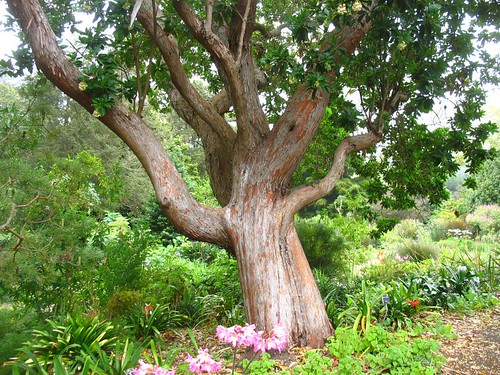
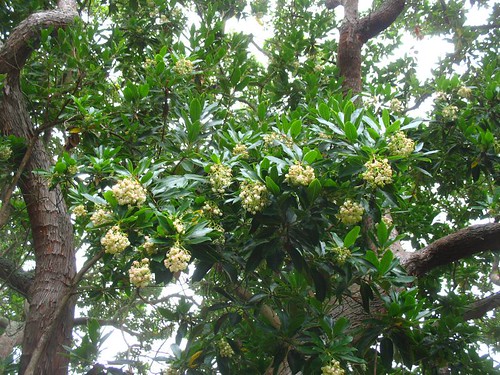
Arbutus canariensis (above and below).

IMG_6675

IMG_6684

IMG_6687

IMG_6688

Link to Part 2.

8/07/2007

Tuesday Night Botanical Garden

Just a few pictures of things you've seen before.

IMG_4702

IMG_4705

IMG_4710

IMG_4711

The Garden has a small bed dedicated to the All-Ameriacan Annuals. These three pictures are from that bed. A little bland for me.

IMG_4713

IMG_4714

IMG_4716

IMG_4717

IMG_4718

IMG_4720

IMG_4721

IMG_4722

IMG_4723

I have to get out as much as possible this time of year. The daylight hours are falling away in San Francisco. We dropped below 14 hours of daylight yesterday. By September 1, we'll have only 13.