12/16/2006

It's the middle of December.

Want to visit the Bot Garden with me?

It's our time of year for magnolias.
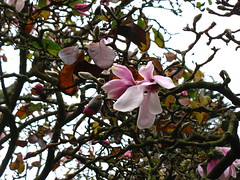
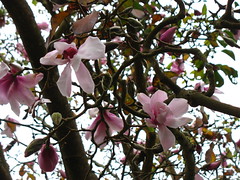
IMG_6101 IMG_6097

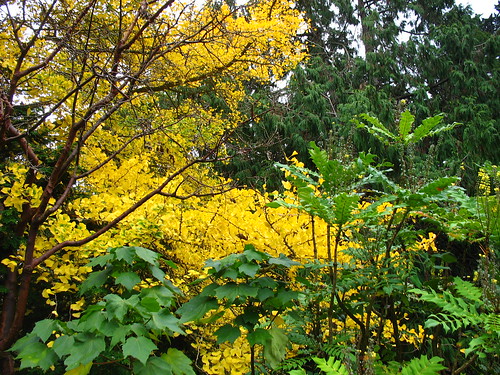
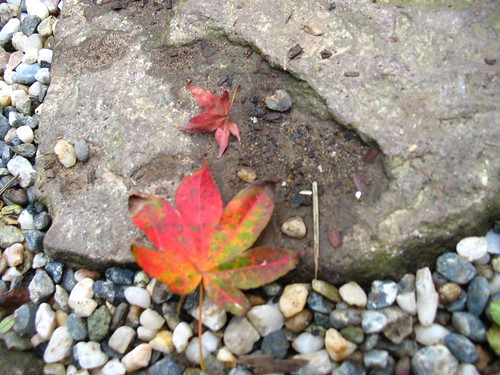
And some lingering fall color.

IMG_6092

Ginkgo grow so slowly, it must have been planted several decades ago. They wanted us to enjoy it, and here we are.

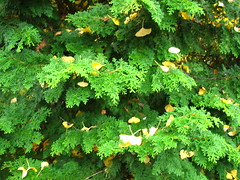
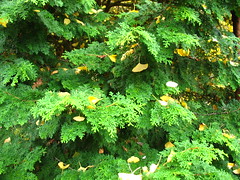
I love the way the leaves decorate the Chamaecyparis obtusa (!) like Christmas ornaments.
IMG_6090 IMG_6089

So Ginkgo and Hinoki cypress makes a good pair. What other plants you can put together so colored leaves falling off one plant will land on another and serve as a decoration?

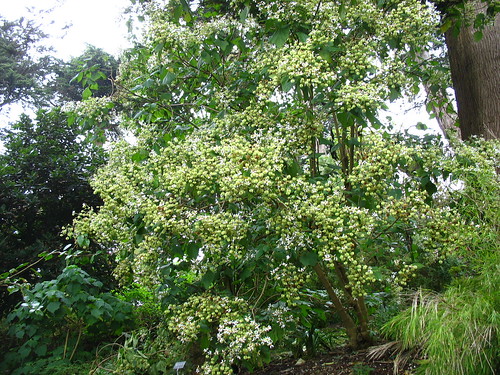
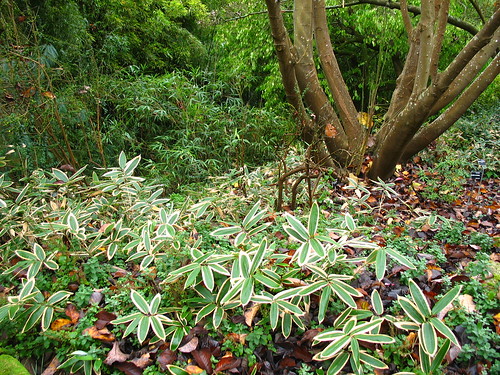
I'm not sure what this is, but I like it.
IMG_6096

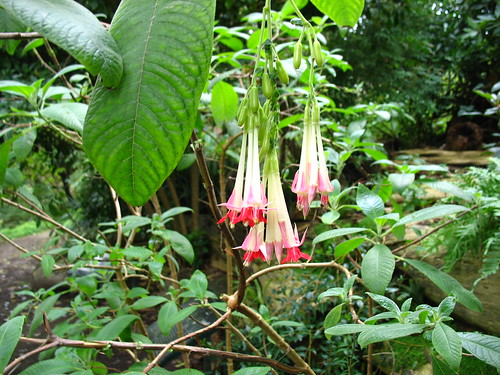
This is the Fuchsia boliviana v. alba that I'm growing from seed. I was very proud of that, but Sunset says this plant will self-sow in moist conditions. Well, whatever. I sowed my own.
IMG_6107

Montanoa leucantha.

IMG_6112

IMG_6139

Every year, I'm surprised all over again by how flowery it gets. Most of the year I don't even notice it.

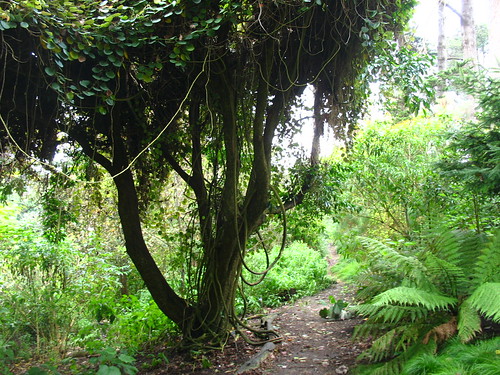
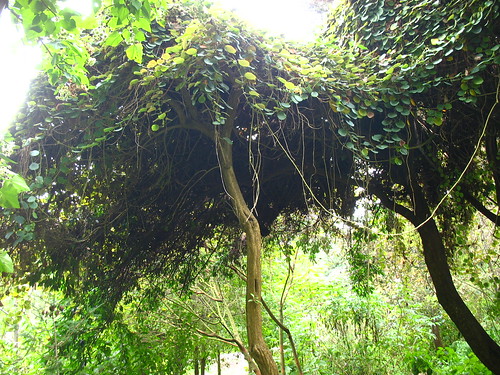
These trees are just here to hold up the vine. Someone's thinned it out recently, probably for winter storms.
IMG_6119

IMG_6117

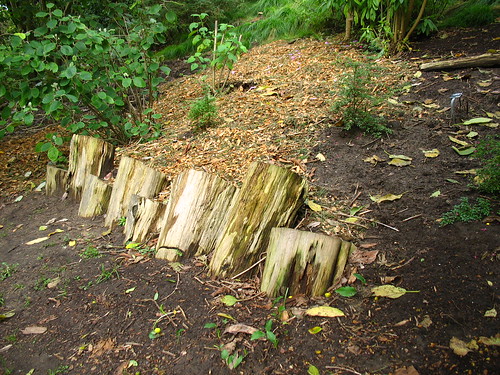
I did this. I installed those stumps as a retaining wall, and I planted those little fuchsias.
IMG_6249

Looks like it's holding up. Yay me!

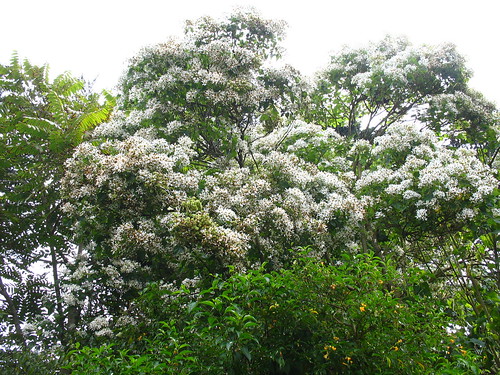
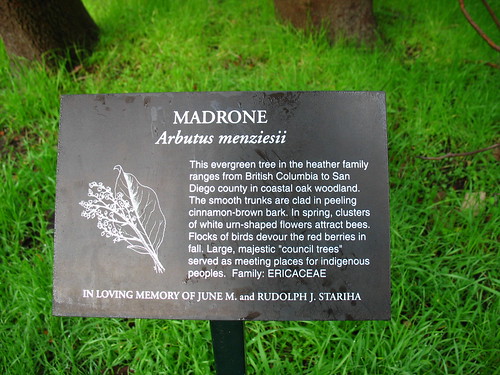
My second favorite tree.
IMG_6143

There it is.

IMG_6142

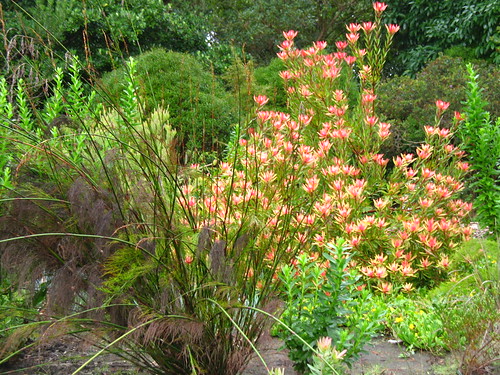
Restios and Protaceae. It must be South Africa.
IMG_6131

IMG_6127

IMG_6152

I want this one:

IMG_6155

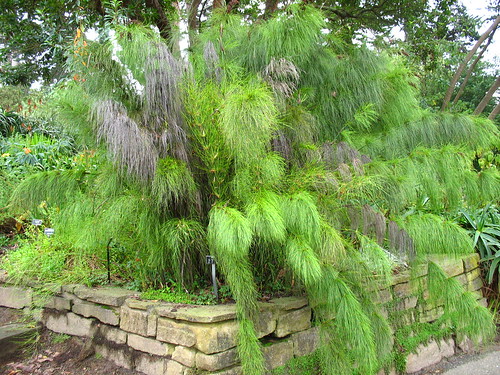
This is Elegia capensis. I like it a lot. It must be the most well-known restio..?
IMG_6147

I would keep it in a container.

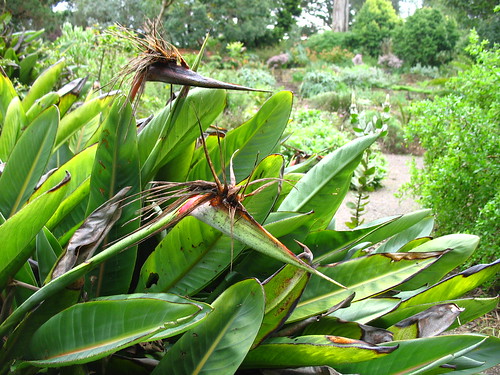
Washed-up Strelitzia. Aren't they cute?
IMG_6165

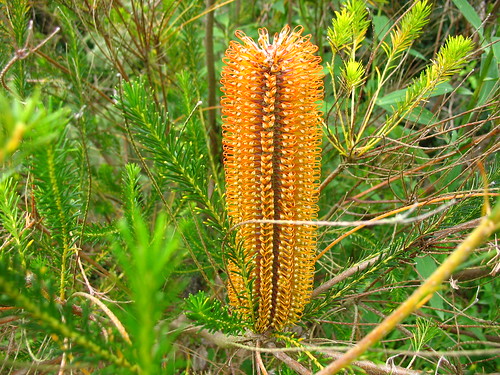
Banksia. Not from South Africa but it goes with the other Protaceae, so I'm putting it here.
IMG_6267

It's actually growing on the other side of the park, near the moon-viewing garden.

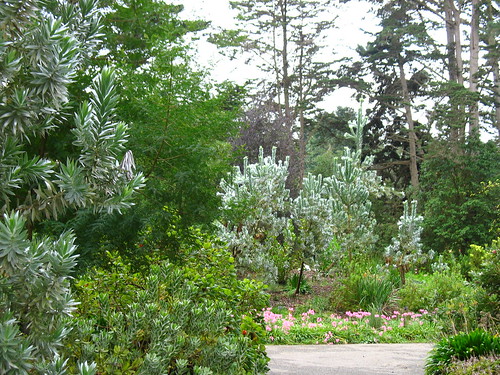
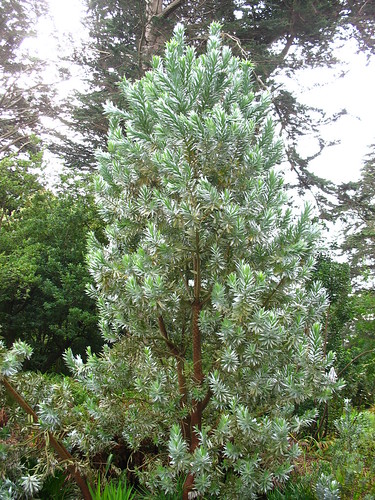
But back to South Africa, I wanted to show you one more thing: the silver trees. Leucodendron argenteum. If I had a bigger garden...
IMG_6159
IMG_6162

IMG_6171 IMG_6172

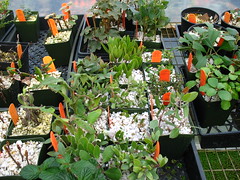
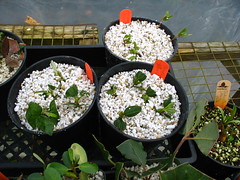
I actually do have some (volunteer) work to do today. Some cuttings.

The three on the right are mine, actually. (Ceanothus arboreus, unk. Arctostaphylos, Oenethera hookeri.
IMG_6196 IMG_6197

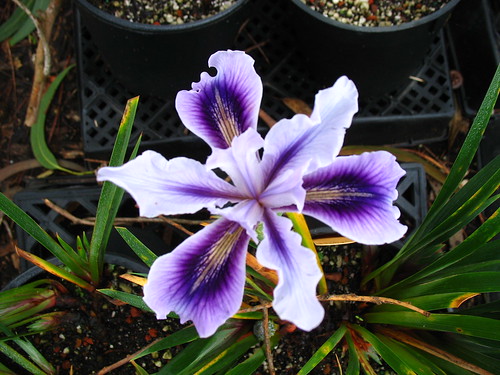
And I dug some slow-release fertilizer into the irises. Iris douglasiana...very diverse native iris, used a lot in hybridizing work.
IMG_6193

Pretty, isn't it?

But when the work is done, the strolling resumes.

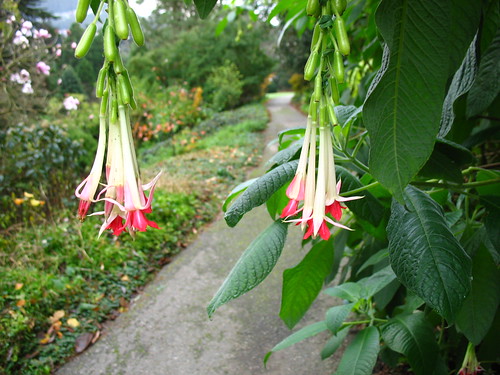
Another Fuchsia boliviana v. alba.
IMG_6174

This time I grab a couple fruit. One to eat, one to harvest seeds from. You know all fuchsias make edible fruit?

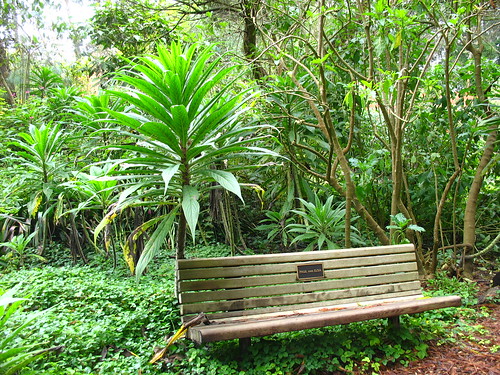
This must be Echium piniana. I'm growing Echium wildprettii from seed. It's smaller, and makes a red spire, and it's a biennial.
IMG_6188

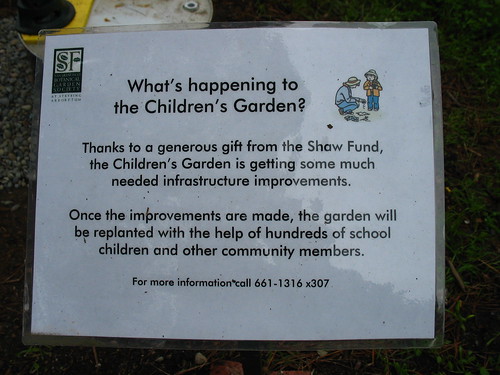
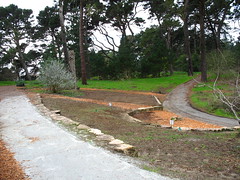
The Children's Garden is one of my faaavorite sections in the Bot Garden.
IMG_6203

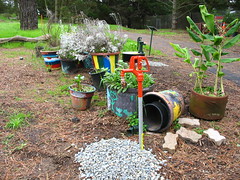
The woman who runs it really knows how to use different materials in interesting ways, and her style is super cottage-y. I come by here all the time for new ideas. The place is under extreme renovation. Soon, this will absolutely be one of the coolest things to see in San Francisco. And noone knows about it. It's waaay in the back of the Bot Garden where noone knows to go. I'll take you.
IMG_6205 IMG_6208
IMG_6213 IMG_6206

IMG_6217

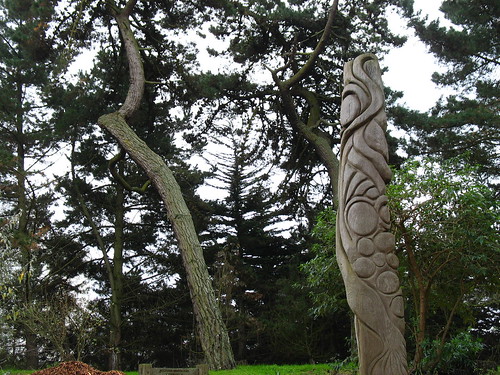
The totem pole can't wait.

IMG_6219

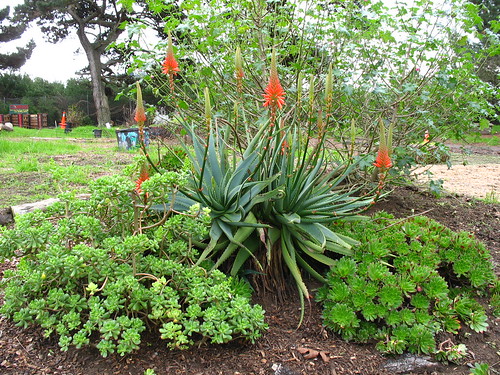
And there's a bit of planting already to go. It looks so easy.
IMG_6209

IMG_6216

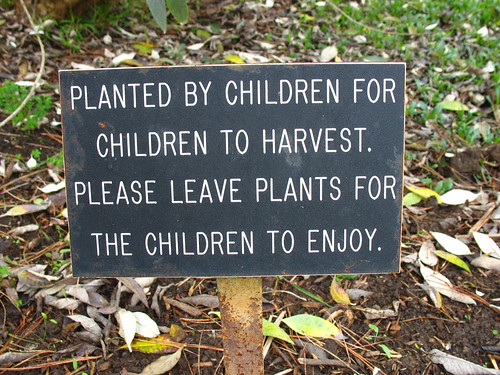
You have to say that, otherwise the adults think everything's for them.

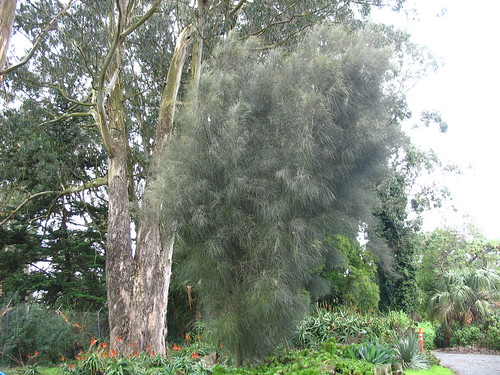
Have you seen a Casuarina stricta before?
IMG_6244

An acquired taste I suppose. I wish they'd feature it a bit more, but it's a toughie.

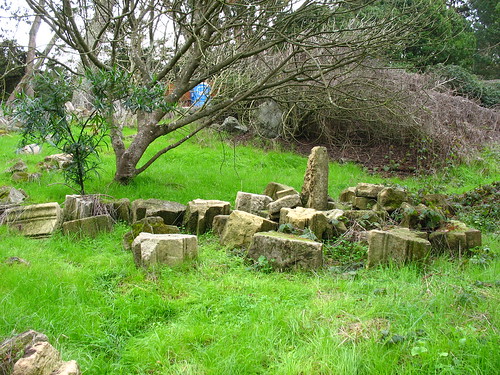
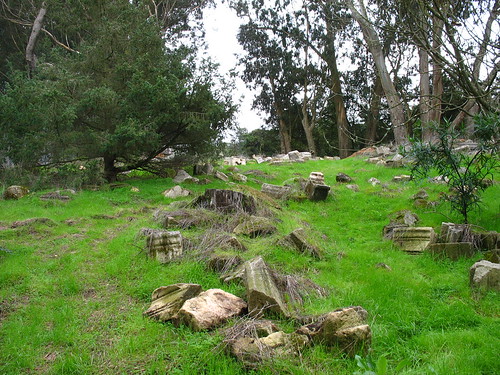
The junkyard of the monestary stones. You remember me telling you about them?
IMG_6237

IMG_6238

Now they're being used in the Children's Garden, which is nice.

Looks like I'm not the only volunteer today.
IMG_6225

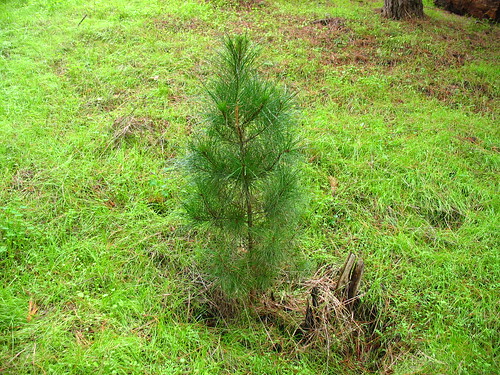
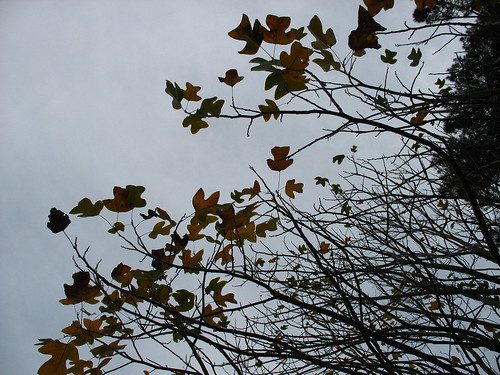
I bet you guys can ID this south/east coast US native.
IMG_6271

IMG_6273 IMG_6274

I was shocked to learn this was a native tree.

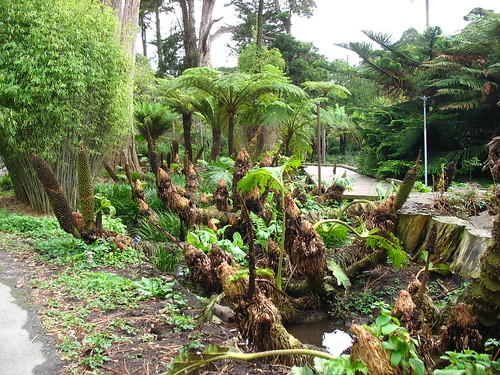
A friend was joking with me about the Gunnera at last spring's big plant sale. She said only gay men buy Gunnera. In fact, only women with big hair bought it this year.
IMG_6270

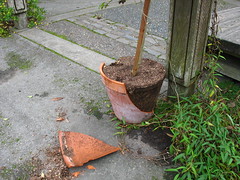
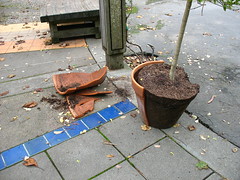
Hopefully the kids who spend time in the new Children's Garden will have a good time and enjoy themselves and learn to appreciate plants and gardening, and not grow up to be people who do shit like this.
IMG_6281 IMG_6277

How sad.

IMG_6280

Vandalism in the Demonstration Garden is depressingly common. I cleaned up several ruined plants today, and lots of broken glass from beer bottles, left smashed all over the patio.

Is it wrong to end on a sad note? Not really. Just as there are people in the world who nurture and cherish, there are those who smash and destroy. That's what we have. It's who we are.

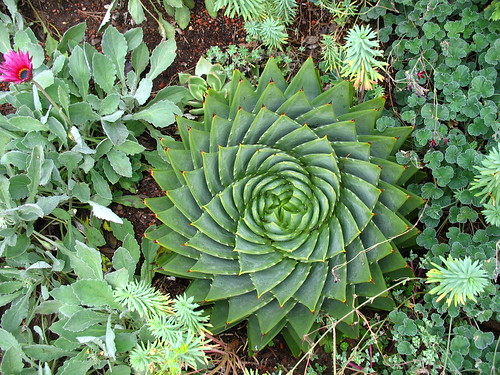
Maybe you want to contemplate that mystery while you gaze into Aloe polyphylla.
IMG_6284

Click here for a quick visit last October.

12/14/2006

"I've found yet another way to categorize people - those who say 'Cool!' when they see a cubic hard-boiled egg, and those who say 'Uh, why?'. I'm glad to be in the former category, as are my friends. I've also learned that many of my co-workers are in the latter."

Link.

Some of my own random gardening idiosyncrasies...

viewed through the lens of the Wayside Gardens Spring 2007 catalog, which came today.

I got on their list soon after I started gardening, but before I became serious. (Serious gardening to me means buying locally with an emphasis on natives, or growing from seed.) I bought a really crappy Hydrangea petiolaris from them that I eventually ripped out when it finally became clear to me what a dud that specimen was. WG has a very seductive print catalog. Their prices are on the high side. I'd rather be buying seed. I shouldn't even look inside...

But I had a beer and leafed through it while I rode the exercise bike tonight...

Coneflowers. Okay, I like them. But do I want them in my garden? I go back and forth on coneflowers all the time. They do well here. I like self-sowers. I like purple. Beneficials like them. They're not so overused I can't stand them anymore. But they're not natives. In my mind, they're kind of east coast-y, garden lady. I certainly don't like fancy-schmancy cultivars of anything, except maybe roses and Japanese maples--and even then I have limits. I'm a species guy whenever possible. I'm not going to buy any of Wayside Gardens' $15 coneflowers, but the coneflower conundrum continues for me.

I like this Climbing Rose 'Night Owl'.

45128

$20 for a bareroot. I like the purple, I like the yellow stamens, I like climbing roses. I especially like climbing roses that might be expected to top out at 14 feet like this one. And I just said I need more flowers in the garden. This pruple climber might be nice planted behind my pink-flowering Brugmansia that I also bought from WG last year when I was drunk. The one I go back-and-forth about. I'd be so grossed out having a "Wayside Gardens" corner in my little San Francisco garden, it would drive me freakin' nuts. And we San Franciscans have to be very careful with roses. The right ones do fantastic here, everything else is a mildewy horrorshow. Still, it's very pretty. The catalog says this is a purple version of 'Sally Holmes'. I'll look this Sally up in my SF rose growing resources and give it some thought.

They're selling Paris polyphylla and they say it's very rare. Not that rare...I've heard of it. I think they're calling it rare because the flower is so subtle and so not over-hybridized it doesn't really make sense in their catalog!

They have three pages of Japanese maples that don't excite me much. Still haven't made my choice on them, but I've already got enough information to work with, thankyouverymuch.

Several pages of hideous, over-determined Cornus sp., Hamamelidaceae, magnolias, Pieris, daylilies.

In the middle of all that ick is Poncirus trifoliata 'Flying Dragon'. This would look really cool in a succulent garden.

FlyingDragon1Main FlyingDragonMain2

Note: Photo credits for those pictures go to Greenwood Nursery.

Two pages of lovely Buddleia [sic]. Is that an east coast spelling? We go with Buddleja in California. I'm a huge, huge Buddleja fan. I never have a bad word to say about Buddleja. I don't want one of my own tho'. I'd be overwhelmed managing it.

Then several more pages of atrocious plants...occasionally interrupted by something nice...

A gardenia. Love them, but don't do well in San Francisco. A rather fastigate Berberis thunbergii cv. atropurpurea. Interesting, but no thank you.

This lurid Guara.

gaura

The most vulgar Cortaderia I have ever seen. Are you with me?

pampas

Eeccchhh.

Wait, am I going too far here? Is this terrible? Should I stop? I'm just blogging, right? This is of no consequence, right?

I'm glad people get satisfaction, and even better, income, breeding plants. I really am. For the most part. But that doesn't mean I can't be honest in my assessment of the results, right? I can express an opinion about art; I can do it about plants. Yes. I'm fine. At best, they can knock me for grabbing pictures without asking. But I gave links and credit. That's good, right?

Because I'm going to end by saying I love all WG's clematis. Every single one of them looks absolutely beautiful. Go see for them yourself.

12/11/2006

IMG_6080

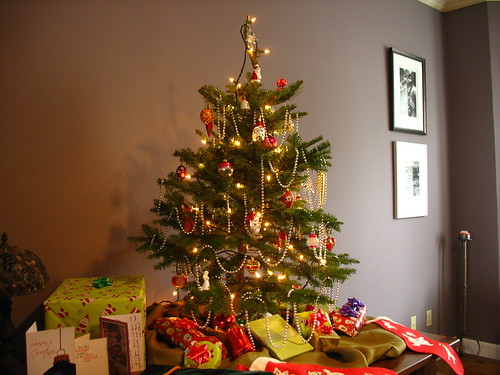
What a difference a day makes, huh?

Here is last year's (it looks a lot like this year's!)...with a scary-ish looking picutre of me.

I think next year, we'll get a bigger tree.

12/10/2006

I have all this weird crap in my garage

from when I cleaned out my grandparents house some years ago. Like this Presidents of the United States commemorative plate from back when whatshisname was president.

IMG_6007

They really, really liked whatshisname.

IMG_6061

That 'Love those Republicans' button is cool. It has that polarized plastic covering, so those wheel-like designs look like they're spinning when you move the button. Everyone loves those wild and crazy Republicans!

It's not like I wanted these things, but noone else wanted them, and I didn't want to just get rid of it all...

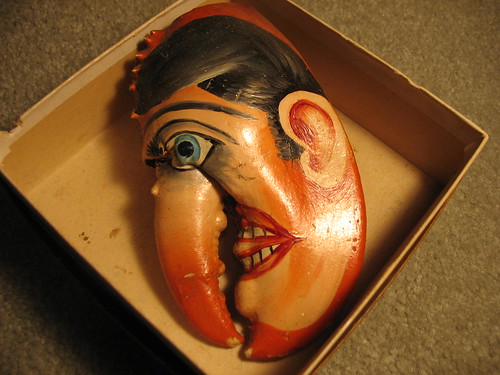
This thing is hideous. HIDEOUS. It's a hand-painted lobster claw. My grandparents came from Maine. You know, Maine lobster. Anyhow, my grandmother had this thing hanging in her kitchen all my life. I have always, always hated it. When it finally came time to get rid of it, I suddenly couldn't let it go. Now it's mine.

IMG_6010

Also from grandmother's kitchen: mammies.

IMG_6051

I would never have these in my kitchen, but they don't seem as offensive to me now as they used to. Is that wrong?

In any case, they're a huge step up from these monstrosities.

IMG_6056

They're made out of some kind of hard plastic--probably recently invented at the time these salt and pepper shakers were fabricated.

What were people thinking? I cannot even begin to imagine.

More here and here and here.

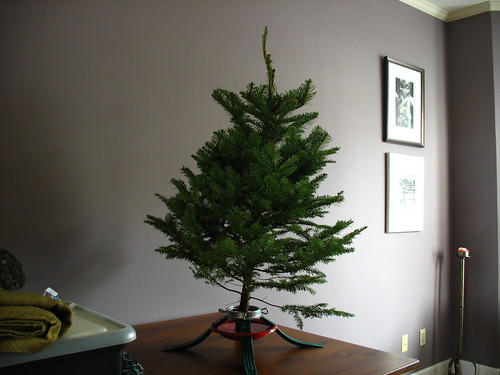
Prelude to a Christmas tree.

IMG_5996

We here at Chez Whoreticulture know that size isn't everything.

Okay, stop laughing. Stop laughing now. Stop it!

We have some serious blogging to do. I want to know what kind of, ahem, "tree" this is.

Do think you know?

Here's a nifty stocking stuffer idea.

IMG_6001

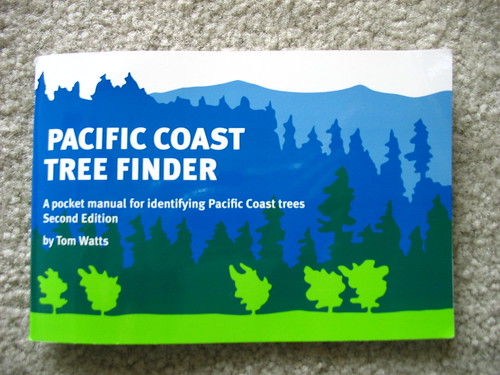
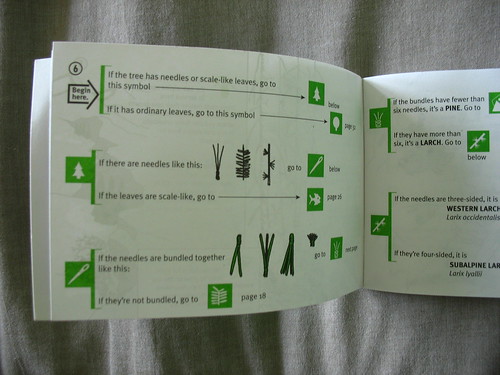
These little books come from Nature Study Guild Publishers and cost a mere $3.50. They sell finders suitable for every part of the USA (except probably Hawaii), and they do more than trees. I have the berry finder, fern finder and flower finder, and you can get bird, fish, and animal finders too. My order came in just a few days--so there's still plenty of time left for you to place a Christmas order. (At the link, click Finders under Browse Products.)

Here's our sample.

IMG_5998

Shall we begin?

IMG_6003

Actually, let me read for you.

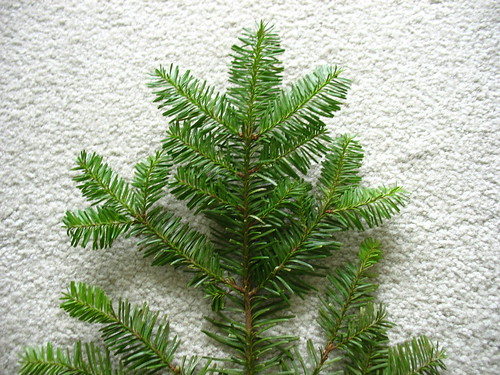
"If the tree has needles..." Check!

"If there are needles like these...[shows little picture of pine needles]" Check!

If the needles are bundled together..." No, they're not.

If they're not bundled, go to page 18.

Page 18. Okay, big decision point: "If there are smooth round scars where old needles have fallen off, it's a fir." There are smooth round scars. This tree is a fir, and this business of no smooth round scars is one reason why Douglas Fir is not a true fir (and also the cones). Doug Firs are more like hemlock pines. Other pines without those smooth, round scars: spruce, pinyon, nutmeg, redwood, and yew.

But we have a fir. Okay, moving on.

Do the needles narrow to a stalk where they join the twig, or are the needles wide at the base? This is a slightly difficult decision point. I have to look at a lot of needles to decide.

The needles are wide at the base. Go to page 21.

Are the needles flat and hard to twirl? Definitely hard to twirl. We're almost done.

Is the bark rusty red, or gray?

Definitely gray.

We have Abies lasiocarpa var. lasiocarpa, common name "Subalpine Fir".

12/09/2006

Fine Gardening, No. 113. February, 2007

I'll never understand magazine publication dates. How is it okay to get the February 2007 issue in mid-December 2006? (Please don't explain.)

This is my second favorite magazine. Let's see what we have this month. Japanese maples on the cover. Always love those. I have the wind blowing leaves from an unknown Japanese maple into my garden. Which is nice.

IMG_5951

I have the west coast native equivalent, Acer circinatum. It's still very small tho', and dropped all its leaves several weeks ago. More of an Oregon, Washington native, but we have some in northern California too. Because California's a really big state, we get to say we have an incredible diversity of native plants. Anyway, that's neither here nor there.

I was going to get a Japanese maple this year, but by the time I got around to it, they'd all dropped their leaves at the nursery and it was too late to pick. But couldn't I just go with a trusted recommendation? I mean, whatever it is, I'll like it, right?

Fine Gardening recommends: Waterfall, Inaba shidare, Mikawa yatsubusa, Aka shigitatsu sawa (which is the one that captivates me most), Shin deshojo (captivates me second most), Seiryu, Koto no ito, Sango kaku (that's one I've heard of before), Aconitifolium, and Vitifolium.

Aka shigitatsu sawa. Zones: 6 to 8, Height: 7-9 feet, Spring color: green, pink, red. Summer color: Green, pink, red. Fall color: Red

Sounds good.

Shin deshojo. Zones: 6 to 8, Height 10-12 feet, Spring color: red. summer color: red, green. Fall color: red, orange. And they add, "This cultivar's form naturally becomes a 10- to 12-foot-tall haystack, or the tree can be opened up to reveal its architecture through pruning."

Well, I'd like to have green, pink, and red during the spring and summer, and orange and red in the winter. Maybe I should get both.

Sunset's recommendations for Japanese maples (Sunset zones 2-10, 12, 14-24) back in November 2005 (but which I'm certain I read in August '05): For yellow-gold fall color, it's Aoyagi, Flavescens, Hogyoku, Koto no ito, and Sango Kaku. For
orange-red, it's Nicholsonii or Orangeola. For red, it's Bloodgood or Osakazuki.

They also suggest five for container culture: Fjellheim, Kamagata, Mikawa, Yatsubusa, Sharp's Pygmy.

[Note: as I sit here typing, we're having a seriously windy rain storm. I need to show you a movie of my neighbor's yard blowing around. It's incredible. I would be unsurprised if the tree dahlia doesn't make it through the night. Another good reason not to have that plant next year. A small branch broke off it last night. I just hope my neighbor's trellis doesn't come off his house and crush my tree fern. Eventually, it's going to. Sigh.]

Back to Fine Gardening...

The featured garden in this issue belongs to Brigit Piskor in Vancouver. She made "every fence, trellis, container, and sculpture in her garden herself." Wow! What an achievement, huh? [Note: Whoreticulture readers can look forward to future blog posts on the subject of hypertufa. Books have been ordered, I'll be picking up a bag of Portland cement next weekend...] In a small garden, Piskor emphasizes the importance of thin, airy plants. I'm particularly impressed with the self-sown mulleins and Culver's root, Veronicastrum virginicum f. album. Looking at pictures of her beautiful garden, I suddenly feel that I must build by own arbor. Okay, that'll happen after the hypertufa.

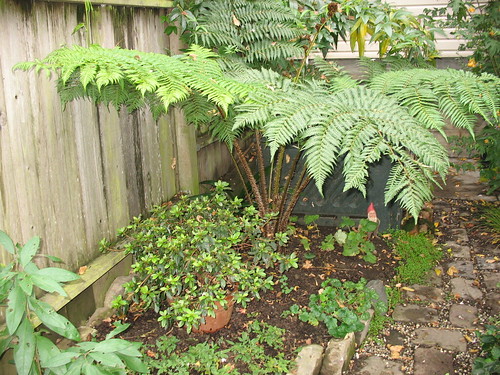
A plant I really like in this issue is Dryopteris erythrosora 'Brilliance'. I want a few other ferns in my garden to echo the tree fern, but I don't want to add any more predominantly green plants for awhile either. Ta da! Problem solved. They're only $6.99. I'll take three.

At least one of them will go somewhere in here.

IMG_5942

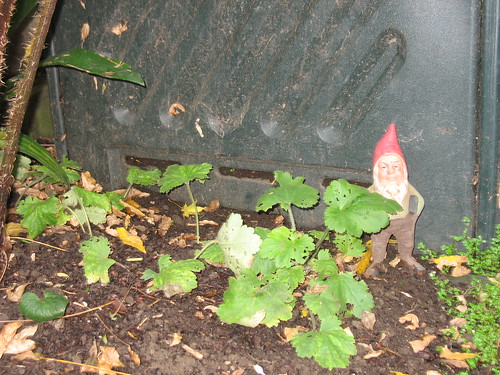
Okay, what disappoints you more--the azalea or the gnome?

IMG_5945

The azalea's just a temporary in that spot, but the gnome stays. He guards the compost bin from the raccoon. That area's real shady. I've got three clivia behind the fern, some tiarella and heuchera (I intended for there to be a lot more heuchera, but most of the divisions I took from elsewhere in the yeard died--to my surprise. These look like they'll make it if they survive the winter.), and hopefully the Symphoricarpus I planted a few weeks ago will take off next spring.

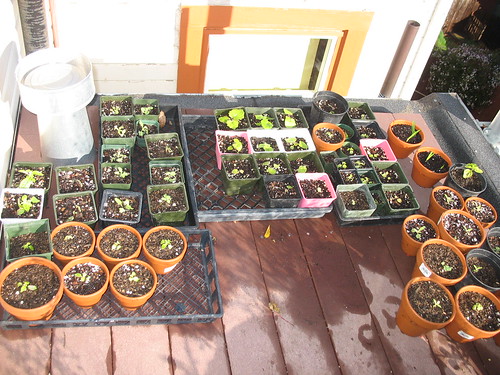
The other thing I have for that spot is the Fuchsia boliviana alba. Still seedlings, but coming along.

IMG_5914

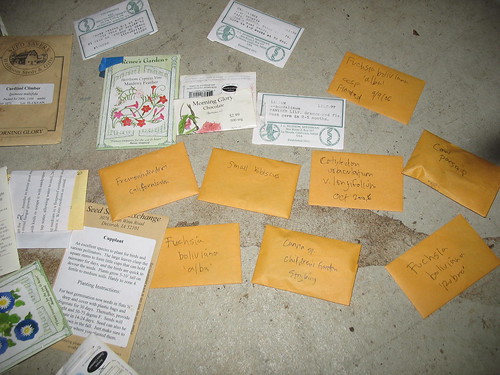
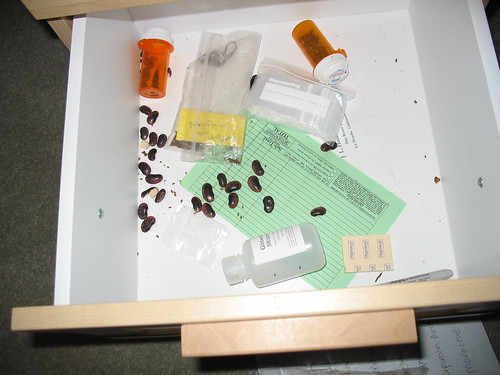
I've got seeds everywhere.

IMG_5910

In every drawer.

IMG_5898

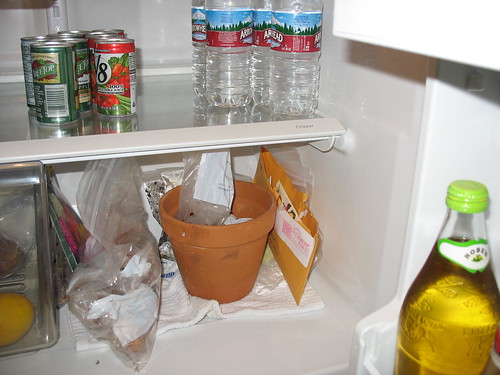
In the refrigerator with extra bulbs I'm not sure what I'm going to do with.

IMG_5900

My boyfriend is very sweet to let me have a little corner of our refrigerator for my germination trials.

IMG_5902

I have extra bulbs because I got a bag of them for my birthday. I can't even remember ever seeing a hyacinth flower before. Do you think it will be okay in this set up?

IMG_5980

I figure the roots will anchor themselves in the shells and hold the bulb upright. It's a pretty small flower, right?

Remember that Berberis wilsoniae? Look how red.

IMG_5912

12/06/2006

Getting lost

I don't know what it's like where you are, but people are forever getting lost in California parks.
In this and a few other searches I've been involved with, I've learned that finding a missing person in the woods can feel like looking for a polar bear in the desert.

These are the steps you take on a search, and what a lost victim can do to help...

at the link.

12/04/2006

Science Corner

Miscellaneous points of interest transcribed by me from recent issues of the estimable science journal, Nature. They don't put much out for free. I type pretty fast (with occasional typos).

Polish scientists fight creationism
Fifty leading scientists in Poland have signed an open letter in protest against an aggressive anti-evolution campaign launched by the League of Polish Families (LPR), the ultra-right-wing coalition partner in the conservative Polish government...

[Maciej Giertych], is an LPR member in the European Parliament and is lobbying for obligatory inclusion of creationism is Polish biology curricula. Maciej, who holds a PhD in tree physiology from the University of Toronto, Canada, claims darwinian evolution is refuted by scientific evidence...

Sigh. On a related note, elsewhere in the same issue, a favorable review of Sean Carroll's book, The Making of the Fittest: DNA and the Ultimate Forensic Record of Evolution.

Also reviewed, the new Richard Dawkins book:
[T]he strategy of focusing on telling people what not to believe is less compelling than positively demonstrating how the wonders of nature can suggest a world without God that is nevertheless both complete and wonderful--an argument that Dawkins reserves for the final few pages of the book.


Other book reviews that catch my eye: Lee Silver's Challenging Nature: the Clash of Science and Spirituality at the New Frontiers of Life and Marion Nestle's What to Eat: An Aisle-by-Aisle Guide to Savvy Food Choices and Good Eating.

About that one, the reviewer writes:
Like other areas of science, nutrition is framed by political realities. Whose interests are being served? Will this or that power bloc be affected if we tell people to cut down on sugar or meat? In a world where food is very big money, and where nigh on a billion starve while a billion overeat, we are seeing a bizarre globalization of 'pork-barrel politics' in which particular consituencies benefit while everyone pays. Land that should be producing food for health is producing food for wealth.

That's a book I should probably spend some time with. But maybe at the library. Once in awhile I like to take an inventory of my nutritional situation. Sort of like taking a financial inventory, or going to the dentist for a teeth cleaning. Just to sort of touch bases with myself and be self-aware about important things I otherwise don't care to think about.

The writer repeats that one-egg-a-day rule to keep your heart healthy. How am I supposed to limit egg consumption to one egg at a time? That rules out eating all kinds of things I like to cook. I would need some help implementing egg-discipline in my life.

I am careful with breakfast eggs. I like them scrambled, and scrambled eggs for me means two whole eggs + one egg white scrambled with 1% milk. I figure the addition of one egg white means I fill up with extra protein minus the yolky cholesterol; it also makes the eggs lighter--I highly recommend it. I guess I could have one egg + one egg white and add in something else. But I'm a hungry guy. I eat a lot of food. Aaanyway...back to Science Corner.

Pollinators in peril
In a report issued on 18 October [2006], the US National Academy of Sciences (NAS) found that pollinators such as bees, birds and bats are declining rapidly in North America....

The agricultural bee-keeping industry will probably ensure the honeybee's survival, but populations have still dropped by 30% over the past 20 years in North America, mainly due to the varroa mite...

Physiscist retires to work on 9/11 conspiracy theories
University [of Utah] officials had placed Steven Jones on paid leave last month while reviewing his work on 9/11 conspiracy theories. On 20 October [2006], the university announced that Jones had reached an agreement to take early retirement. Jones says he plans to continue his 9/11 research...

Antarctic ozone hole is bigger than ever
As ozone-depleting chlorofluorocarbons fade from the atmosphere, the ozone hole over the Antarctic continues to fluctuate in size. And this year it was the biggest it has ever been.

Both NASA and the European Space Agency documented the size of the 2006 ozone hole and found that, in late September and early October, it had broken records for both size and depth, previously set in 2000 and 1998...

The Christmas Invasion [a three-page article about poinsettia-vectored whitefly infestation]
In the 1990s, the B-biotype whitefly swept through North American crops, inflicting more than $1B worth of damage on farmers in the US and Mexico; it had hitchhiked from Israel to Florida to California, and from there it seems likely to have been spread nationwide via the imported poinsettias...

Now the spreading of whitefly by poinsettia is at risk of repeating itself in an even more devastating way. The Q-biotype, orginally observed in Spain in 1997, "is resistant to every pesticide we've tested", says [Timothy] Dennehy who co-chairs a scientific panel on the pest convened by the USDA.

Q&A with congressman Bart Gordon (D-Tenn.), in line to become chair of House Committee on Science.
Q: You've talked about censorship of scientists at agencies and politicization of science. Do you plan any hearings on that issue?

A: We hope that we can have some oversight hearings that are going to find out what was really going on. My goal is not to embarrass the [Bush] administration but to shed some light on this problem so that people will be embarrassed to do it again.

Embarrass the Bush administration?

Meanwhile, across the pond...
The cross-party group of 11 [British] MPs takes ministers to taks for labelling policies "evidence-based" when no relevant research exists, and criticizes the civil service for its poor interpretation of research results. Perhaps most worrying, concludes Phil Willis, the Liberal Democrat member who chairs the committee, is the fact that government-commissioned studies regularly go unpublished when they conflict with a department's policy.

Life goes on...for now.